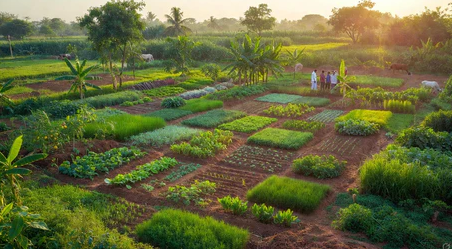
When people think about farming, they usually focus on crops, fruits, rainfall, or harvest seasons.
But experienced farmers know the real secret behind every successful farmland is something far more important — healthy soil.
Without healthy soil, even the best seeds cannot grow properly.
And today, educating people about soil health is more important than ever.
At Nature N Me, farmland is not just seen as land for cultivation — it is viewed as a living ecosystem where soil, plants, water, and nature work together.
Soil is Alive More Than People Realize
Many people think soil is simply “dirt.”
But in reality, healthy soil is filled with life:
- Microorganisms
- Earthworms
- Nutrients
- Organic matter
- Fungi and beneficial bacteria
These tiny living systems help plants absorb nutrients, retain water, and grow naturally.
In fact, one teaspoon of healthy soil can contain millions of microorganisms working silently beneath the surface.
Why Soil Health Matters
Healthy soil directly impacts:
- Food quality
- Crop productivity
- Water retention
- Climate resistance
- Long-term farmland sustainability
When soil becomes damaged due to excessive chemicals or poor farming practices, farmland slowly loses its fertility.
This is one of the biggest challenges modern agriculture faces today.
The Problem with Overusing Chemicals
For years, many farms depended heavily on chemical fertilizers and pesticides for faster production.
While they may increase short-term yields, excessive use can:
- Reduce soil fertility
- Kill beneficial organisms
- Affect groundwater quality
- Damage ecosystems
- Make soil harder and less productive over time
This is why sustainable farming methods are becoming increasingly important worldwide.
How Natural Farming Helps Restore the Land
Natural and regenerative farming practices focus on working with nature instead of against it.
Methods like:
- Composting
- Crop rotation
- Mulching
- Rainwater conservation
- Organic fertilization
- Mixed farming
help improve soil quality naturally while protecting the environment.
Healthy soil also stores more carbon, which helps reduce climate impact over time.
Farmland is More Than an Investment
Today, many people are becoming interested in farmland not only for agriculture, but also for:
- Sustainable living
- Eco tourism
- Organic farming
- Farm stays
- Long-term environmental value
But truly valuable farmland is not measured only by acreage.
Its real value lies in how healthy and sustainable the land remains for future generations.
Why Awareness Matters
Most consumers never think about the condition of the soil behind the food they eat every day.
But understanding soil health creates awareness about:
- Sustainable food systems
- Responsible farming
- Environmental conservation
- Better agricultural practices
The future of farming depends not just on technology, but on protecting the land itself.
Final Thoughts
Healthy soil may not be visible in everyday conversations, but it is the foundation of every thriving farm, orchard, and plantation.
The greener landscapes people admire in places like Coorg exist because of the life hidden beneath the ground.
And perhaps the future of farming begins by learning to protect the soil that quietly feeds the world every single day.