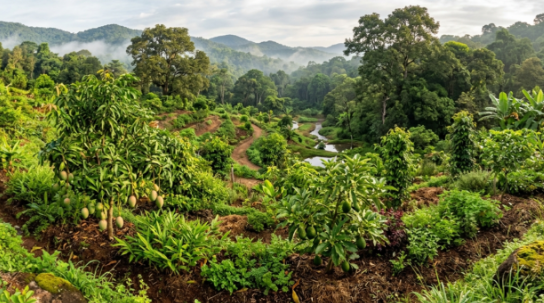
For the discerning steward of nature, farming is not just about extraction—it is about design. While traditional agriculture often focuses on single crops, Permaculture (Permanent Agriculture) looks at the land as a whole, interconnected ecosystem. In regions like Coorg and Madikeri, this philosophy is turning managed farmlands into self-sustaining forests that thrive for generations.
What is Permaculture?
Permaculture is a design system modeled after the patterns found in nature. Instead of working against the environment with heavy chemicals or rigid rows, permaculture integrates trees, shrubs, and groundcover in a way that they support one another.
The Core Pillars of a Permaculture Farm
- Earth Care: Focuses on regenerating soil health through natural composting and diverse planting rather than synthetic fertilizers.
- Water Management: Utilizing the natural mist and rainfall of the Western Ghats through smart swales and ponds to keep the land hydrated year-round.
- Stacked Yields: A single acre can produce multiple “layers”—from tall timber and fruit-bearing trees like avocados to shade-loving spices and medicinal herbs.
Why It Matters for Your Investment
Investing in a permaculture-based farm means investing in resilience. Because these ecosystems are diverse, they are naturally more resistant to pests and climate fluctuations. For brands like Nature N Me, this approach ensures that the land doesn’t just produce a harvest today, but becomes more fertile and valuable every passing year