Among the experiences that consistently surprise new Coorg farmland investors on their first estate visit — alongside the coffee flowering, the misty valley views, and the harvest activity — is the birdlife. A well-managed, forest-adjacent coffee estate in Kodagu hosts an extraordinary diversity of bird species: hornbills calling from the canopy, Malabar whistling thrushes singing from stream-side rocks, flycatchers hawking insects in the understorey, and during migration seasons, an additional diversity of passage migrants pausing in the estate’s trees. This biological richness is not incidental — it is a direct consequence of the estate’s ecological quality, and increasingly it represents a genuine market opportunity for agritourism.
Why Coorg Coffee Estates Are Exceptional Birding Habitats
The Western Ghats is one of the world’s thirty-six biodiversity hotspots — a region of extraordinary species richness and endemism. Karnataka’s portion of the Western Ghats, including Kodagu, hosts over three hundred and fifty bird species, including numerous endemic Western Ghats species that cannot be found anywhere else on earth. The Malabar trogon, the Sri Lanka frogmouth, the white-bellied treepie, the Nilgiri wood pigeon, and the brown-cheeked fulvetta are among the species specifically associated with the coffee estate and forest-edge habitats of Coorg.
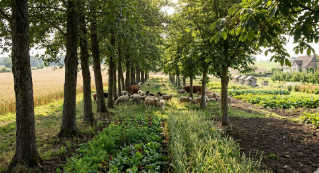
The coffee estate’s multi-layered structure — ground cover, spice understorey, coffee shrubs, shade tree canopy, and emergent timber trees — provides nesting and foraging habitat across the full vertical range that a diverse bird community needs. This structural diversity, combined with the estate’s connection to the broader forest through the surrounding landscape, makes a well-managed Coorg coffee estate capable of hosting fifty to one hundred bird species within its boundaries.
The Indian Birding Market: A Growing Opportunity
India’s birdwatching community has grown dramatically over the past decade. The availability of good field guides, the proliferation of nature travel operators, and the social media sharing of bird sightings and estate visits has created a community of active birders — particularly among urban professionals — who specifically seek out birding destinations and are willing to pay premium prices for access to quality habitat.
A Coorg coffee estate that can offer guided early-morning birding walks with a local naturalist, combined with the estate accommodation and farm experience, commands premium pricing from birding-focused visitors — a market segment that stays longer, spends more per night, and returns repeatedly to the same sites when the birding is consistently good.
This is a genuine and growing agritourism income opportunity that is complementary to the general farmstay model discussed in an earlier post — the same infrastructure, the same estate, but marketed specifically to a premium market segment with identifiable specific interests and willingness to pay for quality.
What Estate Management Practices Support Bird Diversity
The organic and low-chemical management approach practiced on Nature N Me’s managed farmland estates is directly beneficial to bird diversity — insecticide use kills the invertebrate food base that insectivorous birds depend on, while organic management maintains the insect diversity that supports everything from flycatchers and warblers to woodpeckers and hornbills. Maintaining dead trees and hollow logs provides nesting sites for hole-nesting species. Allowing a diversity of understorey plants rather than maintaining a weed-free monoculture provides food and shelter for ground-feeding species.
These management practices simultaneously improve the estate’s agricultural sustainability and biodiversity value — the same organic philosophy that builds soil health and protects mycorrhizal networks also creates the conditions for exceptional bird diversity.
A Different Kind of Estate Story
For investors who care about the ecological dimension of owning land in the Western Ghats — as many do — the birdlife of their Coorg estate is part of what makes it meaningful beyond financial returns. Knowing that your land provides habitat for endemic Western Ghats species that are threatened across their range, that the absence of pesticides on your estate keeps invertebrate food chains intact, and that the forest-adjacent canopy of your estate connects to the broader wildlife landscape of Kodagu — this is the ecological stewardship dimension of agricultural land investment that no urban asset can offer.