
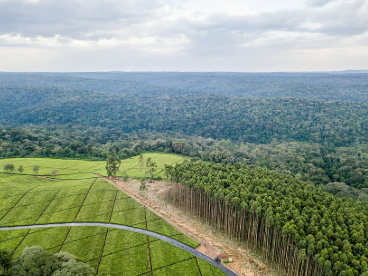
Long-term investment decisions benefit from honest thinking about the future — not forecasting with false precision but identifying the structural trends whose continuation or reversal most significantly affects the investment thesis. For Coorg farmland investors with ten-year-plus horizons, understanding what 2036 might reasonably look like — based on trends already in motion rather than speculation — helps maintain the conviction required to hold through the quiet periods that all long-term investments experience.
Bangalore in 2036: The Demand Engine
Bangalore’s growth trajectory shows no credible reversal scenario. India’s technology sector — which generates the professional cohort that drives Coorg farmland demand — is structurally expanding as global technology spending grows and India’s share of that spending increases. The population of Bangalore professionals earning twenty-five lakhs or more annually is growing. The aspirational class that values lifestyle land in natural settings is expanding. The cultural diffusion of Coorg’s desirability through social media and peer networks is ongoing.
By 2036, the urban professional class in Bangalore that is the primary buyer of Coorg farmland will be larger, wealthier, and more aware of Coorg as an investment and lifestyle destination than it is today. Demand pressure from this cohort on the limited supply of quality Coorg agricultural land will, all else being equal, be higher than it is now.
Infrastructure: The PRR Extension and Beyond
The highway improvements connecting Bangalore to Mysuru are complete. Future infrastructure development that could further improve Coorg’s accessibility includes the Mysuru-Mangaluru highway improvements progressing, proposed connectivity enhancements in the Kushalnagar corridor that serves as the primary Bangalore-to-Coorg gateway, and any progress on the proposed Kodagu regional airport or improved helicopter service from Bangalore that would reduce door-to-door travel time dramatically.
Any confirmed significant infrastructure improvement — particularly an airport — would trigger an immediate and sustained step-change in Coorg land values similar to what has been documented around other Indian airport developments. By 2036, some version of improved connectivity beyond current road access is likely, though specific form and timing remain uncertain.
Specialty Coffee: A Maturing Premium Market
India’s specialty coffee market will be a decade older and larger by 2036. The cultural shift toward coffee quality awareness is at an early stage — the proportion of urban Indian coffee consumers who understand and seek single-origin, traceable, specialty-grade coffee is perhaps five to ten percent of the urban coffee market today. Ten years of growth in coffee culture, education, and consumption will bring this proportion significantly higher.
Internationally, Coorg Arabica’s recognition as a distinct origin will have grown — with more award-winning lots from Coorg estates, more international specialty buyer relationships, and potentially higher allocation of Coorg coffee to the premium specialty export tier. This growing specialty market recognition benefits Coorg estate owners directly through higher average prices for qualifying coffee.
Climate: The Defensive Premium Growing
By 2036, climate change impacts on Indian agriculture will be more visible and more discussed than they are today. Agricultural regions facing water stress, increased heat, and erratic rainfall will be more clearly identified and their land values will begin to reflect the agricultural risk premium that climate-vulnerable locations carry. The Western Ghats — with its orographic rainfall guarantee, forest cover climate buffer, and perennial water systems — will be more clearly recognised as a climate-stable agricultural haven by 2036 than it is today.
This recognition will drive a growing climate premium into Coorg farmland values relative to more vulnerable agricultural regions — a premium that is present but not yet fully priced in current market values.
A Conservative 2036 Land Value Estimate
An investor buying a five-acre plot in Madikeri for twenty-five lakhs in 2026, holding until 2036, at twelve percent annual appreciation sees a land value of approximately seventy-seven lakhs. At fifteen percent appreciation (the upper end of recent trends), the same plot reaches approximately one crore one lakh. The range of seventy-seven lakhs to one crore one lakh represents the conservative to optimistic case for land value alone, before ten years of cumulative tax-free crop income received during the holding period.
The Scenarios That Could Change This Picture
Honest forecasting requires acknowledging risks. A major adverse Karnataka policy change restricting urban farmland ownership would reduce demand and values — though this seems unlikely given the 2020 amendment’s political direction and the government’s agricultural investment promotion stance. A prolonged severe drought cycle that degraded Coorg’s water systems would reduce agricultural income — though the Western Ghats’ structural rainfall resilience makes this the least likely scenario in the current climate modelling. A significant global economic recession that reduced Indian professional incomes and investment capacity would slow but not eliminate the appreciation trajectory — demand might pause but supply is permanently constrained.
None of these risk scenarios, examined honestly, changes the fundamental direction of the outlook. They slow the trajectory or introduce volatility — they do not reverse the structural drivers.
By 2036, investors who bought well-located Coorg farmland in 2026 will, in all likelihood, be describing it as the best investment decision they made in that decade. The structural case suggests exactly this outcome.
Contact Nature N Me at naturenme.in or WhatsApp +91 98805 21637.