
If you are twenty-six or twenty-nine years old, working your first or second serious job in Bangalore or Hyderabad, paying rent and building an emergency fund and maybe running a modest SIP — the idea of buying agricultural land in Coorg probably feels like something that belongs to a later chapter of life. Something for when you are earning more, when you have sorted the more urgent financial priorities, when you have time to think about these things properly.
This instinct is understandable, but it is based on a misunderstanding of what the late-20s investor actually needs to make a farmland investment work — and of the compounding advantage that waiting away from this asset creates.
What You Actually Need to Start, Not What You Think You Need
The common assumption is that farmland investment requires significant capital — crores, certainly, or at least fifty lakhs. This is wrong. Nature N Me‘s entry point is five lakhs for one acre in Madikeri. A twenty-seven-year-old earning fifteen lakhs annually who has been working for three years, has an emergency fund in place, and has SIPs running, very likely has five to ten lakhs available for an initial alternative investment without disrupting any financial priority.
One acre in Coorg, purchased at twenty-seven, will appreciate for forty years if you hold it until retirement. At twelve percent annual appreciation, that one acre triples in value approximately every nine to ten years — by age sixty-seven it has appreciated to perhaps forty times its original purchase price, while paying tax-free crop income every year from year four onwards.
This is not a projection designed to impress — it is simple compound arithmetic applied to a physical asset. The mathematics of early starting in any appreciating asset class are compelling. In farmland, they are particularly so because the asset also generates tax-free income while it appreciates, and because the lifestyle benefit — having a productive piece of the Western Ghats that grows with you across your adult life — is something you can actually enjoy across decades of visits rather than something you acquire too late to meaningfully use.
The Tax Benefit Compounds Over More Years
If you start earning agricultural income at twenty-seven rather than forty-two, you receive fifteen more years of tax-free agricultural income before reaching the same point. For a professional who eventually reaches the thirty percent tax bracket — which most successful young professionals in India do — that fifteen additional years of tax-free income is fifteen additional years of tax savings that a later-starting investor simply does not have access to.
The tax efficiency argument for farmland investment is strongest precisely for people who have many earning years ahead of them — not for people who are already near the end of their working careers.
The First Investment as an Education
There is a learning dimension to investing in a physical asset early that no amount of reading replicates. Going through your first land purchase — understanding what an RTC is, why the encumbrance certificate matters, what the sub-registrar’s office does — builds a practical literacy about physical asset investment that makes every subsequent investment decision more informed and confident.
Many Nature N Me investors who bought their first plot in their late twenties describe it as the best financial education they received — not because of the returns alone, but because the process of buying agricultural land, visiting it, watching a harvest, and understanding what drives value in a physical productive asset gave them a framework for thinking about wealth that financial markets alone do not provide.
The Lifestyle Starts Earlier Too
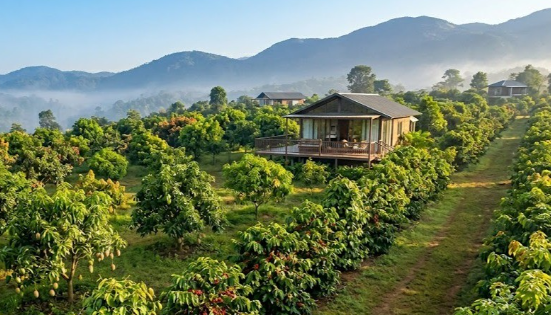
A twenty-seven-year-old who buys a Coorg farmland plot has thirty to forty years of potential farm visits ahead of them. Their children grow up with a farm. Their parents can be taken there. The estate evolves over decades of their life — from young plants to mature coffee, from teak saplings to timber trees — and the investor experiences each stage rather than arriving at a mature estate late in life.
This is not a trivial benefit. The people who describe their Coorg farmland with the most warmth and depth of feeling are almost always those who bought early and grew with the estate. The investment and the place become part of their life story rather than an asset they added late.
The financial case for starting in your late twenties is strong. The lifestyle case is even stronger. The only thing that is genuinely required is the willingness to look past the assumption that this is something to do later — because in farmland investment, later costs you compounding that you cannot recover.