
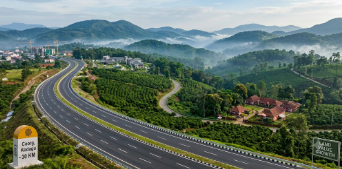
Many Coorg farmland investments begin with a trip that was not originally planned as an investment scouting visit. A family holiday to Coorg, a long weekend with friends, or a road trip from Bangalore that passes through Madikeri — and somewhere between the Abbey Falls visit and the estate coffee stop, the idea of owning a piece of this landscape becomes real rather than abstract.
If you are planning a Coorg trip and want to use it productively to evaluate farmland, this guide tells you what to look at, what to ask, and how to make the most of the time between the sightseeing.
Plan the Visit Around More Than One Plot
A single farm visit gives you one data point. Visiting two or three plots from different providers — or different zones within Kodagu — gives you reference points for comparison. What does the soil look like in this plot versus that one? How different is the canopy density? How does the access road compare? These comparisons build intuition that no amount of reading can substitute.
Contact Nature N Me before your trip and schedule a site visit on one of your travel days — we can arrange accompanied farm visits to available plots at a time that suits your itinerary. A farm visit typically takes two to three hours including travel from Madikeri town, the walk of the plot with the farm manager, and a conversation about documentation and management.
What to Observe When You Walk a Plot
The slope and drainage of the land tells you a lot. A plot that slopes consistently in one direction drains well — water moves off naturally after rain. A plot with flat depressions or poor drainage may waterlog during heavy monsoon rains, which damages coffee root systems and increases disease pressure. Look for signs of previous waterlogging — bare patches where nothing grows, or soil that feels compacted and lacks structure.
The existing shade canopy tells you about management history. A well-managed estate has a controlled canopy — trees pruned to allow adequate light, not so dense that the understorey is dark and light-starved, not so sparse that coffee bushes are exposed to direct sun. A neglected or unmanaged canopy (either over-dense or missing entirely) suggests management gaps that will affect crop quality and income.
The coffee plants themselves should look healthy — dark green leaves without yellowing (which indicates nitrogen deficiency or disease), no significant signs of leaf rust (orange-red powdery patches on the undersides of leaves), and active new growth. Older established plants will have thicker stems and a spreading structure; newer plants will be more upright and slender. Both are normal at different stages.
Ask the farm manager to show you the water source — the stream access point, the bore well, or the check dam if one exists. Observe whether the stream appears perennial (does it have good flow even if you are visiting outside the monsoon) or shows signs of being seasonal (dry channel edges, reduced flow). A full bore well is a good sign; one that is visibly low may indicate limited groundwater.
What to Ask the Farm Manager Directly
Direct conversation with the person who actually manages the land is often more informative than any document. Ask how long they have worked on this specific plot. Ask what the biggest challenge on this plot is — a good manager will give you a specific, honest answer, not a generic positive response. Ask when the last harvest was and what it yielded — if they can give you specific numbers from memory, they are genuinely managing the farm attentively.
Ask about the neighbours — the plots on either side and below. Are they managed estates or unmanaged land? Unmanaged adjacent land can be a source of pest pressure and weed encroachment, and affects the overall landscape quality of your plot’s environment.
The Drive to the Plot: What the Route Tells You
The access to a Coorg farmland plot is as important as the plot itself. You will be visiting periodically, and the quality of the route matters. Is the road to the plot tarmac or gravel? Is the gravel road wide enough for a standard SUV, or so narrow that it requires a 4WD with high clearance? Are there sections that become difficult during heavy rain? Ask specifically whether the access road is passable in the peak monsoon months — if it becomes inaccessible for several weeks each year, this affects both your visit convenience and, more importantly, the ability of farm labour and harvest transport to access the plot during critical operational periods.
Where to Stay in Madikeri for a Farmland Scouting Trip
Madikeri town has good accommodation options across price ranges. For an investor scouting trip where you want to be close to the action without fuss, a clean, well-located mid-range property in or near the town centre works well. The town has good restaurants, a bustling market, and the administrative infrastructure (sub-registrar’s office, banks, legal offices) that you may need to visit as part of due diligence.
For investors who want to experience what a farmstay environment feels like — relevant if you are considering farmstay income potential for your investment — booking a night or two at one of Madikeri’s established estate accommodation options rather than a hotel gives you firsthand experience of what your guests would experience.
Nature N Me can facilitate plot visits coordinated with your Coorg travel plans. Contact us at naturenme.in or WhatsApp +91 98805 21637 to arrange a visit.
Frequently Asked Question
Q: Why should I visit multiple farmland plots on a trip?
A: Visiting two or three different plots gives you reference points to compare soil quality, canopy density, and road access, helping you build practical intuition.
Q: How much time does a farmland site visit take?
A: A typical visit takes two to three hours, including travel from Madikeri town, walking the plot with the farm manager, and discussing details.
Q: What physical features should I check when walking a plot?
A: Look for a consistent slope for natural drainage, a well-managed shade canopy, healthy green coffee plants, and reliable water sources like streams or borewells.
Q: What key questions should I ask the farm manager?
A: Ask how long they’ve managed the plot, its biggest operational challenges, last season’s harvest yields, and whether adjacent lands are well-managed.
Q: Why is the access road to the farmland important?
A: A road that is difficult or impassable during peak monsoon months can restrict your visits and disrupt farm operations, labor access, and crop transport.
Q: Where is the best place to stay in Madikeri during a scouting trip?
A: Stay in a central mid-range hotel for easy access to offices and amenities, or book an established estate farmstay to experience the potential guest experience firsthand.