Owning agricultural land in Coorg connects an investor not just to a piece of soil and a set of crops, but to a place with a distinctive cultural identity — one whose major festivals and traditions are themselves deeply tied to the agricultural calendar that governs the farm. For investors who visit regularly, understanding this cultural dimension adds a layer of meaning to farm ownership that goes beyond the agricultural and financial aspects already covered in previous posts.
The Kodava Identity
The Kodava people are the indigenous community of Kodagu district, with a distinct language (Kodava Takk), customs, and a historical relationship to the land that predates the colonial coffee plantations discussed in our earlier post on Coorg coffee history. Kodava identity is deeply tied to land ownership, ancestral homes (known as “ainmanes”), and an agricultural way of life that has adapted to incorporate coffee cultivation while retaining older traditions tied to rice cultivation and the broader agricultural cycle.
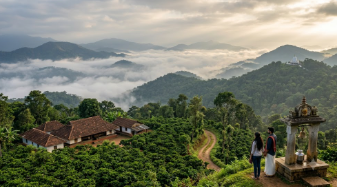
While most managed farmland investors are not themselves Kodava, owning land in Kodagu places an investor within a landscape where this cultural identity remains vibrant — visible in local architecture, in the rhythms of village life, and in the festivals that punctuate the agricultural year.
Puthari: The Harvest Festival
Puthari, celebrated in late November or early December (the exact date follows a traditional calendar), is Kodagu’s most significant harvest festival — marking the harvest of the first paddy crop. The festival involves ceremonial cutting of the first sheaf of rice, processions, traditional Kodava attire, feasting, and community gatherings across Kodagu’s villages.
For a farmland owner visiting during this period, Puthari offers a window into the agricultural traditions that have shaped Kodagu’s relationship with land for generations — traditions that exist alongside, and in some ways inform, the coffee-centric agricultural economy that defines the region’s modern farmland investment landscape.
Kaveri Sankramana
Kaveri Sankramana, observed in mid-October, marks the day the Kaveri (Cauvery) river is believed to have originated at Talakaveri in Kodagu — one of the most significant pilgrimage sites in South India, given the Cauvery’s importance across Karnataka and Tamil Nadu. The festival draws pilgrims to Talakaveri, located in the hills near the river’s source, and is marked by ritual bathing and ceremonies.
For investors whose farmland benefits from the perennial streams discussed in our earlier post on water security — many of which are part of the broader Cauvery watershed originating in Kodagu’s hills — Kaveri Sankramana offers a cultural and almost spiritual framing of the water resource that underpins their farm’s productivity.
Huttari and the Agricultural New Year
Related to Puthari, the Kodava agricultural calendar marks the rice harvest as a kind of agricultural new year — a time of renewal, gratitude for the harvest, and preparation for the coming season’s planting. While coffee, as a perennial crop, does not follow the same annual harvest-and-replant cycle as rice, the cultural emphasis on marking the harvest with gratitude and celebration resonates with the experience of farmland owners receiving their own coffee and spice harvest reports around the same broad season.
Visiting During Festival Periods
For farmland owners interested in experiencing Kodagu’s cultural calendar alongside their farm visits, planning a trip around Puthari (late November/early December) offers the opportunity to witness traditional celebrations in villages near Madikeri, alongside the practical benefit that this period overlaps with the early stages of the coffee harvest season — allowing a combined visit that includes both cultural observation and agricultural activity on the estate itself.
Nature N Me’s local team can provide guidance on festival timing for any given year and suggest how a farm visit might be planned to coincide with these cultural events, for investors interested in this dimension of estate ownership.
A Different Kind of Ownership
Most financial assets exist in a kind of placeless abstraction — a mutual fund or a bond has no festivals, no local culture, no community calendar. Agricultural land in Coorg is different: it sits within a living cultural landscape with its own traditions, its own relationship to the seasons, and its own community life that continues regardless of who owns which survey number.
This does not change the financial fundamentals discussed throughout our other posts — but for investors who value the experiential and cultural dimension of owning land in a place with genuine identity, it is part of what makes Coorg farmland different from agricultural land in less culturally distinctive regions.
To plan a visit that incorporates Kodagu’s cultural calendar, contact Nature N Me at naturenme.in or WhatsApp +91 98805 21637.
Frequently Asked Questions
Q: What is the main festival celebrated in Kodagu, and when is it held?
A: Puthari is Kodagu’s primary harvest festival, celebrated in late November or early December to mark the first paddy crop harvest.
Q: What is Kaveri Sankramana, and why is it important?
A: Celebrated in mid-October, Kaveri Sankramana marks the belief of the Cauvery River originating at Talakaveri, highlighting the region’s spiritual connection to its water sources.
Q: Who are the Kodava people?
A: The Kodavas are the indigenous community of Kodagu with a distinct language (Kodava Takk), unique customs, and deep ancestral ties to the land and agriculture.
Q: How do these local festivals relate to farmland ownership?
A: They connect farmland investors to the living culture, seasonal rhythms, and community traditions of Coorg beyond the financial aspect of farming.
Q: When is the best time to visit a farm in Coorg to experience local culture?
A: Late November or early December is ideal, as the Puthari harvest festival coincides with the start of the coffee harvest season.