
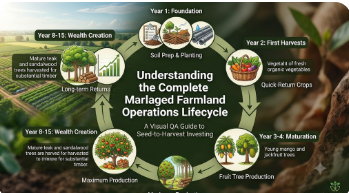
Understanding how managed farmland operates from seed to harvest builds investor confidence and helps set realistic expectations. This detailed walkthrough reveals what happens on your farm and when you’ll see returns.
Year 1: Preparation and Planting
Months 1-3: Land Preparation
Site Assessment:
- Soil testing and analysis
- Topography evaluation
- Water source verification
- Climate and microclimate assessment
Land Clearing:
- Removal of unwanted vegetation
- Stump removal and root clearance
- Leveling for irrigation efficiency
Soil Remediation (if needed):
- Adding organic matter (compost, manure)
- Adjusting pH with lime or sulfur
- Incorporating biofertilizers
Cost:₹30,000-50,000 per acreTimeline: 2-3 months
Months 3-4: Infrastructure Development
Irrigation Systems:
- Drip irrigation installation (most efficient)
- Sprinkler systems for larger areas
- Water storage tanks or ponds
- Pipeline network
Fencing:
- Boundary fencing to prevent animal intrusion
- Barbed wire or chain-link fencing
Access Roads:
- Internal farm roads for equipment movement
Cost:₹1-2 lakhs per acre (one-time)Timeline: 3-4 weeks
Months 4-6: Planting
Crop Selection:Management selects crops based on:
- Soil type and fertility
- Climate suitability
- Market demand and prices
- Growth cycle and cash flow needs
- Complementary planting (agroforestry + short-term crops)
Typical Planting Mix:
- Short-term crops (3-6 months): Vegetables, pulses
- Medium-term crops (1-2 years): Fruits, spices
- Long-term crops (5-15 years): Trees for agroforestry
Planting Process:
- Seedling preparation in nursery
- Transplanting to field
- Proper spacing for optimal growth
- Initial watering and care
Cost:₹20,000-40,000 per acreTimeline: 2-3 weeks
Year 1 Returns: Minimal
First year focuses on establishment. You may see:
- Small crop income from fast-growing vegetables (months 6-12)
- Minimal returns: 2-4% on investment
- Primary focus: Building foundation for future income
Year 2: Growth and First Major Harvest
Months 1-3: Maintenance
Irrigation Management:
- Regular watering schedule
- Monitoring soil moisture
- Adjusting for weather conditions
Weed Control:
- Manual weeding
- Mulching to suppress weeds
- Organic herbicides if necessary
Pest Management:
- Monitoring for pests
- Biological control (beneficial insects)
- Organic pesticides if needed
- Regular scouting
Fertilization:
- Organic fertilizers
- Foliar sprays for micronutrients
- Based on soil test recommendations
Months 4-6: First Harvests
Short-term Crops:
- Vegetables ready for harvest
- First flush of fruits (if planted early)
- Pulses and grains
Harvest Process:
- Timely harvesting at peak ripeness
- Proper handling to prevent damage
- Grading and sorting
- Packaging
Months 6-12: Sales and Distribution
Marketing Channels:
- Local mandis (wholesale markets)
- Direct sales to retailers
- Organic certified buyers (premium prices)
- Online platforms and direct-to-consumer
Pricing:
- Based on market rates at harvest time
- Organic produce commands 20-50% premium
- Quality-based pricing
Year 2 Returns:
- Crop income: 8-12% of investment
- Agroforestry: Still growing (no returns yet)
- Land appreciation: 5-8%
Year 3-4: Maturation and Growing Returns
Crops Reaching Full Production:
- Fruit trees begin bearing (mango, jackfruit from year 3-4)
- Spice plants at full capacity (pepper, cardamom)
- Vegetables continue annual cycles
Agroforestry:
- Trees growing steadily
- No harvest yet, but significant value accumulation
- Biomass increasing 15-20% annually
Infrastructure:
- Irrigation systems functioning optimally
- Reduced maintenance costs
- Efficient operations
Year 3-4 Returns:
- Crop income: 12-15% of investment
- Land appreciation: 10-15%
- Total annual return: 15-20%
Year 5-7: Peak Productivity
Maximum Yields:
- All crops at peak production
- Established orchards producing consistently
- Efficient operations with minimized costs
Agroforestry Benefits Begin:
- Some fast-growing trees ready for thinning (eucalyptus, subabul)
- Partial harvesting without complete tree removal
- Income from timber begins
Year 5-7 Returns:
- Crop income: 15-18% of investment
- Agroforestry beginning: 5-10%
- Land appreciation: 15-20%
- Total annual return: 20-28%
Year 8-15: Long-Term Wealth Creation
Agroforestry Harvest:
- Mature trees harvested (teak, sandalwood, silver oak)
- Each tree worth ₹20,000-1,00,000 depending on species and age
- One-time windfall income
Continuous Crop Income:
- Vegetables, fruits, spices continue annually
- Consistent 12-18% annual returns
Land Appreciation:
- Cumulative appreciation: 200-500% from original investment
- Land value compounds over time
Year 8-15 Returns:
- Agroforestry harvest: 200-400% of tree investment
- Continuous crop income: 12-18% annually
- Land value: 300-500% appreciation
- Total portfolio value: 400-800% of original investment
What Investors See During Each Phase
Monthly:
- Progress reports with photos
- Updates on crop growth stages
- Irrigation and maintenance activities
Quarterly:
- Financial statements showing income and expenses
- Detailed crop performance metrics
- Weather impact analysis
Annually:
- Comprehensive farm report
- Soil test results
- Harvest summary and revenues
- Photos and videos of the farm
- Recommendations for next year
Optional Site Visits:
- Many companies invite investors for harvest visits
- Experience your farm firsthand
- Meet the farming team
Key Success Factors in Managed Farmland Operations
1. Expert ManagementProfessional agronomists with 10+ years experience make critical decisions about crop selection, planting timing, and pest management.
2. Technology Integration
- Soil moisture sensors
- Weather monitoring stations
- Drone imagery for crop health
- Automated irrigation systems
3. Organic Practices
- No synthetic pesticides or fertilizers
- Compost and organic manure
- Biological pest control
- Better prices and lower input costs
4. Market LinkagesEstablished relationships with buyers ensure:
- Fair prices
- Timely sales
- Reduced wastage
- Premium for quality produce
5. Risk Management
- Crop insurance
- Diversified planting (multiple crops)
- Weather contingency plans
- Water storage for droughts
Common Mistakes to Avoid
Investor Mistakes:
- Expecting immediate returns (Year 1 is establishment)
- Micromanaging operations (trust your management team)
- Choosing only short-term crops (miss agroforestry benefits)
- Ignoring soil health reports
Management Mistakes (Red Flags):
- No transparency in operations
- Infrequent updates
- Soil neglect
- Poor record-keeping
- Lack of crop insurance
Setting Realistic Expectations
Timeline:
- Year 1: Investment in foundation (minimal returns)
- Year 2-3: Building momentum (moderate returns)
- Year 4-7: Peak productivity (strong returns)
- Year 8+: Wealth creation (exceptional returns)
Returns:
- Conservative estimate: 12-18% annually
- Optimistic scenario: 20-25% annually
- Include both income and appreciation
Risks:
- Weather events (monsoon failure, extreme heat)
- Pest outbreaks (managed through prevention)
- Market price fluctuations (mitigated by diversification)
- Operational challenges (managed by experienced teams)
The Bottom Line
Managed farmland is a long-term investment that rewards patience. The first year requires investment without significant returns. Years 2-4 build momentum. Years 5+ deliver exceptional returns through both income and appreciation.
Understanding this lifecycle helps investors:
- Set realistic expectations
- Avoid panic during establishment phase
- Plan for long-term wealth creation
- Communicate effectively with management
When you invest in managed farmland, you’re not just buying land—you’re joining a complete agricultural ecosystem with decades of income generation potential. The science, planning, and execution behind seed-to-harvest operations ensure consistent, sustainable returns year after year.