
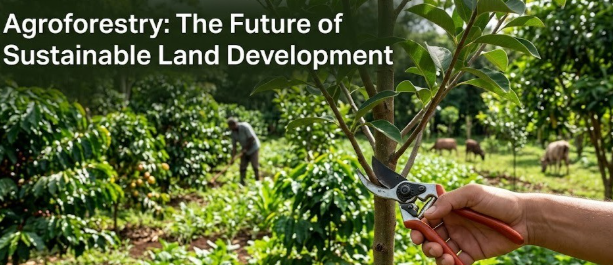
Sustainable investing has moved from niche to mainstream in India. Today’s investors want returns that don’t compromise the planet. Managed farmland uniquely delivers both financial profitability and genuine environmental impact.
What Is Sustainable Investing?
Sustainable investing means allocating capital to businesses or assets that generate positive environmental or social outcomes alongside financial returns. ESG (Environmental, Social, Governance) criteria guide these investments. In India, the sustainable investing market has grown 300% over the past five years.
Why Farmland Is the Ultimate Sustainable Investment
1. Carbon SequestrationTrees and crops absorb carbon dioxide from the atmosphere. A single mature tree sequesters 22 kg of CO2 annually. An acre of agroforestry land can sequester 10-15 tons of CO2 per year, contributing directly to climate change mitigation.
2. Soil RegenerationSustainable farming practices improve soil health:
- Organic farming increases soil organic matter by 1-2% annually
- Crop rotation prevents nutrient depletion
- Cover cropping reduces erosion by 90%
- Composting recycles nutrients naturally
Healthy soil is crucial for long-term food security and filters groundwater, providing clean water.
3. Biodiversity ProtectionFarmland with diverse crops and trees supports:
- Pollinators (bees, butterflies) essential for 75% of food crops
- Beneficial insects that control pests naturally
- Bird populations that maintain ecosystem balance
- Native plant species preservation
Agroforestry farms have 40-60% higher biodiversity than monoculture farms.
4. Water ConservationSustainable farming practices conserve water:
- Drip irrigation reduces water usage by 40-60%
- Tree roots improve groundwater recharge
- Mulching reduces evaporation by 70%
- Organic matter improves water retention
In water-scarce India, this is critical.
5. Reduced Chemical DependencyOrganic and sustainable farming eliminates:
- Synthetic pesticides that contaminate water and harm health
- Chemical fertilizers that degrade soil and pollute waterways
- Herbicides that reduce biodiversity
India’s organic farming market is projected to reach ₹100,000 crores by 2027, driven by health-conscious consumers willing to pay premium prices.
Financial Returns Don’t Suffer
Many investors worry that sustainable investing means lower returns. Farmland proves this wrong:
Premium Pricing for Organic ProduceOrganic products command 20-50% higher prices:
- Organic vegetables: 30-40% premium
- Organic fruits: 25-35% premium
- Organic coffee: 40-60% premium
- Organic spices: 30-50% premium
Government IncentivesSustainable farming qualifies for subsidies:
- Organic certification: 50-75% cost support
- Drip irrigation: 50-60% subsidy
- Solar power: 40% subsidy for farm operations
- Agroforestry: 75-
100% sapling subsidies
Growing Market DemandUrban consumers increasingly prefer organic, sustainably grown food. The middle class willing to pay premium is expanding rapidly.
Measuring Your Environmental Impact
Managed farmland companies now provide impact reports showing:
- Carbon sequestered: Tons of CO2 your farm absorbs annually
- Organic matter added: Soil health improvement metrics
- Water conserved: Liters saved through efficient irrigation
- Biodiversity supported: Number of species thriving on your land
- Chemicals avoided: Pesticides and fertilizers not used
Example: A 2-acre managed farm can sequester 20-30 tons of CO2 annually (equivalent to planting 500 trees), save 100,000 liters of water, and avoid 200 kg of chemical pesticides.
ESG Investing Made Simple
For investors seeking ESG exposure, farmland offers:
- Environmental: Tangible impact on carbon, water, soil, biodiversity
- Social: Supports rural livelihoods, food security, farmer income
- Governance: Transparent operations, verified documentation, regular reporting
Unlike greenwashing in some corporate ESG claims, farmland impact is measurable and genuine.
The Bigger Picture: Food Security
India must feed 1.5 billion people by 2030. Sustainable farmland investment contributes directly to:
- National food security: Increased domestic food production
- Farmer livelihoods: Better income for agricultural workers
- Rural development: Economic growth in rural areas
- Reduced imports: Less dependency on food imports
How to Start Sustainable Farmland Investing
1. Choose Organic-Committed CompaniesSelect managed farmland providers committed to organic/sustainable practices, not just conventional farming.
2. Verify CertificationsLook for:
- Organic certification (India Organic, NPOP)
- Rainforest Alliance certification
- Fair Trade certification
- ISO 14001 (environmental management)
3. Request Impact ReportsReputable companies provide regular sustainability reports showing your environmental contribution.
4. Diversify ImpactInvest in farms practicing:
- Organic farming
- Agroforestry
- Water conservation
- Renewable energy integration
5. Stay EngagedVisit your farm, participate in harvest events, and understand the practices. This connection deepens your commitment.
The Future of Sustainable Investing
As climate awareness grows and regulations tighten, sustainable assets will outperform. Farmland positioned at the intersection of profitability, sustainability, and tangible impact is poised for exceptional growth.
Investing in managed farmland isn’t just about returns—it’s about building a legacy of environmental stewardship while securing your financial future. Every rupee invested contributes to a healthier planet, supporting India’s transition to sustainable agriculture.