
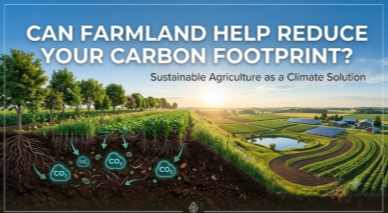
As climate change becomes one of the defining challenges of our time, agriculture is taking on a new role. Beyond producing food and crops, farmland is increasingly being recognized for its ability to capture and store carbon.
This emerging concept is known as carbon farming.
What Is Carbon Farming?
Carbon farming refers to agricultural practices designed to increase the amount of carbon stored in soil, vegetation, and trees. These practices help reduce greenhouse gases in the atmosphere while improving soil health and farm productivity.
Examples include:
- Agroforestry
- Cover cropping
- Reduced tillage
- Organic farming methods
- Tree planting initiatives
Why Carbon Matters
Healthy soils act as natural carbon sinks. When farmers adopt regenerative practices, they increase organic matter in the soil, allowing more carbon to be stored underground.
This creates environmental benefits while improving water retention, soil fertility, and resilience against climate extremes.
The Rise of Climate Assets
Around the world, investors are exploring assets that contribute to climate solutions. Farmland managed with sustainable practices has the potential to become a valuable climate asset due to its carbon sequestration capabilities.
Opportunities in India
India’s diverse agricultural landscape offers significant potential for carbon farming. Regions with agroforestry systems, coffee plantations, and mixed-crop farms can naturally support carbon storage while maintaining productive agricultural operations.
Coffee Plantations and Carbon Storage
Shade-grown coffee systems are particularly effective because they integrate trees with agricultural production. These trees absorb carbon dioxide while supporting biodiversity, improving soil health, and protecting local ecosystems.
Benefits Beyond Carbon
Carbon farming can also:
- Improve soil fertility
- Enhance water conservation
- Increase biodiversity
- Reduce erosion
- Strengthen long-term farm productivity
Looking Ahead
As sustainability becomes a key consideration for investors, farmland is evolving beyond a traditional agricultural asset. It is increasingly viewed as a tool for environmental restoration and climate resilience.