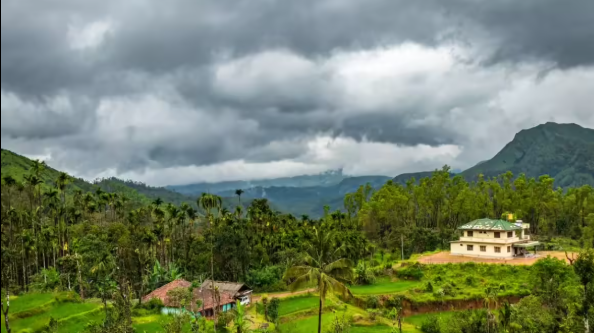
The shade canopy above a Coorg coffee estate is not simply a scenic feature — it is an agricultural management tool that determines the microclimate experienced by the coffee, cardamom, and spice crops growing beneath it. The relationship between canopy density, light penetration, temperature, humidity, and crop performance is one of the most technically nuanced aspects of coffee estate management, and understanding it at a basic level helps investors evaluate whether the canopy management they observe in farm update photographs and during site visits indicates good or poor management practice.
What Canopy Density Means
Canopy density is the proportion of sky covered by shade tree foliage as viewed from the ground — expressed as a percentage. A canopy density of zero percent means full sun, no shade, the coffee plants fully exposed to direct sunlight. A density of one hundred percent means complete shade, no direct sunlight reaching the understorey at any point during the day. Neither extreme is appropriate for Coorg Arabica coffee.
Optimal canopy density for Arabica coffee in Coorg’s conditions is generally considered to be forty to sixty percent — providing sufficient shade to moderate temperature and humidity without denying the coffee plants the light energy they need for photosynthesis and fruit development. This range is not a precise target to be achieved uniformly across the estate but rather a management goal that varies by slope aspect, altitude within the plot, and the age and density of the coffee stand below.
How Canopy Density Creates Microclimate
The shade canopy’s effect on the microclimate beneath it operates through several simultaneous mechanisms. Temperature moderation is the most immediate: a forty to sixty percent canopy reduces peak afternoon temperature in the understorey by three to five degrees Celsius compared to full sun — a reduction that significantly reduces heat stress on coffee plants during Coorg’s warmest months from March to May. This temperature buffering reduces the risk of cherry abortion from heat stress during the critical post-blossom cherry development period.
Humidity maintenance is equally important. The canopy intercepts a portion of incoming solar radiation before it reaches the soil surface, reducing soil evaporation and maintaining a higher relative humidity in the understorey than would exist in full sun. This sustained humidity is what makes Coorg’s agroforestry system suitable for cardamom — one of the world’s most humidity-demanding crops — and what maintains the quality of Arabica coffee by slowing the cherry ripening process in a way that allows more complex flavour compounds to develop.
Wind reduction is a third microclimate effect. The canopy acts as a windbreak, reducing wind speed at the coffee plant level. During the monsoon, strong winds can damage flowering branches and reduce cherry set — a well-managed canopy provides structural protection that reduces this risk.
Signs of Under-Shading in Farm Update Photographs
Under-shading — canopy density below thirty percent — shows specific visual signs. Coffee plants in under-shaded sections develop smaller, thicker, darker leaves as a sun-adaptation response, and the fruit set is often uneven — some branches bearing heavily while others produce poorly. The soil surface between coffee rows in under-shaded sections is typically bare and dry in appearance, with poor weed cover and evidence of moisture loss. Sunscald on coffee cherries — a bleaching or russeting of the cherry skin caused by direct sun exposure — is a visual indicator of inadequate shade.
Signs of Over-Shading
Over-shading — canopy density above seventy percent — produces different problems. Coffee plants in deep shade become etiolated — pale, with elongated internodes and sparse leaf coverage, as the plant prioritises vertical growth toward light rather than fruit production. Fruit set in over-shaded conditions is poor because the plant lacks the photosynthetic output to support heavy cropping. Fungal diseases including coffee leaf rust develop more readily in the damp, airless conditions of a very dense canopy where light and air circulation are both restricted.
The silver oak pruning conducted annually in November is specifically aimed at reducing over-shading — opening the canopy enough to allow adequate light and air while maintaining temperature and humidity moderation. A farm that has not been pruned appropriately will show over-shading symptoms in its coffee stand.
What to Look for in Your Monthly Farm Updates
When reviewing canopy photographs in your monthly update, look for dappled light — the pattern of sunflecks on the ground between coffee plants that indicates approximately forty to sixty percent canopy density. Complete darkness with no sunflecks indicates over-shading; uniform bright light with no shade areas indicates under-shading. Either condition seen repeatedly in monthly updates over several months warrants a specific question to the farm manager about whether canopy management intervention is planned.