
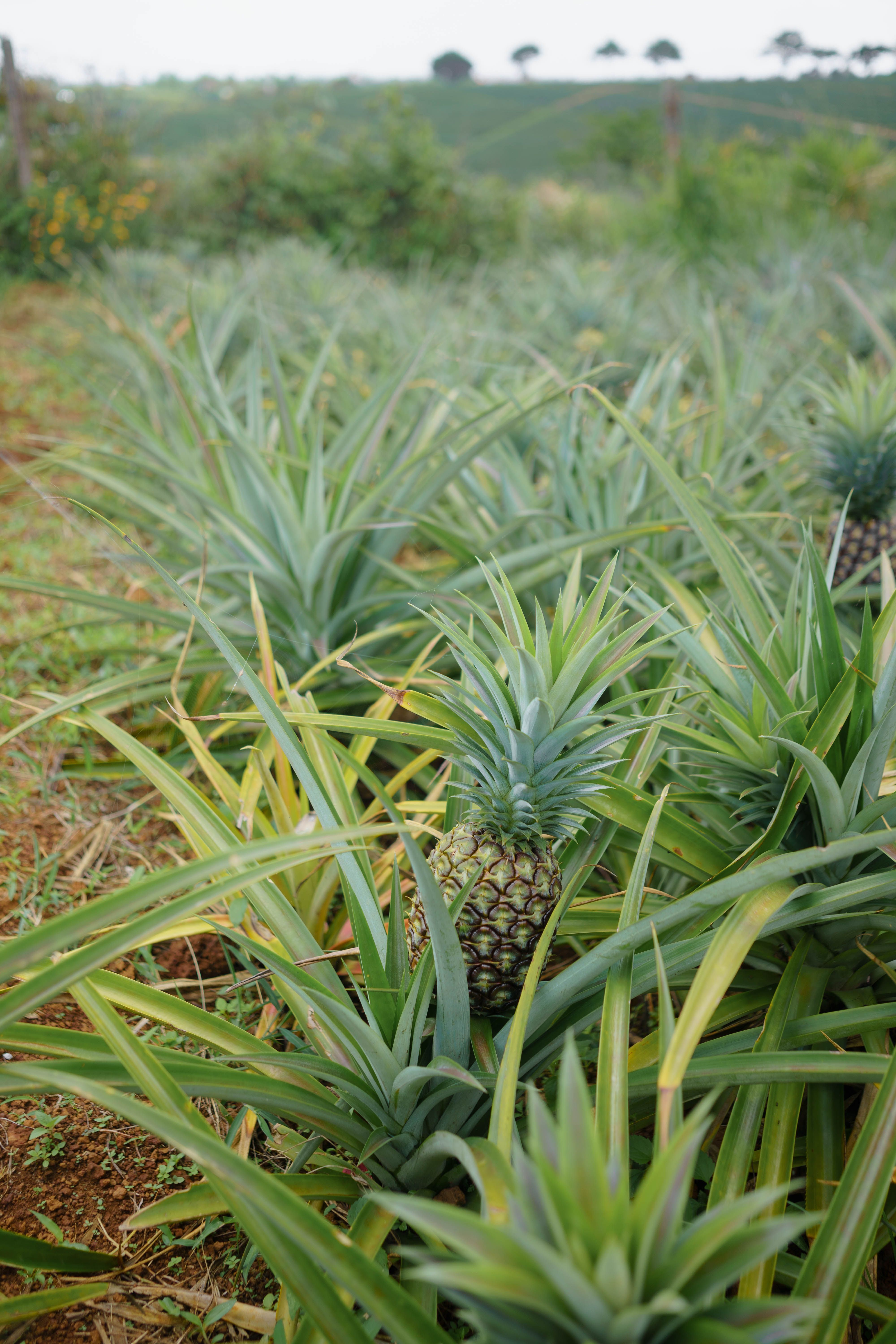
One of the practical challenges of a newly planted agroforestry farmland plot is the income gap — the period between planting and the time when coffee, cardamom, and timber crops reach full productivity. As discussed in our investment timeline post, this gap typically spans three to five years for the main crops to come into meaningful production. Pineapple addresses this gap directly as a fast-maturing, space-efficient intercrop that generates real income during the years when the main crop plantings are still establishing.
Why Pineapple Works as an Intercrop
Pineapple (Ananas comosus) is a low-growing, ground-hugging bromeliad that reaches a maximum height of one to one and a half metres. This compact form makes it an ideal intercrop in the spaces between young coffee plants and timber trees — it utilises the ground-level space that is otherwise unoccupied during the first years before coffee bushes fill the inter-row gaps.
Pineapple’s light requirements are relatively flexible — it can tolerate partial shade from young silver oak and coffee plants without significant yield reduction, making it compatible with the shade structure of a Coorg agroforestry system even as that structure is still developing in the early years.
The Production Timeline
Pineapple planted from crown or ratoon slips (vegetative material from existing plants) produces its first fruit in fourteen to eighteen months from planting — making it one of the fastest main-crop fruit producers available in the tropical climate of Coorg’s lower-to-mid altitude zones. After the first harvest, the plant produces ratoons — side shoots — that become the next generation of fruit-bearing plants, creating a continuous ratoon cycle that extends the planting’s productive life for three to five years from the initial planting.
This timeline means a pineapple intercrop planted in the same season as the main agroforestry crops begins generating income fourteen to eighteen months later — filling the income gap of the main crop establishment period with real, marketable agricultural produce.
Income Potential
Pineapple yields in a managed intercrop setting on Coorg farmland typically range from twelve to twenty tonnes per acre across a first and ratoon crop cycle. At current farm-gate prices of eight to eighteen rupees per kilogram for conventional pineapple, and higher for premium organic or branded supply to urban markets, annual income from a well-managed pineapple intercrop can range from ninety-six thousand to three lakh sixty thousand rupees per acre — a meaningful bridge income during the early establishment years.
As coffee, cardamom, and tree crops mature and fill the inter-row spaces over years three to five, pineapple naturally phases out as the available ground-level light and space reduce. The intercrop has served its purpose — generating income during the establishment gap — and the plot transitions to its mature multi-crop agroforestry configuration without requiring active management of the pineapple exit.
Varieties Suited to Coorg
The most commonly grown pineapple varieties in Karnataka’s Western Ghats districts are Kew (the dominant commercial variety, producing large, sweet fruits suited to fresh market sale) and Queen (a smaller, more aromatic variety with premium positioning in niche markets). At Coorg’s mid-altitude zones (700–1,200 metres), pineapple growth is somewhat slower than at lower altitudes due to cooler temperatures, but fruit quality tends to be higher — firmer flesh and better sugar-acid balance that improves fresh market pricing.
The Management Integration
Pineapple’s management requirements — primarily weed control in the early establishment period, periodic side-dress fertilisation, and harvest at fruit maturity — are managed by Nature N Me’s farm team as part of the overall estate management program on plots where pineapple is included as an intercrop. The crop does not require specialist equipment or separate management infrastructure beyond what the estate team already provides for the main crops.