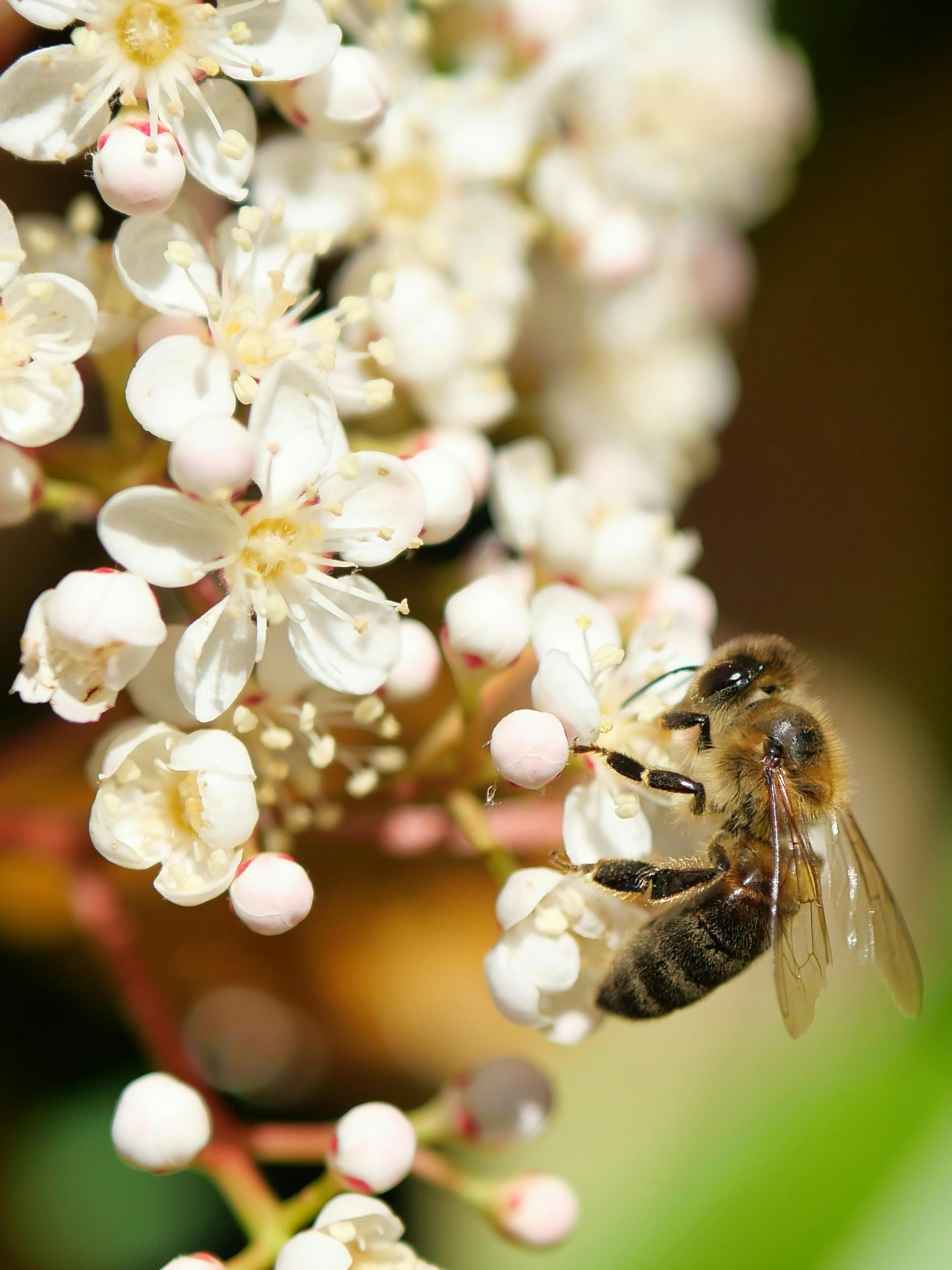
In our earlier post on honey and bee farming in Coorg, the focus was on the managed honeybee — Apis mellifera and Apis cerana — kept in hives and providing both honey income and pollination services. But the pollination story on a Coorg coffee estate is significantly richer than managed honeybees alone. The Western Ghats are home to extraordinary native bee diversity — dozens of wild bee species that provide pollination services on coffee estates, often more effectively than managed honeybees for specific crops, and whose presence is a direct indicator of the ecological health of the farm ecosystem.
The Diversity of Coorg’s Native Bees
The Western Ghats biodiversity hotspot supports an exceptional range of native bee species. Among the most agriculturally significant are the giant rock bee (Apis dorsata), which builds large exposed comb colonies in tree canopies and cliff faces and is an exceptionally efficient pollinator due to its large body size and wide foraging range. The dwarf honeybee (Apis florea) builds small, exposed comb colonies in low shrubs and is an important pollinator for cardamom and other low-growing crops. Stingless bees of the tribe Meliponini — several species of which are found in the Western Ghats — are small, social bees that nest in hollow trees and are among the most efficient pollinators per visit for coffee flowers specifically, due to their foraging behaviour.
Beyond these social bee species, a large diversity of solitary bee species — including Andrena, Halictus, and various carpenter bee species — visit coffee and cardamom flowers and contribute meaningfully to pollination in ways that managed honeybee populations do not fully cover.
Why Native Bees Are Often More Effective Pollinators Than Managed Honeybees
Managed Apis mellifera honeybees, while effective pollinators for many crops, have a specific foraging pattern that does not always optimise pollination for coffee. Coffee flowers produce very little nectar (making them unattractive to nectar-focused honeybees) but substantial pollen. Buzz pollination — where a bee vibrates its flight muscles at a specific frequency to release pollen from coffee flowers — is performed by bumblebees and certain native bee species but not by Apis honeybees. Stingless bees and certain solitary bees, which collect pollen rather than nectar, are often more effective coffee pollinators per flower visit than managed honeybees.
For cardamom, which requires insect pollination and has a specific flower structure suited to certain bee body sizes, native bee diversity provides pollination coverage that a single managed honeybee species cannot fully replicate.
How Farm Management Practices Affect Native Bee Populations
The presence and abundance of native bee species on a Coorg farmland estate is directly influenced by management practices. Organic and low-chemical management — as practiced on Nature N Me’s managed farmland — maintains the floral diversity in the estate understory and hedgerows that provides nesting habitat and alternative forage for native bees throughout the year beyond the brief coffee and cardamom flowering seasons.
Chemical pesticide use — particularly insecticides applied at or before flowering — is the single most damaging practice for both managed and wild bee populations. Estates that use systemic insecticides in the pre-flowering period risk killing or impairing the bee populations that determine their own pollination success. Nature N Me’s integrated pest management approach avoids insecticide application during and around the flowering season specifically to protect both managed and native pollinators.
Maintaining intact canopy with hollow trees available for stingless bee nesting, preserving flowering understory plants between crop rows, and avoiding burning of crop residues (which destroys bee nesting sites) all contribute to a farm ecosystem that supports native bee diversity.
The Biodiversity-Yield Connection
A Coorg farmland plot with high native bee diversity is — all else being equal — a more productive farm than an equivalent plot with low native bee diversity, because better pollination produces higher cherry set per flower, which directly determines yield. Investing in management practices that support native bee populations is therefore not merely a conservation choice but a direct agricultural productivity decision with measurable income implications.
This is the deeper logic of the sustainable, organic-aligned management approach that Nature N Me practices: the ecological health of the farm and its agricultural productivity are not in tension — they are directly and positively correlated. A biodiverse, chemically light estate with abundant native pollinators outperforms a chemically intensive monoculture on the metric that ultimately matters most — how much the farm produces and earns.