Among the future income streams being discussed in agricultural investment circles, carbon credits from agroforestry and plantation land have attracted increasing attention globally — and Coorg farmland, with its dense multi-layered tree cover, coffee canopy, and organic management practices, is potentially well-positioned to participate in this emerging market. Understanding where the carbon credit opportunity stands today, what is genuinely realistic in the near term, and what farmland owners can do to prepare helps investors think clearly about this dimension of their asset.
What Carbon Sequestration Means on a Coorg Farmland Plot
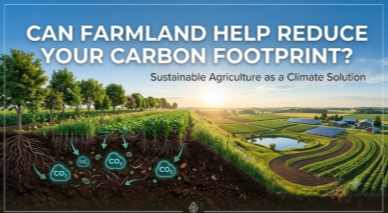
Trees and soil absorb and store carbon dioxide from the atmosphere — this is sequestration. On a Coorg agroforestry farmland plot, sequestration happens across multiple layers simultaneously. The silver oak canopy trees absorb carbon through photosynthesis and store it in their woody biomass — a well-established canopy of silver oak trees on a mature coffee estate represents significant accumulated carbon storage. Coffee bushes themselves contribute, as do any teak, sandalwood, or fruit trees planted on the plot. Healthy organic soil — maintained through Nature N Me’s mulching, composting, and no-till practices — stores carbon as soil organic matter, a sequestration pool that is increasingly recognised in carbon accounting frameworks.
A one-acre agroforestry plot in Coorg with mature canopy and actively managed coffee, spice, and timber crops may sequester two to five tonnes of carbon dioxide equivalent per year, depending on canopy density, tree age, soil management, and specific crop composition. Over a decade, a five-acre plot could accumulate fifty to two hundred and fifty tonnes of sequestered carbon — a meaningful quantity in carbon market terms if it can be certified and verified.
The Voluntary Carbon Market: Where It Stands
Carbon credits are generated through voluntary carbon market mechanisms where sequestration is independently verified by accredited certification bodies — the most recognised international standards include Verra’s Verified Carbon Standard (VCS) and the Gold Standard. These credits are purchased by companies and individuals seeking to offset their own emissions on a voluntary basis.
The global voluntary carbon market has grown significantly and become increasingly sophisticated, with better standards, more transparent pricing, and growing corporate demand driven by net-zero commitments. However, it has also experienced credibility challenges — some carbon offset projects have faced criticism for overstating sequestration, impermanence risks, and inadequate additionality demonstration.
India’s voluntary carbon market infrastructure is still developing. BEE (Bureau of Energy Efficiency) operates a domestic carbon credit trading mechanism under India’s carbon market framework, and several international standards have active projects in Indian agroforestry and forestry contexts. However, the process of certifying agroforestry land for carbon credits — project development, verification, registry listing, and credit issuance — is currently complex, expensive, and better suited to aggregated portfolios of land (across multiple owners) than to individual small plots.
What Is Realistic for Individual Coorg Farmland Investors Today
For an individual investor owning two to ten acres of Coorg farmland, attempting to independently certify and sell carbon credits today would face significant challenges: high project development costs, minimum acreage requirements for most certification methodologies, and the administrative complexity of maintaining monitoring, reporting, and verification (MRV) systems over multi-year crediting periods.
What is more realistic in the near term is aggregated carbon project development — where a managed farmland operator like Nature N Me aggregates the carbon sequestration across multiple investor plots into a single project large enough to justify certification costs and meet methodology requirements. This aggregation model has been used successfully in agroforestry carbon projects elsewhere in India and internationally.
What Farmland Owners Can Do Now
The most important thing investors can do today to preserve optionality on future carbon credit participation is maintain management practices that support credible sequestration claims — organic and low-chemical farming, maintaining and expanding tree cover, soil health practices that build organic matter, and clear documentation of planting and management activities over time. These practices simultaneously improve agricultural productivity, align with Nature N Me’s sustainable farming approach, and create the documentation foundation that carbon certification methodologies require.
Nature N Me is actively monitoring developments in India’s agroforestry carbon market and will communicate with investors as credible aggregated credit opportunities become feasible for our managed farmland portfolio. This is an emerging upside — real in potential, developing in mechanism — that represents genuine optionality for Coorg farmland investors thinking about the full range of value their estate may generate over a fifteen to twenty year horizon.