
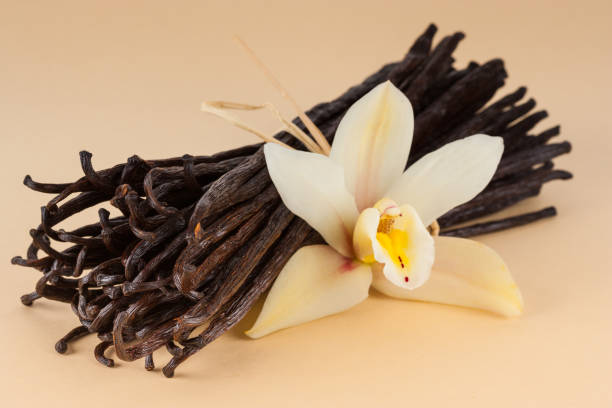
Among all the spice crops discussed in the context of Coorg farmland investment — cardamom, pepper, coffee — one stands apart for the extraordinary premium it commands in global markets: vanilla. Vanilla planifolia is the world’s second most expensive spice by weight, surpassed only by saffron, and its cultivation in the Western Ghats is a genuine but largely unexplored opportunity for managed farmland investors who are thinking about premium income diversification.
Why Vanilla Commands Such Extraordinary Prices
Vanilla’s price is a function of its growing difficulty and processing complexity. The vanilla orchid is a climbing vine that produces flowers lasting only a single day. In its native Mexico, vanilla was pollinated by specific local bee species — outside Mexico, every flower must be pollinated by hand, one by one, on the single day it opens. After hand pollination, vanilla pods take 9 months to develop, followed by a 6-month curing process before the final product is ready for market.
This labour intensity, combined with consistent global demand from the food, fragrance, and pharmaceutical industries, keeps vanilla prices extraordinarily high. Indian vanilla has sold at ₹40,000–60,000 per kilogram of cured beans in recent years — a price point that makes even cardamom look modest by comparison.
Why the Western Ghats Can Grow Vanilla
Vanilla is native to the tropical forests of Mexico and Central America — but it has adapted well to similar climates. The Western Ghats’ combination of warm temperatures (20–32°C), high humidity (70–90%), well-distributed rainfall, partial shade from forest and coffee canopies, and rich organic soil creates growing conditions that closely match vanilla’s requirements.
Vanilla cultivation in Kerala — Coorg’s neighbouring state — has a several-decade history, with Karnataka’s Western Ghats districts, including Coorg, demonstrating comparable growing potential. The crop is not yet widely cultivated in Kodagu, which itself represents an early-mover opportunity for investors who incorporate it into their agroforestry planting mix now.
How Vanilla Integrates Into an Agroforestry System
Vanilla is a climbing vine — like pepper, it grows vertically up a support structure rather than occupying its own ground area. Silver oak, areca nut, and even coffee shade trees can serve as hosts. This means vanilla can be added to an existing agroforestry plot without requiring dedicated land area, using the same vertical integration logic as pepper.
The differences from pepper are significant, however. Vanilla requires hands-on management at flowering time — daily monitoring and hand pollination during the 2–4 week flowering window each year. This is not a purely passive crop. It requires skilled agricultural labour who are trained in the hand-pollination technique and committed to the intensive period when flowers open.
On a managed farmland plot, vanilla cultivation is therefore dependent on the agricultural management team having the expertise and capacity to execute hand pollination reliably. This is a specialised skill that Nature N Me evaluates on a plot-by-plot basis before recommending vanilla as part of a planting plan.
The Investment Timeline and Income Profile
Vanilla vines begin flowering 3–4 years after planting. Once in production, a well-managed vine produces 2–4 kg of green beans per year, which cure down to approximately 0.4–0.8 kg of dried beans. At ₹40,000–60,000 per kg of cured beans, a single mature vine produces ₹16,000–48,000 per year.
On an agroforestry plot with 50–100 vanilla vines — a realistic integration on 2–3 acres with suitable host trees — annual vanilla income at maturity can range from ₹8–48 lakhs, making it the highest per-vine income crop available in the Western Ghats context.
These numbers are subject to more variability than coffee or cardamom — vanilla’s hand-pollination dependency means poor management in the flowering window significantly reduces pod set. But for investors whose management team has vanilla expertise, the income upside is exceptional.
Vanilla as a Differentiation Layer
Even at modest scale — 20–30 vines on an otherwise coffee-and-spice farmland plot — vanilla adds a differentiated premium income component that most managed farmland investments in Coorg do not offer. It also adds a compelling story to the farm’s provenance: a Coorg estate growing coffee, cardamom, pepper, and hand-pollinated vanilla is a genuinely distinctive agricultural asset.
To discuss which available Nature N Me plots are suitable for vanilla integration and what the management requirements involve, contact us at naturenme.in or WhatsApp +91 98805 21637.