
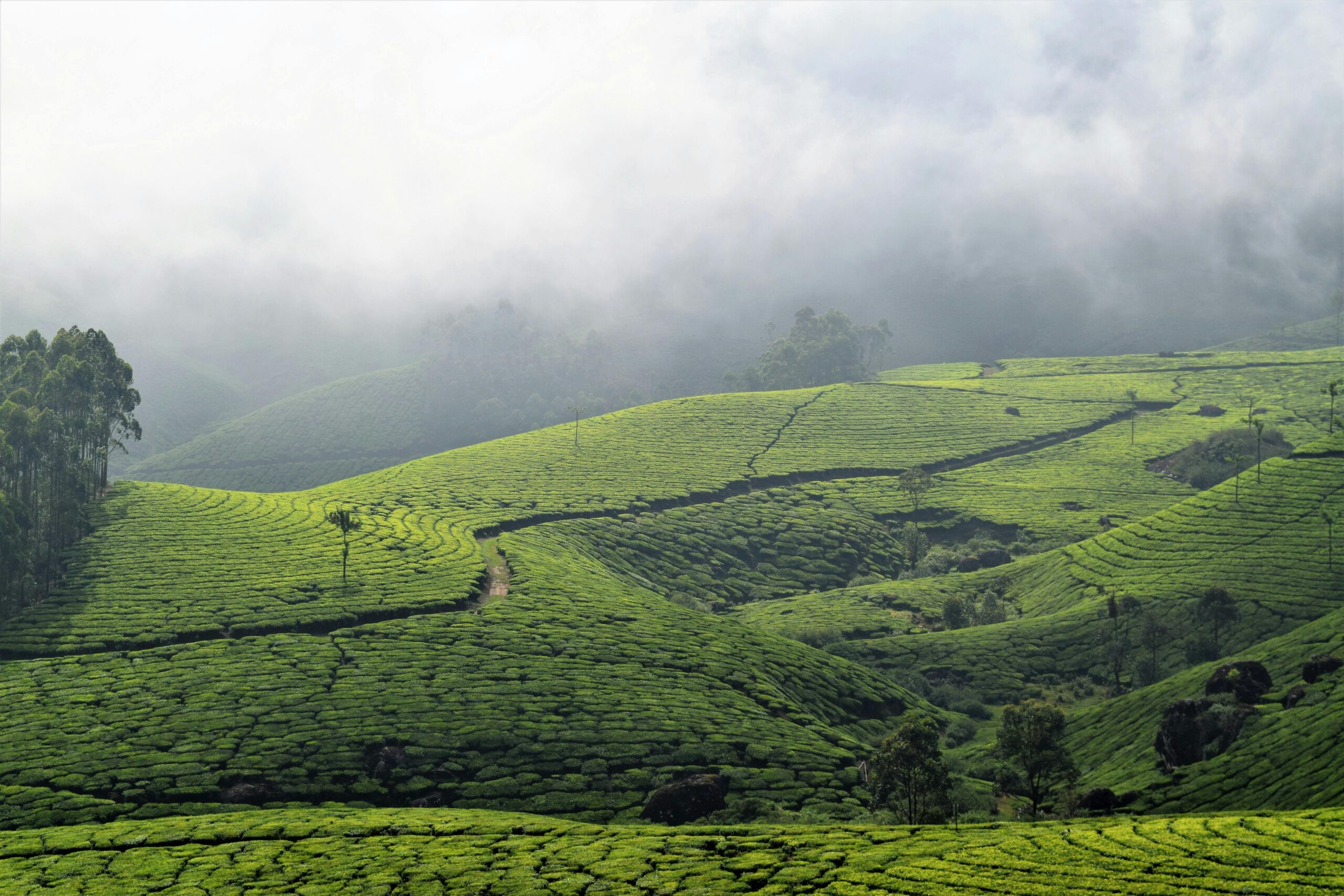
Climate change is the agricultural risk that most Indian farmland investors are not yet systematically thinking about — but probably should be. As rainfall patterns become less predictable, groundwater depletion accelerates in drought-prone states, and extreme weather events become more frequent, the question of where farmland can remain productive over a 10–20 year horizon is increasingly relevant.
Coorg‘s location within the Western Ghats gives it a structural climate stability advantage that most Indian agricultural regions cannot match.
What Makes the Western Ghats a Climate Buffer
The Western Ghats are a 1,600-kilometre mountain range running parallel to India’s western coastline, acting as a natural barrier that forces moisture-laden Arabian Sea winds upward, causing heavy orographic rainfall on the windward slopes — which is precisely where Coorg sits. This physical geography is not affected by year-to-year climate variability in the same way that rain-shadow plateau regions are.
Even in years when the Indian monsoon is classified as below-normal nationally — meaning aggregate rainfall across India is lower than average — the Western Ghats typically continue to receive substantial rainfall because their orographic rainfall mechanism is driven by the physical geometry of the mountains and the Arabian Sea, not by large-scale monsoon dynamics alone.
Coorg’s Rainfall Resilience: The Data
Looking at Kodagu district rainfall records over the past 20 years, the range of annual variation is remarkably narrow compared to Deccan plateau agricultural districts. While Marathwada in Maharashtra or Rayalaseema in Andhra Pradesh have experienced rainfall deficits of 40–60% in drought years, Kodagu’s worst recent years have seen deficits of 15–20% from the annual average — still substantial rainfall by any national comparison.
This resilience means that crop failures from pure rainfall deficit are significantly less likely in Coorg than in any plateau or semi-arid agricultural region. Coffee, cardamom, and pepper — all high-moisture crops — can withstand a 15–20% rainfall reduction in a given year without catastrophic yield loss, particularly with the supplemental irrigation systems that Nature N Me installs on managed farmland plots.
The Forest Cover Stabilisation Effect
Coorg has among the highest forest cover of any district in Karnataka — over 40% of the district’s area is forest or dense tree cover. This forest cover has several climate-stabilising effects for agricultural land: it maintains local humidity through transpiration even during dry periods, it moderates temperature extremes (reducing the heat stress that is damaging crops in other parts of India), it maintains soil moisture through leaf litter and root systems, and it supports the hydrological cycle that feeds the district’s perennial streams and groundwater.
As agricultural land adjacent to forest cover benefits from this microclimate buffering, managed farmland in Coorg’s forest-adjacent zones is better insulated from climate stress than open, exposed agricultural land in deforested regions
Comparing Risk Profiles: Coorg vs Other Farming Regions
Maharashtra’s Vidarbha cotton belt, Rajasthan’s groundwater-dependent wheat zones, and coastal Andhra’s cyclone-exposed rice paddies all face climate risks that are already materialising — crop failures, farmer distress, and land value stagnation in affected zones. Coorg’s risk profile is fundamentally different: its climate stability is geologically and physically rooted, not dependent on rainfall distribution that is sensitive to large-scale climate shifts.
This does not mean Coorg is immune to climate change — no region is. But the degree of resilience, and the physical mechanisms providing that resilience, make it one of India’s most defensible long-term agricultural investment locations from a climate risk perspective.
The Long-Term Investment Implication
For investors thinking about a 10–20 year farmland holding, climate resilience is not a secondary consideration — it is central to whether the asset will remain productive and valuable over the holding period. Farmland that becomes increasingly difficult to farm due to water scarcity, heat stress, or rainfall unpredictability loses both agricultural income and capital value.
Coorg farmland in the Western Ghats, backed by orographic rainfall, dense forest cover, and perennial water sources, is as defensively positioned against climate risk as any Indian agricultural land can be.