The word “organic” is often associated with premium pricing in grocery stores — but for farmland investors in Coorg, organic and sustainable farming practices are not just a marketing label. They are a fundamental protection for the long-term value and productivity of the agricultural asset you own.
Understanding why Nature N Me uses organic and low-chemical farming methods — and what it means for your investment — helps clarify one of the most important but least discussed aspects of managed farmland quality.
The Problem with Chemical-Intensive Farming
Conventional high-input farming — heavy use of synthetic fertilisers, pesticides, and herbicides — produces strong short-term yields but creates serious long-term problems. Synthetic nitrogen fertilisers acidify soil over time, reducing its ability to support crops without ever-increasing chemical inputs. Pesticide-dependent farming eliminates beneficial insects (including pollinators critical to coffee and cardamom yields) and disrupts the soil microbiome. Herbicide use kills ground cover plants that protect soil from erosion and retain moisture between rain events.
In the Western Ghats context, these problems are amplified. Coorg’s steep terrain means chemical runoff reaches streams and water bodies rapidly. Regulatory and social pressure on chemical use in ecologically sensitive zones is increasing. Buyers of premium coffee and spices are increasingly demanding certified sustainable sourcing — and chemical-heavy farms are excluded from these premium market channels.
What Organic Farming Means for Soil Health
Healthy soil is the foundation of productive farmland. In organic and sustainable farming systems:
Compost, vermicompost, and green manure replace synthetic fertilisers — feeding soil microorganisms that break down organic matter into plant-available nutrients naturally. Cover crops and mulching protect soil between growing seasons, retaining moisture and preventing erosion. Intercropping and agroforestry create natural nutrient cycling — leaf litter from shade trees decomposes into the soil, improving fertility year after year.
The result is soil that becomes richer and more productive over time — not depleted and increasingly dependent on expensive inputs. A farm managed organically for 10 years is a fundamentally better asset than a chemically farmed plot of equivalent area.
The Premium Market Access Advantage
Coorg’s specialty coffee market rewards organic and sustainable farming practices directly. Roasters and exporters who pay premium prices for estate-grown Arabica increasingly require documentation of sustainable practices. Third-wave coffee companies sourcing directly from Indian estates conduct farm audits and prioritise chemical-free operations.
Similarly, cardamom and pepper from certified organic farms in Coorg command a meaningful price premium — 20–40% above conventionally grown equivalents — in domestic premium markets and export channels. This premium directly increases the crop income component of your farmland returns.
Protecting the Western Ghats Ecosystem
Coorg sits within the Western Ghats biodiversity hotspot — one of the world’s 36 most biologically diverse regions. The health of this ecosystem directly affects farmland productivity. The insect pollinators, birds, and soil organisms that make Coorg’s agroforestry farms productive exist because the surrounding ecosystem remains intact.
Chemical-intensive farming erodes this ecological foundation. Organic and sustainable farming practices preserve it — keeping your farm embedded in a functioning ecosystem rather than isolated from it.
How Nature N Me Manages Soil and Crop Health
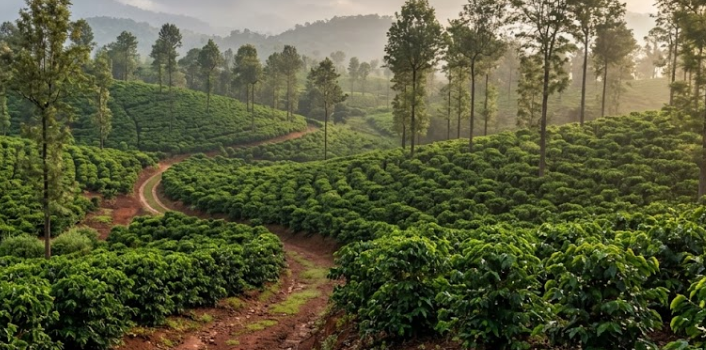
Nature N Me‘s agricultural practices on managed farmland plots in Coorg and Madikeri include regular soil testing to monitor nutrient levels and pH, application of organic compost and bio-inputs rather than synthetic fertilisers, integrated pest management — using natural predators, botanical extracts, and physical barriers before resorting to any chemical intervention, mulching of coffee rows to retain soil moisture and suppress weeds, and canopy management to maintain optimal light and humidity balance for coffee and spice crops below.
These practices cost more in labour than blanket pesticide spraying or synthetic fertiliser application — but they build asset value rather than degrading it.
Your farmland in Coorg is not just a financial instrument. It is a living ecosystem. The way it is managed determines whether it becomes more valuable and productive with each passing year — or gradually less so. Organic, sustainable management is the investment in that trajectory.