
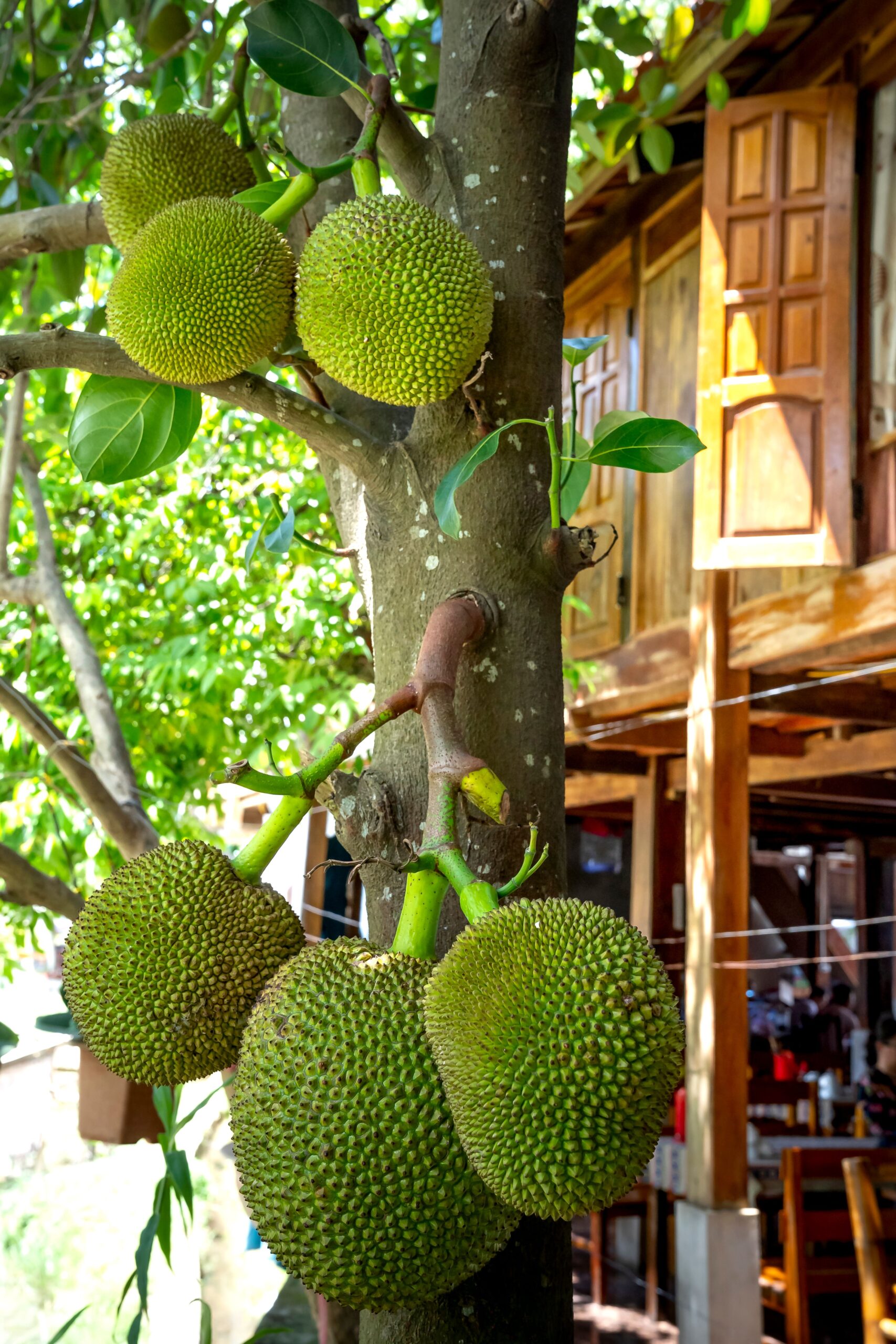
When investors think about income from Coorg farmland, coffee, cardamom, and pepper naturally dominate the conversation — they are the region’s signature cash crops. But a significant and often overlooked income layer on well-designed agroforestry plots is fruit: specifically, mango and jackfruit, both of which grow abundantly in Coorg’s warm, humid climate and contribute meaningfully to annual farm income.
Why Fruit Trees Belong in a Coorg Agroforestry System
Mango (Mangifera indica) and jackfruit (Artocarpus heterophyllus) are native to the Western Ghats and have been grown in Kodagu for centuries. They are not exotic additions to a Coorg farm — they are part of the traditional agroforestry landscape, planted by estate owners for generations alongside coffee and spice crops.
From an agroforestry design perspective, fruit trees serve multiple functions simultaneously. They occupy the mid-to-upper canopy layer, providing partial shade for coffee bushes below. Their deep root systems access water from lower soil horizons, reducing competition with shallower-rooted crops. Their leaf litter and fallen fruit contribute to soil organic matter. And crucially, they produce a harvestable commercial crop every year for 30–50 years once mature.
Mango: Income from Year 5
Grafted mango varieties planted on a Coorg farmland plot begin bearing fruit from year 3–4, with commercial quantities from year 5 onwards. Well-known cultivars suited to Coorg’s climate — Alphonso, Totapuri, Banganapalli, and local varieties — produce 50–200 kg of fruit per tree at maturity, depending on the variety and management.
At ₹30–80 per kg for farm-gate mango sales (higher for premium varieties to urban buyers), a single mature mango tree on your farmland generates ₹1,500–16,000 per season. With 20–40 mango trees per acre, the annual mango income from one acre can reach ₹30,000–6,40,000 depending on variety mix, tree maturity, and market.
Mango has a strongly seasonal harvest window (March to June) — which falls outside the main coffee and cardamom harvest period (December to February), distributing farm income more evenly across the calendar year
Jackfruit: A Quietly Valuable Crop
Jackfruit is often underestimated as a commercial crop, but this is changing rapidly. India’s food processing sector has discovered jackfruit — raw jackfruit is used as a meat substitute, mature jackfruit bulbs are consumed fresh or processed, and jackfruit chips and preserves are a growing market.
A mature jackfruit tree produces 20–100 fruits per season. Individual fruits weigh 5–20 kg each. At ₹20–40 per kg for bulk sales, or ₹60–100 per kg for organic jackfruit sold to premium buyers, a single tree generates ₹2,000–80,000 per season depending on yield and market channel.
Jackfruit trees are extremely low-maintenance — they require minimal irrigation, are naturally pest-resistant, and produce for 50–100 years. Their presence on a Coorg agroforestry plot is a highly efficient income addition relative to the management effort they require.
Other Fruit Species Worth Knowing
Beyond mango and jackfruit, Coorg’s climate supports a range of other commercially viable fruit crops: avocado (growing rapidly in demand in Indian urban markets), pineapple (short-cycle crop between tree rows), banana (quick income in early farm years before trees mature), and passion fruit (climbing vine, similar integration logic to pepper).
Nature N Me‘s planting plans for managed farmland plots include fruit species selection appropriate to the specific plot’s altitude, soil type, and existing canopy structure.
Fruit Income in the Context of Total Farm Returns
Fruit income on a well-designed Coorg agroforestry plot typically contributes 15–25% of total annual crop income — a meaningful addition to coffee, cardamom, and pepper revenues. More importantly, the harvest seasonality of fruit crops (primarily February to June) fills the income gap between the November-January spice and coffee harvests — smoothing the annual income curve.
All fruit income from your Coorg farmland is agricultural income — 100% exempt from income tax under Section 10(1) of the Income Tax Act, like all other crop income from the same plot.
To understand the specific fruit species composition on available Nature N Me plots and their income projections, visit naturenme.in or WhatsApp +91 98805 21637.