
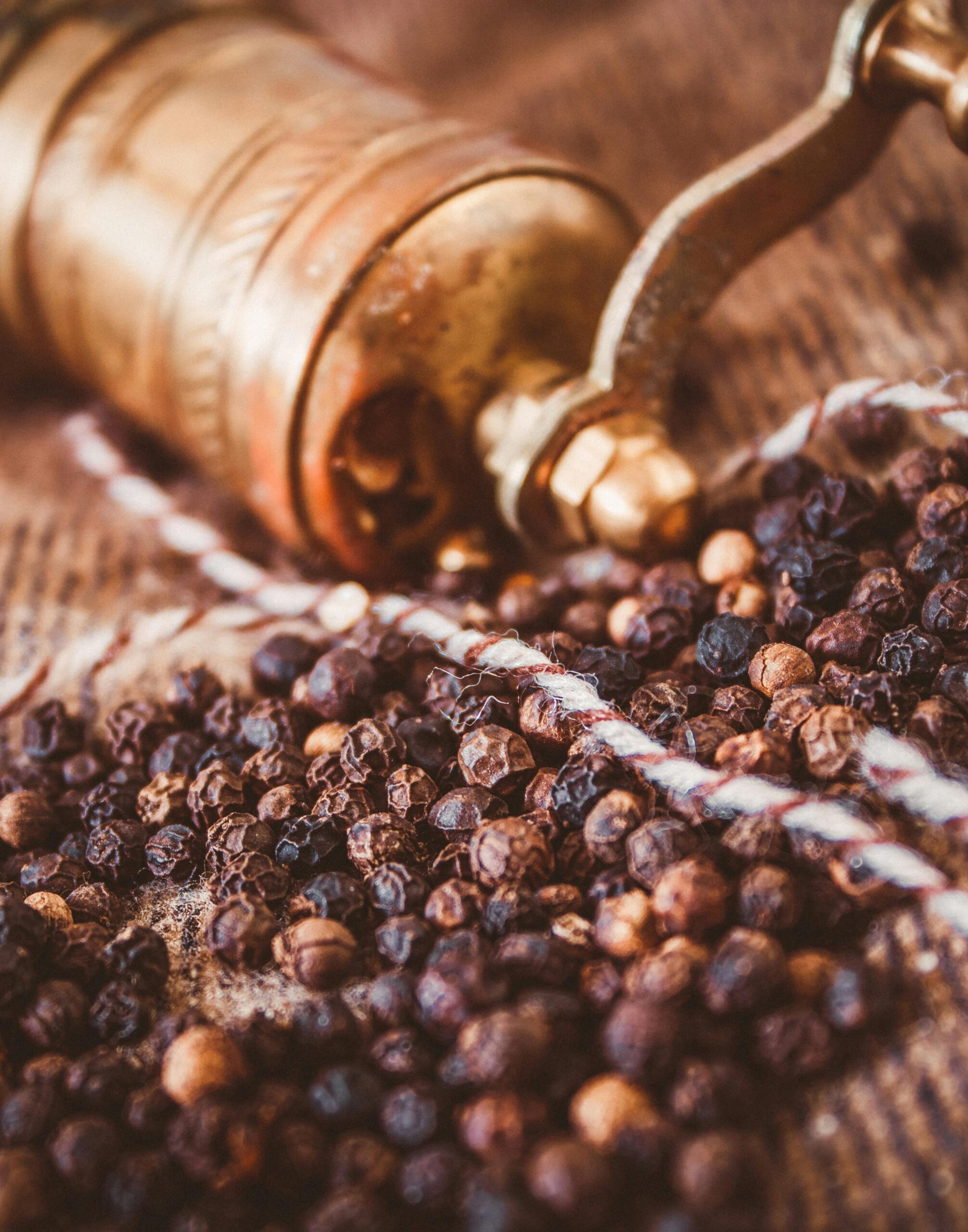
If cardamom is the Queen of Spices and coffee is Coorg’s most famous crop, black pepper — Piper nigrum — is the unsung workhorse that quietly generates significant income on well-managed farmland across Kodagu. Known globally as the King of Spices, black pepper is one of the most widely traded agricultural commodities in the world, and Coorg’s climate and existing farm infrastructure make it one of the easiest high-value crops to integrate into a managed agroforestry plot.
How Pepper Grows on Coorg Farmland
Pepper is a climbing vine — it does not need its own dedicated land area. Instead, it grows vertically up the trunks of existing shade trees already planted on agroforestry farmland: silver oak, areca nut, or teak all serve as natural support structures. This means pepper cultivation adds virtually zero land cost to a Coorg farmland investment — it uses vertical space that is already occupied by trees with other agricultural functions.
Each pepper vine, once established and climbing a mature shade tree, can produce 2–4 kg of dried pepper per year. A single agroforestry acre in Coorg can support 40–80 pepper vines climbing its shade trees, producing 80–320 kg of dried pepper annually from that one acre.
Pepper Prices and Income Potential
Black pepper prices in India have ranged from ₹350 to ₹700 per kg at the farm gate over the past three years, with quality Malabar-type pepper from Karnataka and Kerala commanding the upper end of that range. At current prices:
80–320 kg of dried pepper per acre per year at ₹400–600 per kg generates ₹32,000–1,92,000 per acre annually from pepper alone. On a 5-acre plot with well-established pepper vines, this translates to ₹1.6–9.6 lakhs per year — entirely tax-free as agricultural income.
Pepper prices are influenced by global supply from Vietnam (the world’s largest producer) and domestic demand from India’s food processing sector. Coorg and Kerala pepper hold a quality premium over Vietnamese pepper in premium domestic markets due to their essential oil content and flavour profile.
The Planting and Maturity Timeline
Pepper vines planted from cuttings take 2–3 years to begin producing commercially. Full production is reached by year 4–5 and continues for 15–20 years with proper management. This timeline aligns well with coffee on the same plot — both crops come into full production in roughly the same period, creating synchronised income growth across the farm.
Nature N Me‘s agricultural management includes pepper vine planting, training onto host trees, seasonal fertilisation, and harvest management. Pepper is typically harvested from December to February alongside coffee, making the two crops operationally efficient to manage together.
Why Pepper Suits the Agroforestry Model Perfectly
Unlike a crop that requires dedicated rows, beds, or separate irrigation, pepper integrates invisibly into a working coffee and timber estate. It adds income without adding land cost, uses existing infrastructure (shade trees as support), is harvested in the same season as coffee (reducing labour costs), and improves the biodiversity and pest-resistance of the farm ecosystem.
For investors evaluating the income potential of a managed farmland plot in Coorg, the presence of established pepper vines is a meaningful indicator of both agricultural quality and near-term income potential. Always ask a managed farmland operator specifically how many pepper vines are on any plot under consideration.