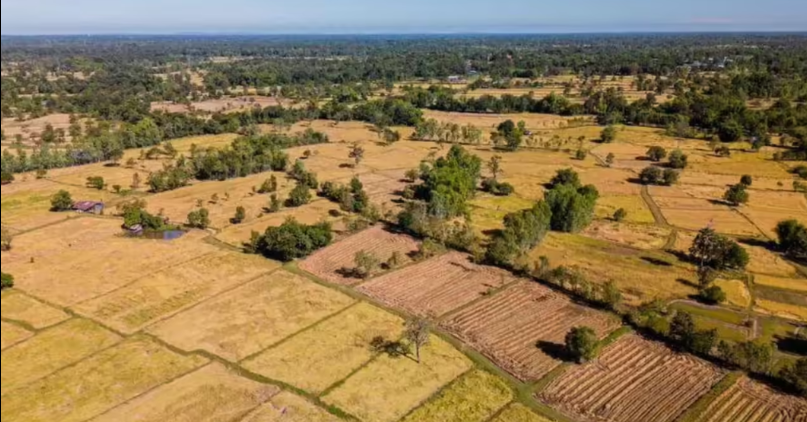
In India’s financial culture, joint family wealth management has deep roots. Decisions about property, investment, and legacy are often made collectively — between siblings, across generations, or among extended family members who pool resources for major purchases. Managed farmland in Coorg is increasingly being structured as exactly this kind of joint family asset — and the model works remarkably well.
Why Farmland Lends Itself to Joint Family Ownership
Unlike a flat in Bangalore — where joint ownership can create practical complications around usage, rental income distribution, and sale decisions — agricultural farmland in Coorg has a natural fit with joint family structures:
Multiple family members can visit the farm at different times, each enjoying it as a personal retreat. Income from crops is distributed according to ownership share — simple, transparent, and directly linked to land productivity. The asset appreciates in a way that benefits all co-owners equally. It is a tangible asset that family members across age groups can relate to — from parents who want a retirement retreat to adult children who see it as a portfolio diversifier.
How Joint Ownership Is Legally Structured
In Karnataka, agricultural land can be co-owned by up to four individuals on a single registered sale deed. Each co-owner’s name and ownership share is recorded in the sale deed and subsequently in the RTC and mutation register.
For larger families or investment groups, a single larger plot can be sub-divided into individual survey numbers — each owned independently — while sharing the same farm infrastructure and management. Nature N Me can advise on the most appropriate legal structure based on family size and investment amount.
The Sibling Investment Model
One common pattern Nature N Me sees: two or three siblings in Bangalore or different cities — often professionals in their 30s and 40s — pool their resources to purchase 5–10 acres of managed farmland in Madikeri. Each might contribute ₹10–15 lakhs, arriving at a combined investment of ₹30–45 lakhs that purchases a meaningful estate.
The benefits multiply: crop income is shared proportionally, visits to the farm become family trips, the management burden is shared across siblings, and the land provides a tangible connection between families spread across different cities or countries.
Parent-Child Investment as an Estate Planning Tool
Another model gaining traction: parents in their 50s and 60s co-invest with adult children, explicitly framing the purchase as an estate planning instrument. The parents may be seeking a retirement retreat and tax-free income; the children are building a long-term appreciating asset. Legal title can be structured with both names, or parents can purchase in their names with a clear intention to transfer via gift deed or will.
Agricultural land in Karnataka can be gifted or bequeathed under standard inheritance laws. Working with a legal advisor to structure the transfer cleanly is advisable — Nature N Me can facilitate introductions to appropriate legal professionals.
Group Investment Among Friends and Colleagues
Beyond family, groups of friends — particularly colleagues from Bangalore’s tech sector — are increasingly co-investing in Coorg farmland. A group of four colleagues contributing ₹10 lakhs each can purchase and manage a 5–8 acre estate collectively. Farm visits become group trips. Crop income decisions are made collectively. The social dimension of the investment adds an element that no stock portfolio can replicate.
For group investments, Nature N Me recommends formalising the co-ownership arrangement with a simple co-ownership agreement drafted by a lawyer — outlining decision-making processes, income distribution, and what happens if one co-owner wishes to exit.
The Retreat Benefit for Joint Investors
A joint family farmland in Coorg is not just a financial asset — it is a shared space. For families dispersed across Bangalore, the US, the Middle East, or Singapore, a farmland in the Western Ghats becomes a point of reunion. Festivals, school holidays, retirement visits — the farm gives extended families a reason to gather somewhere genuinely beautiful rather than a hotel or someone’s flat.
This intangible value — a physical home for the family in one of India’s most scenic regions — is something no return percentage can fully capture. But it is real, and for many families, it is as important as the financial returns.