
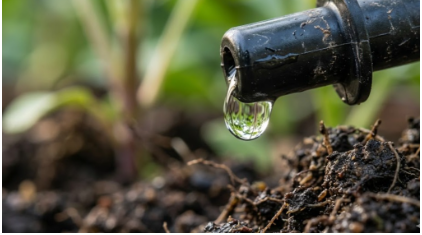
If there is one resource that defines whether agricultural land is a sound long-term investment, it is water. Land without reliable water is land without reliable income. It is the single most important due diligence factor that many first-time farmland investors overlook — and it is the factor that most clearly separates Coorg and Madikeri from other agricultural investment regions in India.
Coorg’s Rainfall: The Numbers
Kodagu district receives an average annual rainfall of 2,500–3,500 mm — among the highest of any agricultural district in India. Bangalore receives approximately 970 mm of annual rainfall. Pune receives approximately 760 mm. Mumbai receives approximately 2,200 mm, but almost entirely across four monsoon months. Coorg receives 2,500–3,500 mm, distributed across two monsoon seasons — southwest and northeast — with additional winter mist and dew contributing to soil moisture year-round.
This is not incidental. It is the geological and climatic reason Coorg produces some of India’s finest Arabica coffee, which requires consistent moisture, humidity, and temperature stability that very few Indian regions can provide.
Perennial Streams: The Unseen Asset
Beyond rainfall, Coorg’s topography ensures that water does not simply run off the landscape — it is held in hills, absorbed by laterite soil, and released slowly through hundreds of perennial streams that flow year-round. The Cauvery River and its major tributaries, including the Harangi, Lakshmantirtha, and Sauparnika, all originate in the Coorg hills.
Many agricultural plots in Coorg and Madikeri have a perennial stream or spring within or adjacent to the property boundary. This provides year-round water for irrigation without dependence on monsoon timing, gravity-fed water channels that have functioned on Coorg estates for over a century, and natural replenishment of bore wells and open wells on the property.
Nature N Me selects farmland plots specifically based on water availability. Every plot is evaluated for perennial stream access, bore well potential, and proximity to natural springs before it is offered to investors.
Why Water Security Is a Growing Investment Factor
India is facing a deepening agricultural water crisis in many states. Groundwater depletion in Maharashtra, Rajasthan, and parts of Karnataka’s northern districts has made farming increasingly dependent on expensive irrigation infrastructure and uncertain monsoons. The water table in many Deccan plateau agricultural regions has dropped dramatically over the past two decades.
Coorg is the exception. The Western Ghats act as a natural water tower — capturing monsoon moisture, holding it in dense forests and laterite geology, and releasing it slowly through streams and springs. Climate scientists consistently identify the Western Ghats as one of India’s most water-secure biodiversity hotspots.
For farmland investors thinking about 10–20 year holding periods, water security is not a nice-to-have — it is the foundation of whether the asset will remain productive and valuable. Coorg farmland clears this test decisively.
Irrigation Infrastructure on Nature N Me Plots
Beyond the natural water advantage, Nature N Me’s agricultural team installs and maintains drip irrigation systems for efficient water delivery to coffee and fruit trees, water storage tanks and check dams where relevant to retain monsoon water for dry-season use, bore wells with submersible pumps as backup to natural water sources, and soil bunding and mulching practices that retain soil moisture and reduce irrigation requirements.
The combination of Coorg’s natural water abundance and professionally managed irrigation infrastructure means your farmland is productive across all seasons — not just during the monsoon.
The Connection Between Water and Crop Income
Water security directly determines the reliability of your agricultural income. A farm with uncertain water availability will have inconsistent crop yields — good years and poor years driven by monsoon variability. A farm in Coorg, with perennial streams and professional irrigation management, delivers consistent harvests.
Coffee requires steady moisture during flowering in February to April and berry development from June to September — Coorg’s water profile supports both. Cardamom is among India’s most water-demanding spice crops and thrives exclusively in high-rainfall, humid environments like Coorg. Fruit orchards benefit from deep laterite soil that holds moisture even between rain events. Pepper vines root into shade trees and benefit from consistent humidity — another Coorg advantage.
Reliable water means reliable harvests, which means reliable passive income. The logic is simple, but it is only possible in regions with structural water security.
What to Ask About Water When Evaluating Any Farmland
Whether you are evaluating a Nature N Me plot or any agricultural land purchase in India, ask these water-specific questions: Is there a perennial stream within or adjacent to the property, and in which survey number is it recorded? What is the current bore well depth, water table level, and yield in litres per hour? What is the historical rainfall data for the specific taluk over the past 10 years? Is irrigation infrastructure already in place, or is it planned — and what is the cost? Has the farm been productive in drought years as well as normal monsoon years?
Nature N Me provides answers to all of these questions with documented evidence before any investor commits to a purchase.
In a water-scarce country, owning farmland with perennial water access is not just an agricultural advantage — it is a fundamental asset quality that will matter more with every passing decade.
Frequently Asked Questions
Q: How much rainfall does Coorg receive compared to major Indian cities?
A: Coorg receives 2,500–3,500 mm of annual rainfall across two monsoons, compared to ~970 mm in Bangalore and ~760 mm in Pune.
Q: What makes perennial streams in Coorg uniquely valuable for farmland?
A: They flow year-round, offering natural, gravity-fed irrigation and bore well replenishment without total reliance on monsoon timing.
Q: Why is water security critical for long-term farmland investments?
A: Reliable water prevents crop failure during drought years, ensuring consistent crop yields and steady passive income over long holding periods.
Q: Which crops in Coorg benefit most from high water availability?
A: Arabica coffee, cardamom, pepper vines, and various fruit orchards thrive due to constant soil moisture and atmospheric humidity.
Q: What irrigation infrastructure is added to Nature N Me managed plots?
A: Plots feature drip irrigation systems, water storage tanks, check dams, backup bore wells, and soil bunding for year-round water retention.
Q: What key water details should an investor check before purchasing farmland?
A: Stream presence, bore well yield (liters/hour), historical rainfall data, existing irrigation infrastructure, and past drought performance.