When investors ask about returns from managed farmland in Coorg, the conversation usually covers two streams: land appreciation and agricultural crop income. But there is a third income stream that is growing rapidly across Coorg and Madikeri — farmstay rental income.
Coorg receives millions of domestic tourists every year. It is one of Karnataka’s most visited destinations, and demand for authentic, nature-immersive farmstay experiences has exploded since 2022. Savvy farmland investors are capitalising on this by developing simple farmstay infrastructure on their agricultural plots — and earning meaningful hospitality income on top of their crop returns.
What Is a Farmstay?
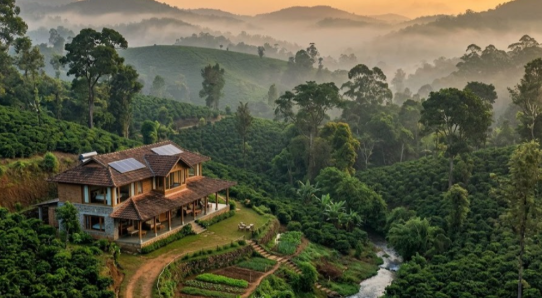
A farmstay is a tourism accommodation set within a working farm — guests stay in cottages or rooms on the property, wake up to coffee estate views, participate in farm activities like coffee picking and fruit plucking, and enjoy the natural environment. Unlike a resort, the appeal is authenticity: staying on a real, working farm in one of India’s most beautiful hill regions.
Coorg’s farmstays have built a strong reputation on platforms like Airbnb, StayVista, and SaffronStays, often commanding premium pricing compared to standard hotel rooms in the region.
The Income Potential
A well-positioned farmstay cottage in Coorg or Madikeri can earn substantial returns. Weekday occupancy of 40–60% at average nightly rates of ₹3,000–6,000, weekend and holiday occupancy of 80–100% at ₹6,000–12,000 per night, and near-full occupancy during peak seasons from October to March and during school holiday weeks.
A single well-built cottage can generate ₹8–15 lakhs per year in gross rental income, depending on size, finish, and marketing quality. This income is in addition to the crop income and land appreciation already built into the farmland investment model.
How Agricultural Land and Tourism Can Coexist Legally
In Karnataka, agricultural land is classified for farming use. Constructing a permanent commercial hotel on agricultural land without conversion is not permitted. However, temporary or semi-permanent structures used for homestay or agricultural tourism purposes are handled differently under Karnataka’s homestay policy. Many existing Coorg estate owners operate under the Karnataka Tourism Homestay Policy, which allows residents to offer limited hospitality services on their property.
The specifics depend on the nature of the structure, number of rooms, and how the use is classified. Nature N Me recommends working with a local legal advisor familiar with Karnataka’s tourism and land-use regulations to structure any farmstay activity correctly.
What Kind of Infrastructure Works
The most successful Coorg farmstays are not elaborate hotels — they are simple, authentic, and well-maintained. A single cottage or two built with local stone and timber, a covered outdoor dining area with plantation views, clean and well-appointed bathrooms, basic amenities like Wi-Fi and hot water, and an honest farm experience where guests can pick fruits and walk the estate.
Over-investment in infrastructure is unnecessary. Coorg farmstay guests are seeking the opposite of a city hotel — simplicity, nature, authenticity. A ₹10–20 lakh investment in a well-built cottage can generate returns within 2–3 years at current occupancy levels.
Managing a Farmstay Without Being There
Like the agricultural management side of Coorg farmland investment, farmstay operations can be handled by a local property manager — handling guest check-in and check-out, managing bookings across platforms, coordinating housekeeping and maintenance, and managing guest reviews and communication.
Many Coorg farmstay owners live in Bangalore, Mumbai, or abroad and manage their properties entirely remotely, visiting a few times a year to check quality and enjoy the property themselves.
Coorg’s Tourism Growth Is Structural, Not Seasonal
Post-pandemic, domestic travel in India has surged — and Coorg has been a primary beneficiary. The growth in working-from-anywhere culture means guests now book farmstays for extended stays of a week or more, not just weekend breaks. This structural shift in Indian travel behaviour means farmstay rental income in Coorg is not just a seasonal opportunity — it is a durable income stream.
Land that grows coffee during the week and hosts city families on weekends is working twice as hard as any urban real estate investment.