
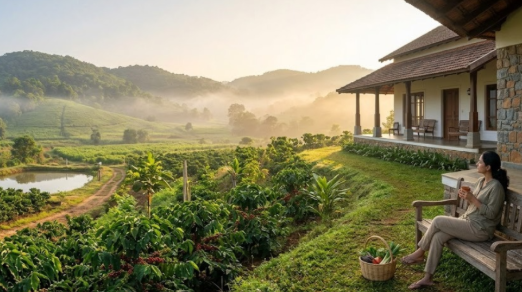
Coorg receives some of the highest rainfall in Karnataka — between 2,500 mm and 3,500 mm annually, most of it arriving between June and September during the southwest monsoon. For anyone considering a farm investment here, understanding the monsoon is not just interesting background — it directly affects how your farm performs, how it is managed, and why Coorg is so consistently productive.
Why Heavy Rainfall is an Advantage
Coffee, cardamom, pepper, and most fruit trees are thirsty crops. They need consistent moisture across the growing season. In most parts of India, farmers depend entirely on borewells and canals that can dry up during drought years. In Coorg, the monsoon does the heavy lifting. Our estates are also located near perennial hill streams, which means water availability continues even in the dry season from December to May.
This natural water security is one of the strongest reasons Coorg farmland consistently outproduces estates in drier regions and why investors here face lower water-related crop failure risk.
What Happens on the Farm During Monsoon
The monsoon is one of the busiest seasons on a Coorg estate. Soil preparation and replanting happen early in the season. Cover crops are grown to prevent soil erosion on slopes. Drainage channels are checked and cleared. Compost and organic matter are applied because the rain helps nutrients integrate into the soil quickly.
At Nature N Me, our farm team is active through the monsoon. We do not leave farms unmanaged during the rains. Monthly updates continue through the season so you always know what is happening on your plot.
What the Monsoon Means for Road Access
Coorg roads are good year-round, including during the monsoon, on the main highway route from Bangalore via Hassan and Kushalnagar. Some interior estate roads may have limited access during very heavy rain days. Our investors plan their visits for drier windows within the monsoon period or outside the peak months, and our team advises on the best times to visit.
The Post-Monsoon Season — When the Magic Happens
October and November are when Coorg comes alive after the rains. The coffee cherries turn red, cardamom pods swell, and the landscape is at its greenest and most dramatic. This is harvest season — the most rewarding time to visit your farm. Many of our investors plan their annual farm visit for this window specifically.
The Bottom Line
Coorg’s monsoon is not a risk factor. It is an asset. Farms here are naturally irrigated, naturally fertile, and naturally productive in a way that farmland in lower-rainfall regions simply cannot match. The rain is part of why land values here have grown 40% in three years and why investor interest keeps rising.
Want to see the farm during harvest season? Book a site visit at +91 98805 21637.