
Most people think farming and forests are opposites.
They’re not. And the farmers who figured this out centuries ago? They built wealth that lasted generations.
Welcome to agroforestry — the most underrated land strategy in India right now.
━━━━━━━━━━━━━━━━━━━━━━━━━━
🌱 WHAT IS AGROFORESTRY? (AND WHY SHOULD YOU CARE?)
Agroforestry is simply this — growing trees & crops (or raising livestock) on the same piece of land, at the same time.
Not forests. Not farms. Both. Together.
It sounds simple. But the results are extraordinary.
Instead of monoculture farming (one crop, one risk, one income), agroforestry creates a layered ecosystem — where every layer of the land is working for you simultaneously.
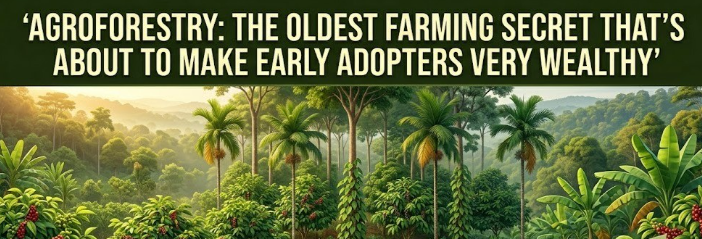
Top layer → Timber trees (teak, silver oak, rosewood) Middle layer → Fruit trees, coffee, arecanut Ground layer → Spices, vegetables, medicinal herbs Soil layer → Nitrogen-fixing roots rebuilding the earth itself
The land never stops producing. And it never stops growing in value.
━━━━━━━━━━━━━━━━━━━━━━━━━━
🔥 WHY AGROFORESTRY IS EXPLODING RIGHT NOW
This isn’t a new concept. It’s a rediscovered one — and the timing couldn’t be better.
Here’s what’s driving the global agroforestry boom:
🌍 Climate change is making monoculture farming increasingly fragile. Single-crop farms fail when one pest hits, one rain season fails, or one market crashes. Agroforestry systems are naturally resilient.
💰 Carbon credit markets are opening up. Trees = carbon sequestration = money. Agroforestry landowners in India are now beginning to monetise their tree cover through voluntary carbon markets. This is a brand new income stream that didn’t exist 5 years ago.
🥗 Organic and specialty food demand is skyrocketing. Consumers globally are paying 40–80% premiums for naturally grown, chemical-free produce. Agroforestry systems, by design, produce exactly this.
🏦 Institutional money is moving in. Impact investors, ESG funds, and green finance institutions are actively looking for agroforestry projects to fund. The capital is arriving.
━━━━━━━━━━━━━━━━━━━━━━━━━━
💡 THE 5 REAL BENEFITS OF AGROFORESTRY NOBODY TALKS ABOUT
1️⃣ MULTIPLE INCOME STREAMS FROM ONE ACRE
Conventional farming gives you one harvest, one income, one bet.
Agroforestry gives you: → Annual income from spices, vegetables, and short-cycle crops → Medium-term income (3–7 years) from fruit trees and coffee → Long-term wealth (10–25 years) from timber trees like teak → Passive income from carbon credits → Tourism income if the land is developed for agri-tourism
One acre. Five revenue streams. That’s the agroforestry advantage.
2️⃣ THE LAND GETS RICHER EVERY YEAR — NOT POORER
Conventional farming depletes soil. Every harvest strips nutrients. Every season demands more fertiliser.
Agroforestry does the opposite.
Tree roots break up compacted soil. Fallen leaves become natural compost. Nitrogen-fixing plants rebuild soil fertility automatically. Shade from trees reduces water evaporation.
After 10 years of agroforestry, your land is MORE productive than when you started. Not less.
3️⃣ WATER CONSERVATION BUILT INTO THE SYSTEM
India is facing a water crisis. Groundwater levels are dropping in almost every state.
Agroforestry systems naturally conserve water. Tree canopies reduce surface runoff. Root systems improve groundwater recharge. Less irrigation is needed because shade keeps moisture in the soil.
In regions like Coorg, Karnataka, and the Western Ghats — where rainfall is abundant — agroforestry amplifies nature’s own water management system.
4️⃣ NATURAL PEST CONTROL — ZERO CHEMICALS NEEDED
Biodiversity is nature’s pest control system.
In a monoculture farm, one pest can wipe out your entire crop because there’s nothing stopping it.
In an agroforestry system, natural predators, diverse microclimates, and mixed species create a self-regulating ecosystem. Pests rarely reach destructive levels.
The result? Lower input costs. Cleaner produce. Higher market price.
5️⃣ GENERATIONAL WEALTH THAT COMPOUNDS
A teak tree planted today is worth ₹50,000–₹3,00,000 at maturity (20–25 years).
Plant 100 teak trees on 2 acres alongside your regular crops. Keep farming normally. In 25 years, you have a standing timber wealth of ₹50 lakhs to ₹3 crores — in addition to everything you earned along the way.
That’s the compounding effect of agroforestry. The trees grow whether you’re watching or not.
━━━━━━━━━━━━━━━━━━━━━━━━━━
📍 WHERE DOES AGROFORESTRY WORK BEST IN INDIA?
Agroforestry works across India — but certain regions are especially powerful:
🌿 Coorg & Kodagu, Karnataka — Coffee + pepper + cardamom + silver oak. The gold standard of Indian agroforestry. Already producing globally exported specialty coffee alongside timber.
🌴 Kerala — Coconut + black pepper + banana + vanilla. Multi-layered systems with strong export market connections.
🏔️ Uttarakhand & Himachal Pradesh — Apple orchards + medicinal herbs + pine timber. High-value produce in ecologically sensitive zones.
🌾 Vidarbha & Telangana — Orange orchards + teak + soybean intercropping. Transforming drought-stressed regions into resilient systems.
🌊 Coastal Karnataka & Goa — Arecanut + cocoa + banana + timber. Year-round production with multiple harvest cycles.
━━━━━━━━━━━━━━━━━━━━━━━━━━
🚀 THE FUTURE OF AGROFORESTRY — WHAT’S COMING IN THE NEXT DECADE
The next 10 years will be transformative for agroforestry landowners. Here’s why:
→ India’s National Agroforestry Policy is pushing for 10 million hectares of agroforestry coverage by 2030 — with direct subsidies and support for landowners
→ Carbon credit prices are rising globally. Agroforestry systems that sequester carbon could generate ₹5,000–₹25,000 per acre per year in carbon income alone by 2030
→ GI-tagged and traceable produce commands massive premiums in European and US markets. Agroforestry farms are perfectly positioned to supply this demand
→ Agri-tourism is a ₹50,000 crore opportunity in India. A beautiful, biodiverse agroforestry farm is the perfect agri-tourism destination
→ Green finance and ESG lending is making farm loans cheaper for agroforestry projects than conventional agriculture
The policy, the money, and the market are all pointing in the same direction.
━━━━━━━━━━━━━━━━━━━━━━━━━━
🌍 AGROFORESTRY vs CONVENTIONAL FARMING — THE HONEST COMPARISON
Conventional Farming: ❌ One income stream ❌ Soil degrades over time ❌ High input costs (fertiliser, pesticides) ❌ Vulnerable to climate and market shocks ❌ No long-term asset appreciation
Agroforestry: ✅ 3–5 income streams simultaneously ✅ Soil improves every year ✅ Low input costs — nature does the work ✅ Climate-resilient by design ✅ Timber and land value compound over decades
The numbers don’t lie. The only question is why more people aren’t doing it.
━━━━━━━━━━━━━━━━━━━━━━━━━━
💬 WHO SHOULD BE PAYING ATTENTION TO AGROFORESTRY?
If you are any of the following — agroforestry deserves your full attention:
🔹 A farmer looking to reduce risk and increase income 🔹 An investor looking for long-term, tangible, inflation-proof assets 🔹 An NRI wanting to invest in Indian land with sustainable returns 🔹 A professional wanting a second income stream and a weekend escape 🔹 A business looking at ESG commitments and carbon neutrality goals 🔹 Anyone who believes clean food, clean water, and clean air will be the most valuable things on earth in 20 years
━━━━━━━━━━━━━━━━━━━━━━━━━━
🌱 THE BOTTOM LINE
Agroforestry is not a trend. It is not a buzzword.
It is the most logical, time-tested, ecologically sound, and financially rewarding way to use land — and the world is finally catching up to what nature figured out millions of years ago.
The forests and farms of tomorrow are being planted today.
The question is — will your name be on that land?
💬 Are you practicing agroforestry? Thinking about it? Or hearing about it for the first time? Drop a comment — I’d love to know where you are in this journey.
♻️ Share this with a farmer, an investor, or anyone who cares about the future of food and land in India.
👇 Follow for more on sustainable land use, agri-investment, and building wealth through nature.