
by admin | Aug 5, 2026 | Uncategorized
The Bangalore technology and professional services sector has an employee retention problem that no amount of salary benchmarking fully solves. After the basic financial needs are met — competitive compensation, health insurance, flexible work arrangements — the...

by admin | Aug 5, 2026 | Uncategorized
The possibility of generating carbon credit income from the tree cover and soil carbon sequestration on a Coorg managed farmland estate has been a topic in investor conversations for several years. As India’s carbon market develops — through the Carbon Credit Trading...

by admin | Aug 5, 2026 | Uncategorized
Of all the photographs in a Coorg managed farmland estate’s annual cycle — the harvest, the monsoon greenery, the silver oak pruning — none generates more interest from investors and non-investors alike than the coffee blossom photographs. For two to three days in...
by admin | Aug 5, 2026 | Uncategorized
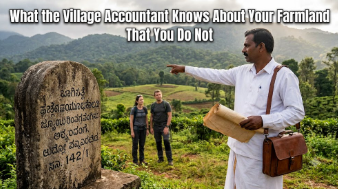
Every piece of agricultural land in Karnataka is overseen by a specific government official whose title and functions are largely unknown to urban investors: the village accountant (VA) — called patwari in some states, sometimes called shanbhog in older Karnataka...
by admin | Aug 4, 2026 | Uncategorized
Risk-averse investors — those who prioritise capital preservation and income stability over maximum return potential — approach Coorg farmland investment with a specific set of questions. They are not asking whether farmland can produce impressive returns in the...
by admin | Aug 4, 2026 | Uncategorized
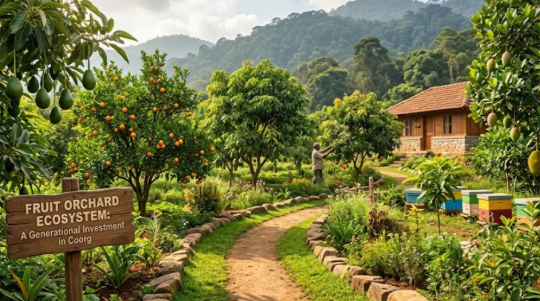
In India’s growing managed farmland market, not all products that call themselves “farmland ownership” actually deliver what that phrase implies. A significant portion of the managed farmland market — particularly among newer operators and lower-price-point offerings...