Agriculture is no longer driven only by tradition and manual labor. Across the world, farms are becoming smarter, more efficient, and more sustainable through the use of modern technology. From AI-powered irrigation systems to drone monitoring and precision farming, smart agriculture is reshaping the future of farming in 2026.
As climate challenges grow and food demand increases, technology is helping farmers produce more while using fewer resources. The result is a new generation of farms that are productive, environmentally responsible, and economically sustainable.
What Is Smart Farming?
Smart farming refers to the use of advanced technologies and data-driven systems to improve agricultural productivity and efficiency. It combines agriculture with innovation to help farmers make better decisions in real time.
These technologies include:
- IoT sensors
- Drone surveillance
- Automated irrigation systems
- Weather monitoring tools
- Artificial Intelligence (AI)
- GPS-based precision farming
- Farm management software
Instead of relying only on guesswork, farmers can now use accurate data to optimize crop growth and reduce waste.
Precision Farming: Growing More With Less
One of the biggest advantages of smart farming is precision agriculture. This method allows farmers to apply water, fertilizers, and nutrients exactly where and when they are needed.
Benefits of precision farming include:
- Reduced water usage
- Lower fertilizer costs
- Improved crop quality
- Better yield prediction
- Reduced environmental impact
By monitoring soil conditions and crop health in real time, farmers can avoid overusing resources while maintaining healthier crops.
This creates a more sustainable farming ecosystem with higher long-term productivity.
The Role of Drones in Modern Agriculture
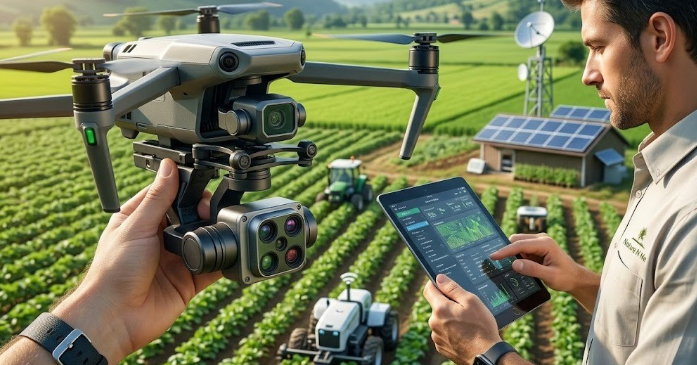
Drones are becoming essential tools in agriculture. They help farmers monitor large farmlands quickly and accurately without physically inspecting every section of the field.
Agricultural drones can:
- Detect crop stress early
- Identify pest infestations
- Monitor irrigation efficiency
- Capture aerial farm data
- Improve crop management decisions
With drone technology, farmers can solve problems before they become major losses.
In sustainable farming projects, drones also help monitor tree plantations, agroforestry layouts, and soil health patterns.
Water Management Through Smart Irrigation
Water conservation has become one of agriculture’s most important priorities. Smart irrigation systems are helping farms use water more efficiently than ever before.
Modern irrigation technology uses:
- Soil moisture sensors
- Weather-based automation
- Drip irrigation systems
- Mobile-controlled irrigation monitoring
These systems provide water only when crops truly need it, reducing wastage significantly.
For regions facing water shortages, smart irrigation is becoming essential for sustainable agriculture.
AI and Data Are Changing Farm Decisions
Artificial Intelligence is helping farmers predict weather patterns, crop diseases, and harvest outcomes with greater accuracy.
AI-driven farming systems can:
- Analyze soil conditions
- Predict pest outbreaks
- Recommend planting schedules
- Optimize fertilizer usage
- Improve harvest planning
This allows farmers to reduce risk while improving profitability and sustainability.
Technology is making agriculture more predictable in an increasingly unpredictable climate.
Sustainable Farming Meets Technology
Smart farming is not just about increasing profits — it is also about protecting natural resources for future generations.
By combining sustainability with innovation, farms can:
- Reduce chemical dependency
- Lower carbon footprints
- Improve soil health
- Protect biodiversity
- Conserve water resources
Technology and sustainability are no longer separate concepts in agriculture. They now work together to create resilient farming systems.
Why Smart Farmland Is Attracting Investors
As sustainable agriculture gains momentum, managed farmlands using smart farming practices are becoming attractive investment opportunities.
People are increasingly interested in:
- Eco-friendly farmland ownership
- Sustainable agricultural communities
- Long-term land appreciation
- Organic and regenerative farming models
Technology-driven farms are seen as future-ready assets that combine environmental responsibility with economic potential.
The Future of Agriculture Is Intelligent
The farms of tomorrow will not rely solely on tradition. They will combine nature, sustainability, and technology to build stronger agricultural ecosystems.
Smart farming is helping agriculture evolve into an industry that is:
- More efficient
- More sustainable
- More climate-resilient
- More profitable for future generations
In 2026, agriculture is no longer just about farming the land. It is about farming smarter.