
98805 21637 info@naturenme.in

The Future of Farming May Depend on One Simple Drop

by | May 19, 2026

For decades, agriculture depended heavily on one thing:
More water.

But the future of farming is teaching us something different:
Smarter water usage matters more than higher water usage.

This is where drip irrigation is quietly transforming modern agriculture.

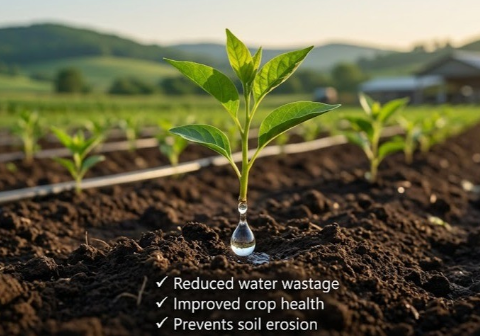
Unlike traditional irrigation methods that flood entire fields, drip irrigation delivers water directly to the roots of plants — slowly, precisely, and efficiently.

Every drop has a purpose.

And in a time where water scarcity is becoming a global concern, this small innovation is creating a massive impact.

Why does drip irrigation matter so much?

Because it helps solve multiple agricultural challenges at once:
✔ Reduces water wastage
✔ Improves crop health
✔ Prevents soil erosion
✔ Minimizes weed growth
✔ Saves labor and energy costs

But what makes it even more interesting is how it supports sustainable farmland development.

In regions like Coorg and other plantation zones, maintaining soil moisture without overwatering is critical. Drip irrigation allows farms to remain productive while preserving the natural balance of the ecosystem.

It is not just an irrigation system.
It is a long-term sustainability strategy.

Modern farming is no longer only about bigger lands and higher yields.

It is about:
“How efficiently can we use our natural resources?”

The farms that thrive in the future will not necessarily be the ones using the most water.

They will be the ones respecting it the most.

Sometimes innovation does not arrive with noise.
Sometimes it arrives quietly — one drop at a time.

#DripIrrigation #SustainableFarming #NatureNMe #SmartAgriculture #WaterConservation #FarmlandInvestment #EcoFarming #RegenerativeAgriculture #AgricultureInnovation #SustainableLiving #ModernFarming #ClimateSmartAgriculture

Recent Posts

Agricultural Land Classification Rules in Karnataka

Why Classification Is the First Thing to Check Before evaluating soil quality, crop potential, or expected returns, the single most important question about any land purchase is how it is officially classified under Karnataka's land records. This single detail...

Is Managed Farmland Recession-Proof? A Closer Look

The Question Every Cautious Investor Asks Whenever markets turn volatile, a common question resurfaces: which assets actually hold up during a downturn? Equities and real estate both have well-documented histories of significant declines during recessions. Managed...

Startup Founders and the Case for Managed Farmland

A Portfolio Concentrated in One Bet Startup founders often have a portfolio problem unique to their situation: a significant share of their net worth is tied up in equity in their own company, an asset that is illiquid, hard to value precisely, and entirely dependent...

Farmland Investment for Women Building Wealth

A Shift in Who Is Asking About Land Farmland investment conversations have historically skewed toward male family decision-makers, often the household head managing all major financial decisions. That pattern is changing. More women, particularly working professionals...

Timber and Silvopasture: Long-Term Farmland Income

The Slowest, and Sometimes Most Valuable, Crop Most conversations about farmland income focus on annual or near-annual harvests: coffee, cardamom, pepper, fruit. Timber trees work on an entirely different timescale, often taking 10 to 20 years or more to mature, but...