
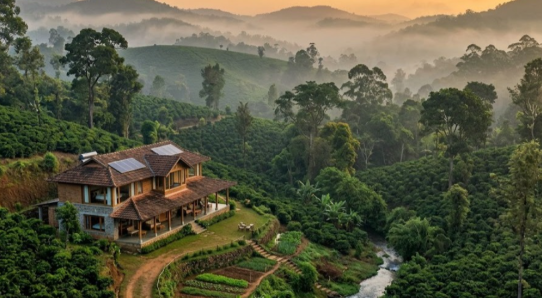
🌿 WHAT IS A COORG FARMHOUSE — AND WHY IS EVERYONE TALKING ABOUT IT?
A Coorg farmhouse isn’t just a weekend home.
It’s a working piece of land — usually between 2 to 20 acres — nestled inside coffee plantations, pepper vines, cardamom groves, and towering silver oak trees. The air smells like rain and roasted beans. The silence is loud. And the returns? They’re real.
Coorg (officially Kodagu) sits in the Western Ghats of Karnataka at an average altitude of 900–1,800 metres. It receives over 2,500mm of rainfall annually. The soil is volcanic, mineral-rich, and deeply fertile — the kind of soil that has been growing some of India’s finest coffee for over 200 years.
A farmhouse here isn’t a luxury. It’s a living asset.
━━━━━━━━━━━━━━━━━━━━━━━━━━
🏡 5 REASONS A COORG FARMHOUSE IS THE SMARTEST MOVE RIGHT NOW
1️⃣ THE LAND WORKS FOR YOU — EVEN WHEN YOU’RE NOT THERE
This is the part people don’t expect.
A 5-acre coffee estate in Coorg produces 1,500–3,000 kg of raw coffee per season. At current market prices, that’s passive income of ₹3–10 lakhs per year — from the same land you’re also living on or renting out.
Add cardamom, pepper, and vanilla? You’re stacking multiple income streams on one plot.
2️⃣ TOURISM DEMAND IS THROUGH THE ROOF
Coorg receives 15–20 lakh tourists every single year — making it one of India’s top 5 most-visited hill destinations.
Post-COVID, “slow travel” and “nature escapes” aren’t trends anymore. They’re a permanent shift in how Indians travel and spend.
A well-managed farmhouse homestay in Coorg earns ₹15,000–₹50,000 per night at peak season. At 50–60% annual occupancy, that’s ₹20–40 lakhs per year in rental income alone.
3️⃣ THE LAND IS APPRECIATING — QUIETLY BUT CONSISTENTLY
Agricultural land in Coorg has appreciated 8–12% CAGR over the past decade.
Compare that to fixed deposits. Compare that to most mutual funds. Compare that to an apartment in a city that’s already overpriced.
And here’s the kicker — land in Coorg is still undervalued relative to comparable hill stations like Ooty, Munnar, Kodaikanal, and Chikmagalur. The gap is closing fast.
4️⃣ COORG HAS WATER. AND WATER IS THE FUTURE.
The Cauvery River — one of India’s most important rivers — originates in Coorg.
As climate change puts pressure on agricultural land across India’s plains, high-altitude, water-secure regions like Coorg are going to become dramatically more valuable. Not in 50 years. In the next 10–15.
Owning land here isn’t just an investment in today’s market. It’s a hedge against tomorrow’s scarcity.
5️⃣ YOUR MENTAL HEALTH WILL THANK YOU
Okay — this one isn’t financial. But it matters.
A farmhouse here is a reset button. For you, your family, and your team.
━━━━━━━━━━━━━━━━━━━━━━━━━━
📍 WHY COORG OVER EVERY OTHER HILL STATION?
Great question. Here’s the honest answer:
🔸 Proximity — Coorg is 4–6 hours from Bengaluru, Mangaluru, and Mysuru. Close enough for weekends. Far enough to feel like another world.
🔸 Legal clarity — Karnataka has relatively well-defined land records (RTC, mutation, Pahani) making due diligence more straightforward than many other states.
🔸 Year-round appeal — Unlike purely summer destinations, Coorg’s monsoon (June–September) is spectacular. Waterfalls, mist, and green so deep it looks unreal.
🔸 Strong local community — The Kodava community is known for hospitality, land stewardship, and a culture that welcomes responsible investment.
🔸 Government support — Karnataka’s eco-tourism and agri-tourism policy is actively creating new income categories for farmhouse owners.
━━━━━━━━━━━━━━━━━━━━━━━━━━
💡 WHAT TO LOOK FOR WHEN BUYING A COORG FARMHOUSE
Don’t buy blind. Here’s your quick checklist:
✅ Clear title — verify RTC (Record of Rights, Tenancy and Crops), EC (Encumbrance Certificate), and mutation records ✅ Water source — check for natural streams, bore wells, or catchment access on the land ✅ Crop mix — diversified estates (coffee + pepper + cardamom) are more resilient than single-crop plots ✅ Road access — year-round motorable road access is non-negotiable ✅ Permission for construction — verify if the land allows for homestay or residential development under Karnataka land use rules ✅ Proximity to Madikeri or Virajpet — being near a town means better healthcare, schooling, and services
━━━━━━━━━━━━━━━━━━━━━━━━━━
🔭 THE FUTURE OF COORG FARMHOUSES — WHAT’S COMING
Here’s what the next decade looks like for Coorg:
→ Carbon credit markets opening up for forest-adjacent landowners → GI-tagged Coorg coffee commanding higher export premiums globally → Digital nomad and long-stay tourism creating 30–90 day rental demand → Agri-processing infrastructure being developed in Kodagu district → NRI and HNI demand pushing land prices further as supply stays constrained
The window is open. But windows don’t stay open forever.
━━━━━━━━━━━━━━━━━━━━━━━━━━
🌱 THE BOTTOM LINE
A Coorg farmhouse is not just a property purchase.
It’s a lifestyle upgrade, a passive income engine, a climate-resilient asset, and a legacy you can pass down — all wrapped in one of the most beautiful landscapes India has to offer.
If you’ve been thinking about it — this is your sign.
And if you found this useful, share it with someone who needs to escape the city. 🌿
👇 Follow for more on alternative investments, agri-tourism, and life beyond the concrete jungle.