
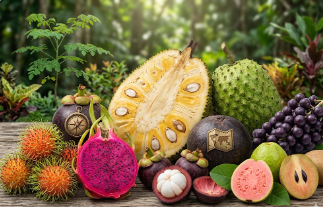
Apples and bananas are fine. But the world grows thousands of fruits most people never taste — and many of them are nutritional powerhouses hiding in plain sight at specialty markets, farms, and increasingly, backyard agroforestry plots.
Here’s why it’s worth reaching past the familiar.
Packed With Nutrients You’re Probably Missing
Exotic fruits tend to be extraordinarily dense in micronutrients that common commercial fruits lack.
- Moringa fruit delivers more iron than spinach and more calcium than milk, making it one of the most nutrient-complete foods on the planet.
- Dragon fruit is rich in prebiotic fiber, iron, and magnesium — nutrients that support gut health and energy metabolism.
- Jackfruit provides significant plant-based protein alongside potassium and B vitamins, making it a genuine meat substitute in texture and substance.
- Rambutan is loaded with vitamin C and copper, supporting immune function and collagen production.
- Sapodilla offers a slow-digesting natural sugar alongside fiber and antioxidants, making it surprisingly kind to blood sugar levels.
Antioxidants in Abundance
Many exotic fruits grow in tropical and subtropical environments where UV radiation, pests, and heat are intense. Plants respond by producing high concentrations of protective compounds — and we benefit when we eat them.
Mangosteen, sometimes called the “queen of fruits,” contains xanthones — a class of antioxidant with anti-inflammatory properties that have attracted serious research attention. Açaí berries deliver anthocyanins at concentrations that outrank most temperate fruits. Passion fruit provides flavonoids linked to reduced anxiety and improved sleep quality.
Good for Gut Health
Several exotic fruits are exceptional sources of prebiotic fiber — the kind that feeds beneficial gut bacteria rather than simply passing through.
Guava, papaya, and soursop all support digestive health in ways that go beyond simple fiber content. Papaya contains papain, a natural enzyme that aids protein digestion. Soursop leaf and fruit have both been studied for their antimicrobial properties, with traditional medicine systems across the tropics using them to treat digestive complaints for centuries.
They Support Agroforestry Systems
From a growing perspective, many exotic fruit trees are ideal agroforestry species. Jackfruit trees provide canopy shade for understorey crops. Moringa grows rapidly and fixes nutrients into the soil. Banana plants create microclimates that protect neighbouring species from wind and heat.
Growing exotic fruits isn’t just good for your health — it’s often good for the land.
Where to Start
You don’t need to overhaul your diet. Add one unfamiliar fruit a week. Visit a local Asian, African, or Latin American grocery. Look for jackfruit, dragon fruit, or fresh guava. Try rambutan if you can find it fresh — the flavour bears no resemblance to anything in the standard produce aisle.
Your body, and your palate, will thank you.
Exotic fruits are increasingly available through community-supported agriculture schemes, farmers’ markets, and agroforestry farms. Ask your local grower what’s in season.