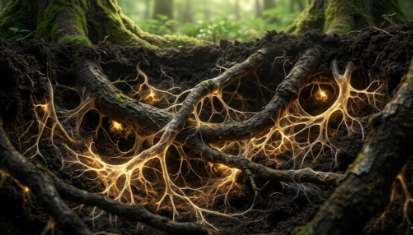
We spend thousands on high-speed internet to stay connected, but right beneath your garden’s surface, there is a communication network more complex than anything Silicon Valley has ever built.
It’s called the Mycorrhizal Network, and if you’re a modern gardener or investor, understanding this “Soil Internet” is the difference between a struggling plot and a thriving ecosystem.
1. The Underground Trade Agreement
Plants don’t grow in isolation. They are part of a massive trade economy.
- The Players: Fungi (Mycelium) and Plant Roots.
- The Deal: Plants provide sugar (produced via photosynthesis) to the fungi. In exchange, the fungi act as a massive “extension cord,” reaching into tiny soil crevices roots can’t touch to bring back phosphorus, nitrogen, and water.
- The Lesson: When you use heavy chemical fertilizers, you break this contract. The plant gets “lazy,” stops feeding the fungi, and the network collapses.
2. The “Warning System”
Did you know a plant on one side of your garden can “warn” a plant on the other side about a pest attack?
- The Science: When a tomato plant is attacked by aphids, it sends chemical signals through the fungal network.
- The Result: Nearby plants receive the “text message” and immediately begin producing defensive toxins to make their leaves bitter before the pests even arrive.
3. “Mother Trees” and the Inheritance Tax
In a forest (or a well-managed orchard), the oldest trees act as “hubs.”
- The Discovery: Research shows that older, larger trees use the fungal network to send extra sugar and nutrients to younger, shaded saplings that can’t reach the sun yet.
- Why it Matters: At Nature N Me, we don’t just plant trees; we build communities. By maintaining soil health, we ensure the “Mother Trees” in our managed farmlands can support the next generation of growth.
4. How to “Log In” to the Network
Most modern farming “mutes” this conversation. Here is how you can re-enable it:
- Stop Tilling: Breaking the soil breaks the “cables” (the mycelium).
- Cover Crops: Never leave soil bare. Living roots keep the network alive during the off-season.
- Inoculation: When planting, add mycorrhizal spores directly to the root ball. It’s like giving your plant a 5G router on day one.
The Takeaway: Soil is not a container for plants; it is a living, breathing social network. When we protect the “Wood Wide Web,” nature does 80% of the work for us.
Are you gardening with “analog” soil or “digital” intelligence? Let’s talk about regenerative soil health in the comments.