
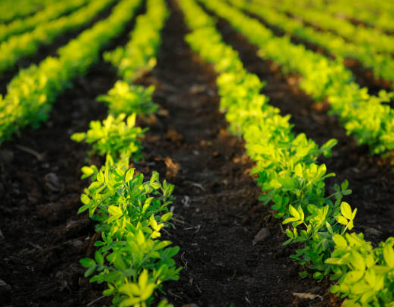
Legal clarity, water security, proximity to markets, and compliance with evolving policies determine long-term success — but there is a fourth foundational factor that investment due diligence consistently underemphasises: soil health. The soil beneath a fruit orchard is not merely the medium in which roots grow — it is a living biological system whose health determines every dimension of the orchard’s long-term productivity, input efficiency, and resilience.
What is soil health and why does it matter for a fruit orchard?
Soil health is the capacity of the soil to function as a living ecosystem — to support plant growth, regulate water movement, cycle nutrients, and sustain biological activity — rather than simply acting as a physical anchor for roots and a reservoir for water. Healthy soil is teeming with life: billions of bacteria per teaspoon, kilometres of fungal hyphae, hundreds of earthworms per cubic metre in well-managed systems, and a vast community of soil invertebrates that collectively drive the nutrient cycling that makes plant growth possible without purchased inputs.
For a fruit orchard, soil health specifically determines:
Nutrient availability: Healthy soil biology continuously converts organic matter into plant-available nutrients — nitrogen, phosphorus, potassium, and dozens of micronutrients — making them available to fruit tree roots when the trees need them. Degraded soil biology reduces this conversion efficiency, requiring purchased fertiliser inputs to supplement what the biology no longer provides.
Water infiltration and retention: Healthy soil with good aggregate structure allows rainfall and irrigation water to infiltrate quickly (reducing runoff and erosion) and retain moisture between rainfall or irrigation events (reducing the frequency and volume of irrigation required). Degraded, compacted soil has poor infiltration and retention — more water is lost as runoff and more frequent irrigation is needed to maintain adequate root zone moisture.
Disease suppression: Diverse, abundant soil biology competitively suppresses soil-borne pathogens — fungi and bacteria that cause root rot and wilt diseases in fruit trees. The healthy microbial community occupies the ecological niches that pathogens would otherwise exploit. Degraded soil with low biological diversity has reduced disease suppression capacity, making orchards more vulnerable to root diseases.
How do you assess soil health on a farmland plot before purchase?
Visual assessment during a site visit provides the most immediately accessible soil health indicators. Take a soil sample from the top twenty centimetres and examine it:
Earthworm presence: Active earthworms in the sample are among the strongest indicators of good soil biology. Healthy soil in warm, moist conditions should contain visible earthworm activity in the top twenty centimetres. Absence of earthworms in a farmland soil sample during the post-monsoon period (when conditions are most favourable) is a concern.
Aggregate structure: Squeeze a handful of moist soil and observe how it breaks apart when released. Healthy aggregated soil breaks into irregular clumps with visible pore spaces. Compacted, degraded soil either stays in a solid mass or crumbles to powder — neither showing the granular, porous structure that healthy soil biology creates.
Organic matter colour: Dark colour in the topsoil indicates organic matter presence — the humus that is both the product of biological decomposition and the food source for continued biological activity. Pale or grey topsoil indicates low organic matter content.
What laboratory soil tests reveal
A laboratory soil test provides quantitative data on the chemical properties that visual assessment cannot assess. The key parameters for a fruit orchard:
pH: Most fruit species perform best in a pH range of six to seven. pH below five point five (acidic) reduces phosphorus availability and increases aluminium toxicity; pH above seven point five (alkaline) reduces micronutrient availability. Karnataka’s laterite soils are typically slightly acidic — usually within the acceptable range for most fruit species, but specific plot values should be confirmed.
Organic carbon percentage: Organic carbon above one percent indicates adequate biological activity support. Below zero point five percent indicates severely degraded soil that will require significant organic matter addition before supporting productive fruit orchards.
Nitrogen, phosphorus, potassium (NPK): The primary macronutrients that determine the fertiliser requirements of a new orchard. Low initial nutrient levels are manageable with appropriate fertilisation — they are a planning input rather than a deal-breaker.
Nature N Me conducts soil testing on all plots before establishing the planting plan, using the results to design the specific fertilisation and soil health restoration program appropriate to each plot’s baseline condition.