
Coffee, cardamom, and pepper dominate the Coorg farmland income conversation. The fruit orchards on the same estate — typically including mango and jackfruit as the most significant species, with orange, avocado, and pineapple in suitable altitude sections — receive far less attention in investor communications and return projections. This systematic undervaluation of fruit income is a gap in how the investment is presented, and understanding the real contribution of fruit orchards corrects this gap.
Why Fruit Income Is Systematically Underestimated
Fruit income is underestimated in Coorg farmland projections for several specific reasons. First, fruit trees take longer to reach commercial production than the main spice crops — mango from grafted planting takes four to five years to first commercial fruit. This delay means fruit income does not appear in early-year projections, and the convention of projecting “year three to five income” typically focuses on coffee and cardamom that are producing by then.
Second, fruit income is more variable than coffee income — mango has pronounced on-year and off-year production cycles, and jackfruit’s production timing is less predictable than spice crops’ seasonal patterns. This variability makes fruit income harder to project confidently and easier to exclude from conservative income estimates.
Third, commodity fruit prices — the prices visible in APMC markets — are genuinely low, making fruit income appear insignificant when calculated at commodity rates. The premium market potential of estate-grown, provenance-documented fruit from the Western Ghats is rarely captured in standard projections.
What Mango Actually Earns on a Coorg Estate at Premium Market Rates
A mature mango tree on a well-managed Coorg estate produces thirty to one hundred kilograms of fruit per season depending on variety, age, and the specific on-year/off-year cycle. At commodity APMC prices of fifteen to twenty-five rupees per kilogram, a productive tree earns four hundred and fifty to two thousand five hundred rupees per season.
But the same tree’s fruit sold through premium channels — directly to Bangalore households, to specialty grocery retailers, to hotel and restaurant supply — achieves forty to eighty rupees per kilogram, more than doubling the commodity calculation. At sixty rupees per kilogram and seventy kilograms per tree, a productive mango tree earns four thousand two hundred rupees per season — not per year, as some estates produce two smaller crops.
An estate with thirty mature mango trees (typical for a five-acre estate with three to five trees per acre in the fruit component) generates approximately one lakh twenty-six thousand rupees annually from mango alone at premium market rates — a significant addition to the coffee and spice income that standard projections often omit.
What Jackfruit Contributes: The Overlooked Giant
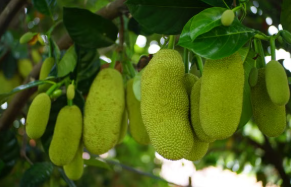
Jackfruit trees on Coorg estates are frequently present but rarely accounted for in income projections — they are treated as incidental to the estate rather than as productive assets. A mature jackfruit tree produces twenty to one hundred fruits per season, each weighing five to twenty kilograms. At ten to fifteen rupees per kilogram in bulk markets, a single productive tree earns one thousand to thirty thousand rupees per season — a very wide range reflecting both yield and price variability.
The value-added processing opportunity for jackfruit — discussed in our earlier detailed post on jackfruit processing — dramatically changes this calculation when the raw fruit is converted to chips, dried jackfruit, or green jackfruit for the plant-based protein market.
The Combined Fruit Contribution at Full Production
On a mature, well-managed five-acre Coorg estate with an established fruit component (thirty mango trees, five jackfruit trees, fifteen orange trees where appropriate altitude), the combined fruit income at premium market rates is:
Mango: one lakh twenty to one lakh fifty thousand rupees annually.
Jackfruit: twenty-five thousand to forty thousand rupees annually at bulk rates, significantly more with value addition.
Orange (where present): thirty thousand to sixty thousand rupees annually.
Combined: one lakh seventy-five thousand to two lakh fifty thousand rupees of annual fruit income that many standard five-acre Coorg farmland projections do not fully capture — because they focus on the coffee and spice crops and treat fruit as bonus income rather than as a material income component.
Frequently Asked Questions
Q1: Why is fruit income often omitted from Coorg farmland investment projections?
A: Fruit trees take 4–5 years to mature, experience natural on-and-off production cycles, and are usually evaluated at low local APMC market rates rather than premium retail prices.
Q2: How much can a mature mango tree earn per season at premium market rates?
A: Selling directly to urban households or specialty retailers at ₹40–80/kg, a productive tree yielding 70 kg can generate around ₹4,200 per season compared to just ₹450–2,500 at commodity prices.
Q3: What makes jackfruit a valuable secondary asset on a Coorg estate?
A: Beyond bulk raw sales (which earn ₹1,000–3,000 per tree), jackfruit offers high-margin value-addition potential through products like jackfruit chips, dried fruit, or plant-based protein alternatives.
Q4: How much total annual income can fruit orchards add to a 5-acre Coorg estate?
A: A mature 5-acre estate with mango, jackfruit, and orange trees can generate ₹1.75 lakh to ₹2.50 lakh in additional annual income alongside primary coffee and spice harvests.
Q5: What fruit varieties thrive alongside coffee and spices on Coorg estates?
A: Mango and jackfruit are the primary species, complemented by Coorg mandarin oranges, avocados, and pineapples depending on section elevation and microclimate.