
Retirement planning in India has a structural challenge that financial advisors underemphasise: the risk of outliving income. A professional who retires at fifty-five to sixty with a corpus of one to two crores, invested in a combination of equity and debt, generates safe withdrawal income that is fully taxable — reducing the effective income by thirty to forty percent at higher withdrawal levels.
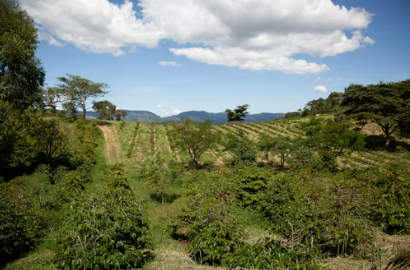
Coorg managed farmland purchased during the peak earning years — the forties or early fifties — arrives at full agricultural income production precisely when the investor retires in their mid to late fifties, delivering a completely tax-free supplementary income stream at exactly the moment it is most needed and most valuable.
The Timing Alignment
The agricultural income ramp-up timeline from a new Coorg farmland investment — modest in years one to three, growing meaningfully in years three to six, at full production from years six to eight — aligns specifically with a ten-year investment horizon that maps onto the period from active career to early retirement.
A professional who invests in Coorg managed farmland at age forty-five has a farming estate in full production by age fifty-one to fifty-three. By retirement at fifty-seven to sixty, the estate has been at full production for four to seven years — generating consistent, documented, tax-free income that supplements the retirement corpus without tax friction.
This timing alignment — investment during peak earning years, full income during early retirement years — is not coincidental. It reflects the agricultural income ramp-up timeline matching the standard investment horizon of a mid-career professional who is ten to fifteen years from retirement.
The Tax-Free Income Advantage in Retirement
During peak earning years, agricultural income’s tax exemption is valuable because it does not add to the already high marginal rate on professional income. In retirement, it is valuable for a different reason: retirement income typically involves withdrawing from savings and investments at slab rates, and the tax drag on this income reduces the effective withdrawal rate.
Agricultural income that is completely exempt from income tax does not compete for tax bracket space with pension income, FD interest, or mutual fund redemption. It arrives on top of other income, tax-free, without reducing the available deductions or pushing other income into higher slabs.
For a retired professional receiving three lakhs per year of pension or other income, an additional two lakhs of agricultural income is genuinely additive — two lakhs more in their account than it would be if the same income were taxable at thirty percent.
The Land Appreciation as Retirement Capital
Beyond the ongoing agricultural income, the appreciated land value represents retirement capital that can be realised through sale if needed. Coorg farmland purchased at fourteen lakhs per acre in 2026 and sold at retirement in 2040 — fourteen years later — at twelve percent annual appreciation would be worth approximately sixty-eight lakhs per acre. A two-acre position purchased at twenty-eight lakhs total would be worth approximately one crore thirty-six lakhs.
This capital gain is in addition to fourteen years of cumulative tax-free agricultural income received during the holding period. The total wealth created by the investment — crop income plus appreciation — significantly outperforms the equivalent corpus invested in fixed income instruments over the same period.
The Estate as Non-Financial Retirement Enrichment
Retirement is not only a financial transition — it is a lifestyle transition. The professional who retires without a meaningful productive engagement outside of work often finds the sudden absence of professional identity and daily purpose one of the most challenging aspects of the transition.
The Coorg managed farmland estate provides a productive engagement that persists into and enriches retirement — visits to the estate, relationship with the farm manager, seasonal awareness of the agricultural calendar, pride in the estate’s development and production. These are not incidental benefits alongside the financial return — they are genuine components of a fulfilling retirement lifestyle that agricultural land ownership specifically enables.
The retired doctor, engineer, or business professional who visits their Coorg estate quarterly, walks the mature coffee rows they planted fifteen years ago, meets the farm manager who has grown into a trusted agricultural partner across a decade of shared stewardship, and receives the harvest income statement that reflects real crops from real land — this person is experiencing a retirement that is richer in engagement, purpose, and beauty than one supported purely by financial corpus withdrawal.
Contact Nature N Me at naturenme.in or WhatsApp +91 98805 21637 to begin building the retirement income that arrives exactly when you need it.
Disclaimer: The financial projections, tax exemptions under Section 10(1) of the Income Tax Act, and land appreciation estimates in this article are provided for educational and illustrative purposes only. Actual agricultural yields and land value growth are subject to market conditions, climate factors, and estate management. This content does not constitute formal financial, tax, or legal advice. Readers should consult a qualified financial planner, tax consultant, or legal expert before making farmland investments.