
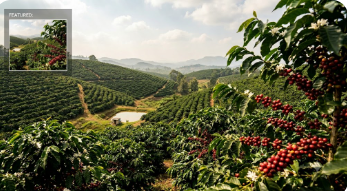
The question of drought risk is one that every serious Coorg farmland investor should understand specifically rather than dismissing or catastrophising. This article examines what actually happens on a Coorg coffee estate during a genuine below-average rainfall year — the specific agricultural mechanisms, the realistic income impact range, and why Coorg’s structural water security creates a drought resilience that most Indian agricultural investments cannot match.
What “Drought” Means in Coorg’s Context
In Indian agriculture, drought typically refers to rainfall falling below fifty to seventy percent of long-term average. In Karnataka’s northern rain-shadow districts — Kalaburagi, Bidar, Vijayapura — a drought year means three hundred to four hundred millimetres of rain instead of the expected six hundred to seven hundred millimetres. This is genuinely devastating — crops fail, wells run dry, agricultural income collapses.
In Coorg (Kodagu district), the long-term average annual rainfall is two thousand five hundred to three thousand five hundred millimetres depending on location. A “drought year” in Coorg’s statistical terms — a year when rainfall falls to sixty to seventy percent of normal — still delivers one thousand five hundred to two thousand four hundred millimetres of rainfall. This is two to four times the total annual rainfall of Karnataka’s most drought-affected districts even in a normal year.
This is the first and most important fact about drought risk in Coorg: what Coorg experiences as a below-average rainfall year would be considered an adequate or even above-average rainfall year for most of India’s agricultural regions.
The Specific Agricultural Impact of a Below-Average Monsoon in Coorg
During a year when Coorg’s monsoon delivers sixty to seventy percent of normal rainfall, the following agricultural consequences typically occur:
Coffee cherry development: The developing cherries (from the March-April blossom to January harvest) require moisture throughout their six-to-nine month development period. In a below-average monsoon year, the rain-fed moisture supply is reduced — but on a managed estate with drip irrigation and a functional bore well, the irrigation system supplements the deficit. A well-managed irrigated estate in a below-average monsoon year typically experiences five to fifteen percent yield reduction rather than the forty to sixty percent losses that an unirrigated estate in the same conditions might see.
Cherry blossom response: The pre-monsoon blossom “shower” — the brief rain event in March or April that triggers mass coffee flowering — can be affected by very dry pre-monsoon conditions. An insufficient blossom shower response produces less synchronised, sparser flowering and therefore lower cherry set for the coming season. This is the most sensitive phase for drought impact on coffee yield, and it is managed by pre-blossom supplementary irrigation (applying irrigation stress relief just before the expected shower period to prime the plants for a synchronised blossom response).
Water source impact: In a very dry year, bore well yields may decline in the April to May dry season peak as the groundwater table drops without the normal monsoon recharge. On estates with good bore well yield documentation and supplementary water sources (perennial streams), this is manageable. On estates with shallow or marginal bore wells and no alternative water source, dry-season irrigation capacity is reduced and crop yield impact is correspondingly greater.
The Income Impact Range in a Below-Average Year
For a well-managed Coorg managed farmland estate with drip irrigation, documented bore well yield, and perennial stream access — the typical income impact of a below-average monsoon year is a ten to twenty-five percent reduction from the normal harvest income. This is a meaningful reduction but not a catastrophic one.
For a poorly managed or inadequately watered estate in the same rainfall year, the impact can be significantly larger — thirty to fifty percent yield reduction, with quality also affected by water stress during cherry development.
This difference between the well-managed and poorly managed estate in a drought year is precisely why irrigation infrastructure documentation and management quality are so important in pre-purchase due diligence. The resilience of the investment in an adverse weather year is determined by the management quality and water infrastructure — not primarily by the rainfall deficit itself.
Why Coorg Is Structurally More Resilient Than Any Alternative Karnataka Agricultural Zone
As established in our dedicated post on Coorg’s orographic rainfall guarantee, the Western Ghats mechanism that delivers Coorg’s rainfall is structurally more reliable than the rainfall systems of Karnataka’s interior agricultural districts. In the same year that Coorg receives seventy percent of normal rainfall — a below-average year — the Deccan plateau districts may receive forty to fifty percent of normal, representing genuine agricultural crisis rather than manageable income reduction.
The relative drought resilience of Coorg farmland investment — its ability to maintain meaningful agricultural income even in below-average weather years — is not a marketing claim. It is the consequence of the orographic rainfall mechanism that has been operating consistently since the Western Ghats were formed and that climate science identifies as among the most rainfall-stable systems in peninsular India.