
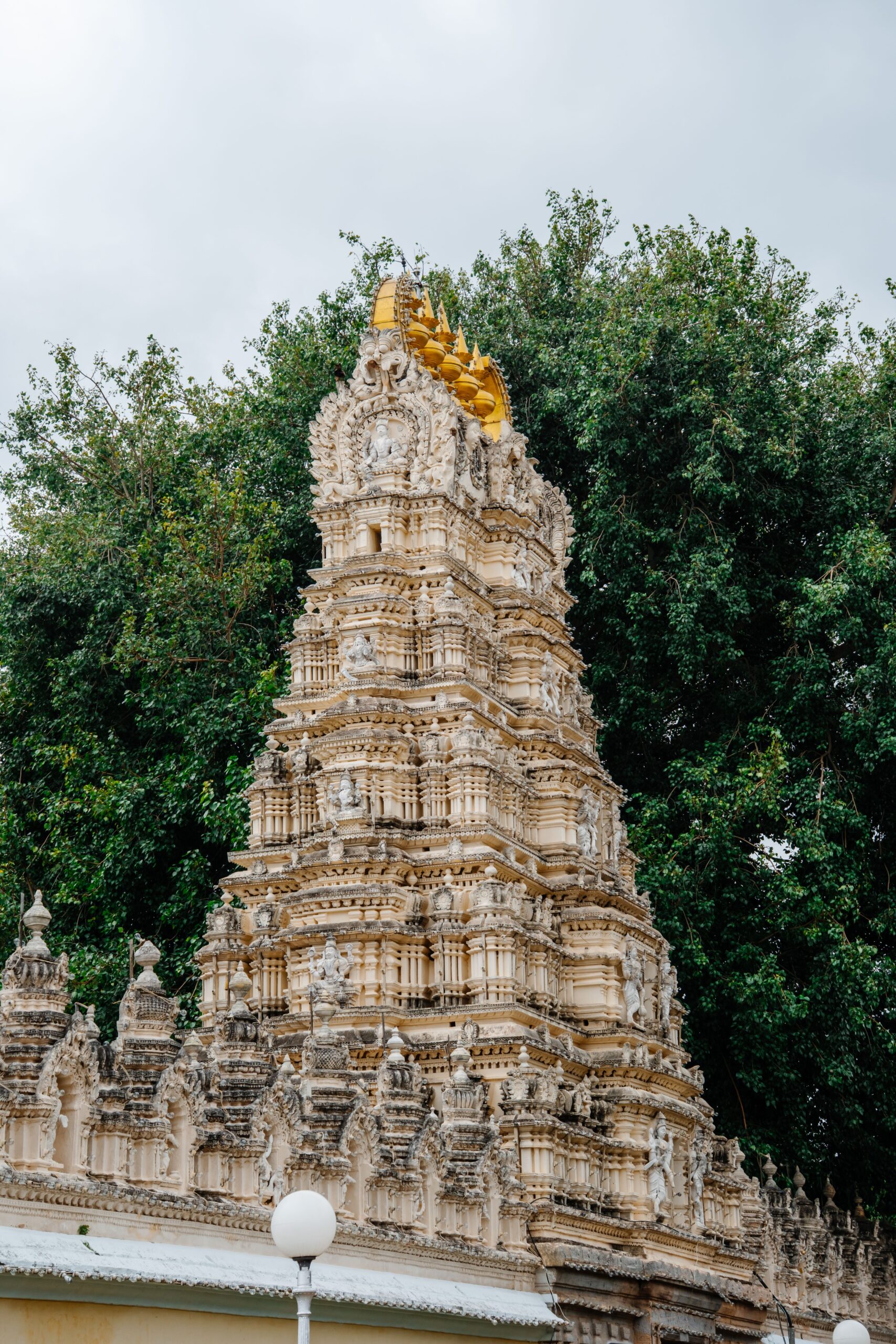
Towering over the royal city at an elevation of over 3,400 feet, Chamundi Hills is one of the most prominent spiritual, historical, and scenic landmarks in Mysore (Mysuru). Visible from almost anywhere in the city, the hill holds immense religious significance and offers breathtaking panoramic views of Mysore and its surrounding countryside.
Whether you are seeking spiritual blessings, a scenic drive, or a invigorating morning trek, Chamundi Hills is a must-visit destination on any Karnataka itinerary.
1. The Sacred Chamundeshwari Temple
At the summit sits the famous Sri Chamundeshwari Temple, dedicated to Goddess Chamundeshwari (an incarnation of Durga), the fierce guardian deity of the Mysore royal family and the city itself.
- Architectural Grandeur: Built in the traditional Dravidian style, the temple features a majestic 7-tier Gopuram (pyramidal tower) adorned with intricate carvings of deities.
- Mythological Importance: According to legend, this is the very spot where Goddess Chamundeshwari slayed the demon king Mahishasura, giving the city its name (from Mahishooru to Mysore).
- Golden Idol: Inside the sanctum lies a solid gold idol of the Goddess, which is specially decorated during the annual Mysuru Dasara festival.
2. Key Attractions & Landmarks on the Hill
🛕 The Statue of Mahishasura
Right near the bus stand and temple entrance stands a colorful, iconic statue of the demon king Mahishasura, holding a sword and a cobra. It is one of the most photographed spots on the hill.
🐂 The Monolithic Nandi Statue
Located roughly halfway down the hill (along the flight of steps) is a massive, single-stone statue of Nandi the Bull (the mount of Lord Shiva). Carved out of black granite in 1659, it stands over 15 feet tall and 24 feet long, making it one of the largest monolithic Nandi statues in India.
🌅 Panoramic Viewpoints
Several vantage points along the hilltop offer breathtaking views of Mysore landmarks, including the illuminated Mysore Palace, Lalitha Mahal, Race Course, and Karanji Lake.
3. How to Reach the Summit
- By Foot (The 1,000 Steps Trek): For pilgrims and fitness enthusiasts, a well-paved staircase of 1,008 steps leads from the base of the hill to the temple top. Climbing early in the morning offers a refreshing trek surrounded by lush greenery and playful monkeys.
- By Road (Car/Taxi/Bike): A well-maintained 13 km winding road takes you directly to the summit parking area in about 20–25 minutes from the city center.
- By Public Bus: Frequent KSRTC city buses run directly from the Mysore City Bus Stand to the Chamundi Hill top throughout the day.
Frequently Asked Questions
Q: Where is Chamundi Hills located and how high is it?
A: It is located about 13 km southeast of Mysore city, standing at an elevation of approximately 3,489 feet (1,065 meters) above sea level.
Q: How many steps lead up to the Chamundeshwari Temple?
A: The traditional stone stairway consists of 1,008 steps leading from the base of the hill to the summit.
Q: Who is the main deity of the Chamundeshwari Temple?
A: Goddess Chamundeshwari (a form of Durga), who is considered the guardian deity of Mysore.
Q: What is the significance of the Mahishasura statue at the top?
A: Located near the temple entrance, it represents the demon Mahishasura, who according to legend was slain by Goddess Chamundeshwari, giving Mysuru its name.
Q: How big is the monolithic Nandi statue and where is it located?
A: Located around the 700th step, the massive 17th-century Nandi bull is carved from a single granite boulder and measures 15 feet high and 24 feet long.
Q: What are the best ways to reach the hilltop?
A: Visitors can either climb the 1,008 stone steps for a workout/pilgrimage, drive up the scenic winding road, or take public KSRTC buses from the Mysore bus stand.
Q: What are the general visiting hours for the temple?
A: The temple is generally open daily from 7:30 AM to 2:00 PM, 3:30 PM to 6:00 PM, and 7:30 PM to 9:00 PM.