The managed farmland category near Mysore and Bangalore has a terminology problem. Developers and brokers use “farm plot,” “farmhouse plot,” “managed farmland,” “agri plot,” and “eco farmland” to describe products that range from raw agricultural land to developed residential communities to collective investment schemes. A buyer who does not know what they are looking for can spend months comparing products that are not actually comparable.
This blog cuts through the terminology confusion with plain definitions.
Farm Plot: The Raw Land Sale
A “farm plot” in its most basic meaning is agricultural land subdivided into smaller parcels and sold to individual buyers. The buyer receives legal title to a piece of agricultural land — typically between one quarter of an acre and five acres — and takes full responsibility for what happens to it after purchase.
There is no management. No crop program. No agricultural team. No amenities. Just land. What the buyer does with it — fence it, cultivate it, ignore it, plant trees on it, sell it later — is entirely their decision and their logistical challenge to execute.
Farm plots are the simplest and most straightforward product in this category and also the product with the biggest implementation gap for urban investors without local agricultural connections. Many farm plots purchased by Bangalore investors in the Kanakapura and Mysore corridors sit essentially unused — the buyer owns agricultural land but lacks the infrastructure to make it produce anything.
Farmhouse Plot: The Residential Development on Agricultural Land
A “farmhouse plot” is typically a small plot (often five hundred to one thousand five hundred square metres) in a gated development that includes or proposes to include a constructed house or villa. These developments are marketed at the intersection of the real estate and the nature-living market.
The critical legal question for any farmhouse plot is whether the land has been DC converted to residential use (legal construction, no agricultural income exemption) or whether construction has occurred or is proposed on unconverted agricultural land (potentially illegal construction creating long-term title risk). This question is not academic — it determines both the legal security of your purchase and what income and tax treatment you can expect from the property.
Many farmhouse plot products near Mysore and Bangalore are legitimate — the land has been properly converted, the construction is permitted. Some are not. Independent legal due diligence on the conversion status is non-negotiable before purchasing any farmhouse plot product.
Managed Farmland: The Agricultural Investment With Professional Management
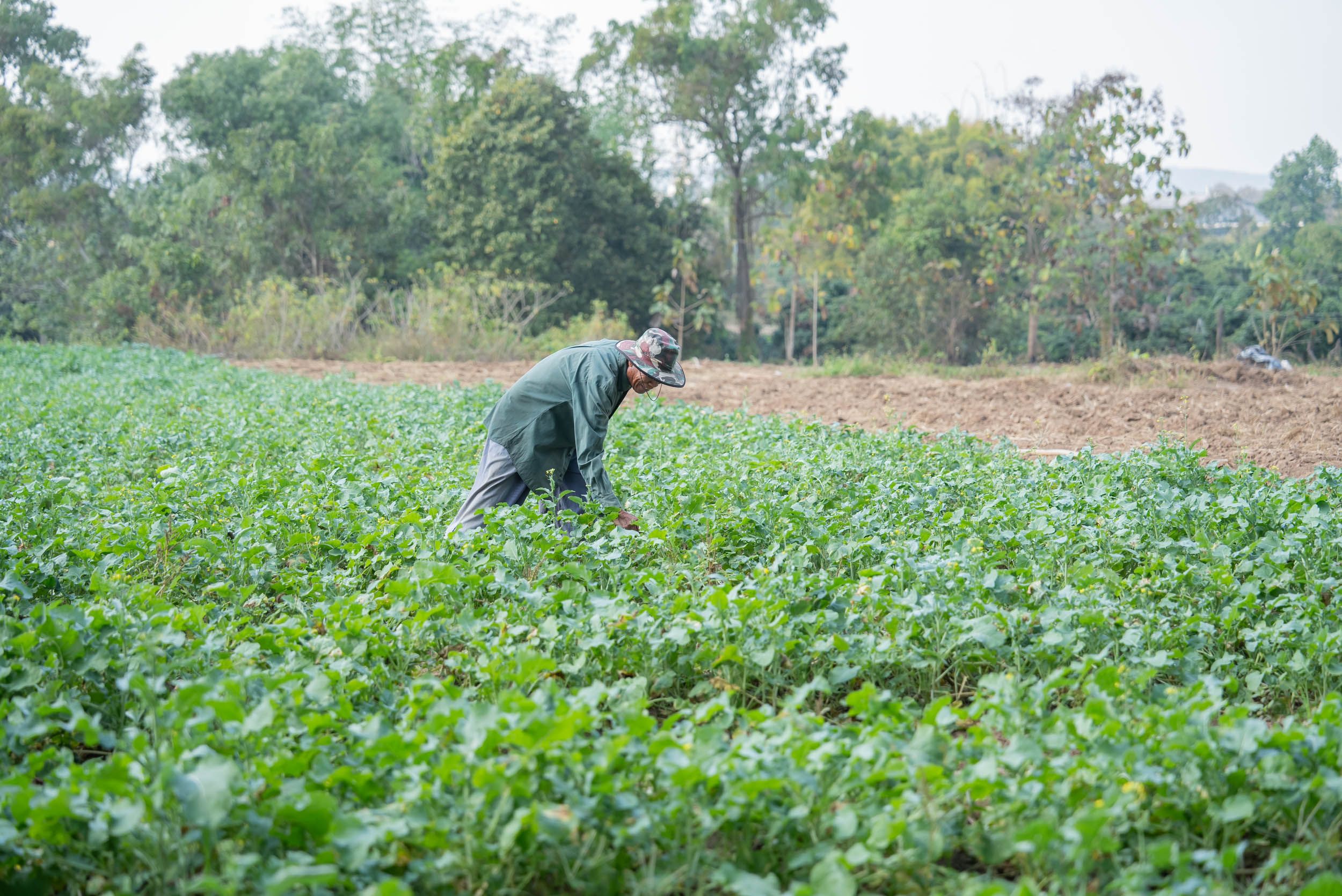
Managed farmland — the product Nature N Me provides — is agricultural land (no construction, no DC conversion required) sold with individual freehold title and accompanied by a professional agricultural management agreement. The investor owns agricultural land that is actively farmed by a professional team, generating agricultural income and capital appreciation, without any involvement required from the investor.
The key distinctions from the other two categories: unlike a raw farm plot, managed farmland comes with an operational agricultural program that makes the land produce income without the investor building this infrastructure. Unlike a farmhouse plot, managed farmland remains agricultural land — legal, appropriately classified, and generating income with the specific tax treatment applicable to agricultural income.
Which One Should You Buy?
If you want a country house for personal weekend use and have no interest in agricultural income: a farmhouse plot on properly DC-converted land is appropriate.
If you want pure land ownership with maximum flexibility and have the local connections and agricultural capability to manage it yourself: a raw farm plot is the simplest structure.
If you want a financial investment in productive agricultural land with professional management, no involvement required, legal freehold title, and agricultural income: managed farmland through an operator like Nature N Me is the appropriate product.
Disclaimer: This article is published for general educational and informational purposes only and does not constitute legal, tax, or investment advice. Real estate classifications, DC conversion requirements, construction regulations, and agricultural land laws in Karnataka are subject to statutory guidelines and local regulations. Readers are strongly encouraged to conduct independent legal due diligence and consult with qualified legal and tax professionals before purchasing any farmland or entering into property agreements.