
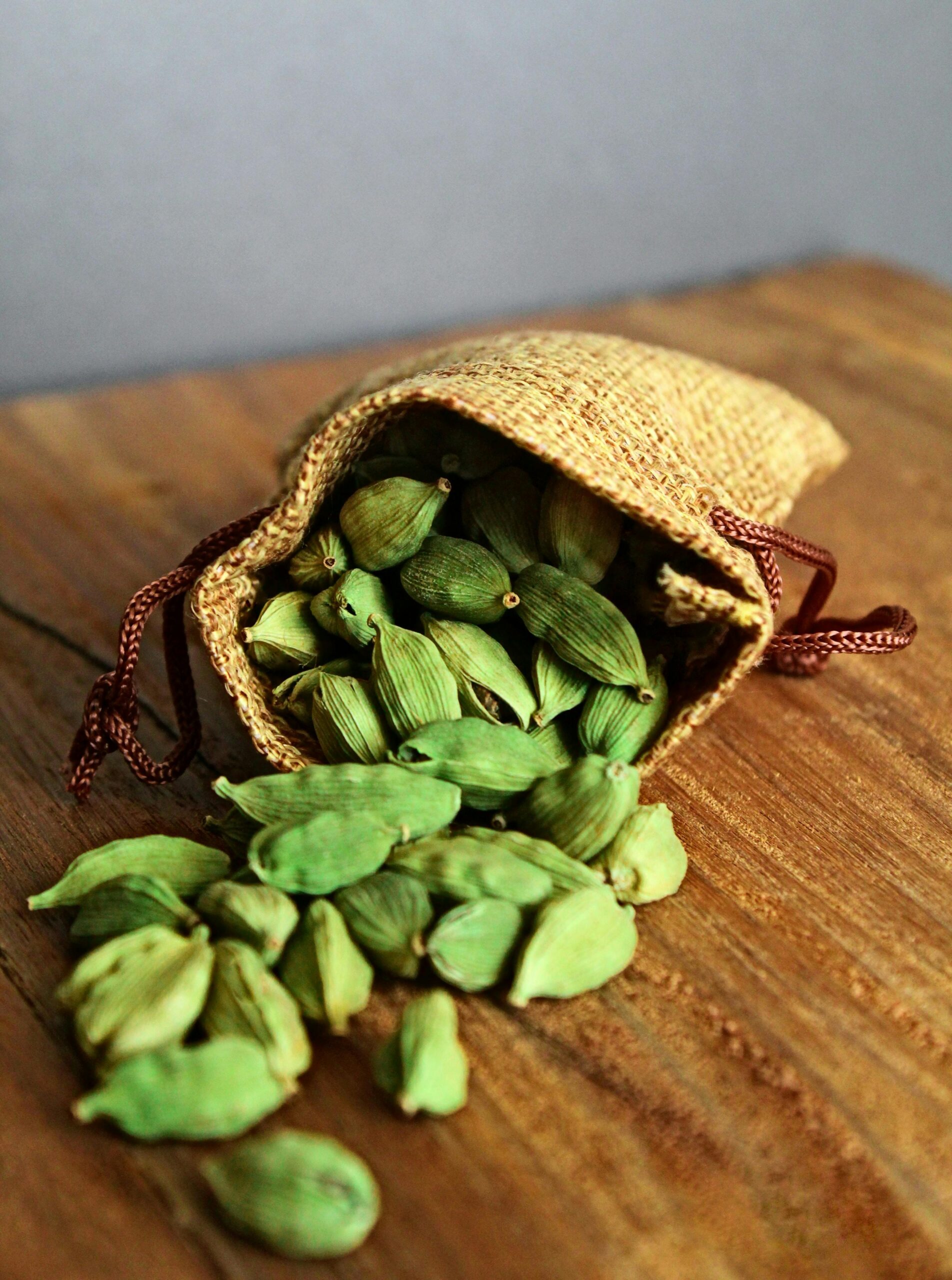
Cardamom generates some of the most exciting and some of the most anxiety-inducing crop income numbers in Coorg farmland investment — it is among the highest-value spices per kilogram, but its price is also highly volatile. This FAQ explains how cardamom prices are set and what investors should understand about the income implications.
How is cardamom sold from a Coorg estate?
Cardamom from Coorg and Kerala is primarily sold through the electronic auction system operated by the Spices Board of India at designated auction centres — primarily the auction at Bodinayakanur in Tamil Nadu (the world’s largest cardamom auction centre) and supplementary auctions in Kerala. Sellers bring graded, dried cardamom to the auction and buyers — traders, exporters, and food companies — bid competitively in the e-auction system.
The auction mechanism creates transparent, competitive price discovery. The price achieved at the auction centre is the benchmark from which farm-gate prices are derived — typically the auction price less the cost of transport and the trader’s margin. Nature N Me coordinates cardamom sales through this established channel, ensuring investor produce reaches fair-market pricing rather than being sold at below-market rates through informal channels.
What has cardamom’s price been historically?
Cardamom prices in India are among the most volatile of any agricultural commodity — they have ranged from as low as five hundred rupees per kilogram to over three thousand rupees per kilogram within the past decade, with significant swings within individual years. The volatility reflects the structure of the global cardamom market: India and Guatemala are the world’s two dominant producers, and supply shifts in either country produce sharp price movements because cardamom is a specialty spice with relatively inelastic demand in the short term.
A Coorg farmland investor should model cardamom income conservatively — using a mid-cycle price of eight hundred to twelve hundred rupees per kilogram as a planning figure rather than either the price peak or price trough.
What drives cardamom price cycles?
The primary driver of cardamom price cycles is the balance of supply between India and Guatemala. When Indian monsoon conditions are favourable and both India and Guatemala have strong harvests simultaneously, supply exceeds demand and prices fall. When either country experiences a poor crop due to drought, disease (Katte disease has historically devastated Indian cardamom crops in some years), or adverse weather, supply tightens and prices spike.
Domestic Indian demand — driven by the food industry’s use of cardamom in chai masala, sweets, and biryani — is large and relatively stable, providing a demand floor that prevents prices from collapsing to zero. Export demand, primarily to the Middle East and Southeast Asia, adds a second demand channel that rises and falls with export market conditions.
Does the price volatility mean cardamom is a risky crop to grow?
Price volatility in any single crop is a risk — but in the multi-crop agroforestry context of a Coorg managed farmland plot, cardamom price cycles do not move in the same direction or at the same time as coffee price cycles or pepper price cycles. The three crops follow different markets with different supply-demand drivers.
In years when cardamom prices are depressed, coffee or pepper income typically provides offset — the total estate income is more stable than any single crop’s income would be. This is the practical value of the agroforestry diversification that Nature N Me’s managed farmland is designed around.
What cardamom yields can I expect from my plot?
Productive cardamom plants on a well-managed Coorg estate yield fifty to one hundred and fifty grams of dried capsules per plant per year, depending on plant age, soil fertility, irrigation, and pest management. A well-planted cardamom section might contain two hundred to four hundred plants per acre (in the understorey sections suitable for cardamom). At this planting density, an acre of productive cardamom generates forty to sixty kilograms of dried capsules per year — at eight hundred to twelve hundred rupees per kilogram (mid-cycle price), that is thirty-two thousand to seventy-two thousand rupees per cardamom acre per year.
Contact Nature N Me at naturenme.in or WhatsApp +91 98805 21637 for the cardamom composition and yield history on any available plot.
Disclaimer: The following information is provided for general educational and informational purposes only and does not constitute financial, investment, legal, or agricultural advice. Commodity prices (including cardamom, coffee, and pepper) and crop yields are highly volatile and subject to market fluctuations, weather conditions, pests, and other external factors. Historical performance, price estimates, and yield projections (such as mid-cycle price points or projected income per acre) are purely illustrative and are not guaranteed. Prospective investors should conduct independent due diligence, inspect specific farmland plots, and consult with qualified financial, legal, and agricultural advisors before making any investment decisions.
Frequently Asked Questions
Q: How is cardamom sold from a Coorg estate?
A: It is sold via transparent electronic auctions managed by the Spices Board of India (mainly in Bodinayakanur, TN). Farm-gate prices reflect these auction rates minus transport costs and trader margins.
Q: What is the historical price range for cardamom?
A: Prices are highly volatile, ranging from ₹500 to over ₹3,000 per kilogram over the last decade. A realistic mid-cycle planning figure is ₹800–₹1,200 per kg.
Q: What drives cardamom price fluctuations?
A: Global supply balances between India and Guatemala, domestic demand in India, and export demand to the Middle East and Southeast Asia. Adverse weather or crop diseases like Katte disease can trigger major price spikes.
Q: Is cardamom price volatility a high risk for farmland income?
A: No. In a diversified agroforestry model, price drops in cardamom are typically offset by income from coffee and pepper, which operate on different market drivers.
Q: What yields and income can be expected per acre?
A: A well-managed acre yields 40–60 kg of dried cardamom annually (50–150g per plant). At mid-cycle prices, this generates approximately ₹32,000–₹72,000 per acre per year.