
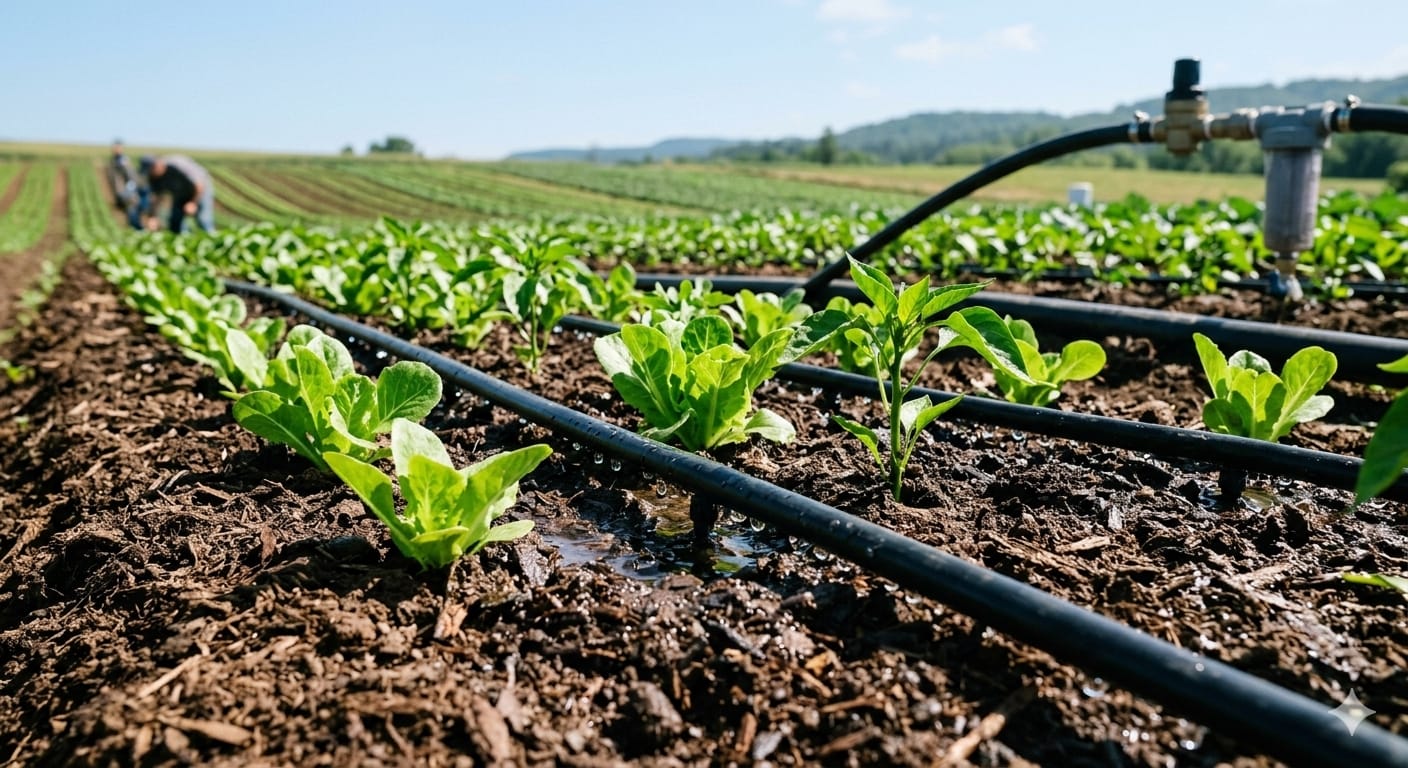
Water Is the Variable That Decides Everything
Soil quality and crop selection get most of the attention in farmland investment conversations, but water management is often the factor that actually determines whether a plantation thrives or struggles. Understanding how irrigation is handled on a managed farmland plot is worth as much attention as understanding what crops are planted.
The Problem With Traditional Flood Irrigation
Older farming methods often rely on flood irrigation, where water is channeled across open fields. This approach wastes a significant percentage of water to evaporation and runoff, delivers water unevenly across a plot, and can gradually degrade soil structure over years of repeated use.
What Drip Irrigation Does Differently
Drip irrigation delivers water directly to the root zone of each plant through a network of tubing and emitters, minimizing evaporation and runoff. This means more of the water applied actually reaches the crop, which translates into more consistent yields and lower water usage overall compared to flood methods.
Why This Matters More During Dry Spells
Karnataka, like much of India, experiences year-to-year variation in monsoon rainfall. A plot equipped with drip irrigation infrastructure is better protected against a weaker monsoon year, since it does not rely solely on rainfall timing to keep crops adequately watered during critical growth periods.
Water Efficiency and Long-Term Sustainability
Beyond immediate yield benefits, efficient water use matters for the long-term sustainability of the land itself. Overuse or inefficient use of groundwater can lower water tables over time. Drip systems reduce the volume of water drawn for irrigation, supporting more sustainable land use over the decades a managed farmland investment is meant to last.
How This Applies Across Crop Types
Coffee, cardamom, pepper, and fruit crops each have different water requirements at different growth stages. A properly designed drip system can be calibrated to deliver the right amount of water to each crop type, rather than applying a uniform amount across an entire plot regardless of what is actually growing where.
What Investors Should Ask About
When evaluating a managed farmland plot, it is reasonable to ask whether drip irrigation infrastructure is already installed, whether it covers the entire plot or only sections, and how it is maintained over time. This is a legitimate due diligence question alongside soil reports and legal documentation.
Maintenance and Who Handles It
Drip irrigation systems require periodic maintenance, including checking for clogged emitters and replacing worn components. On a managed farmland plot, this maintenance is handled by the professional agricultural team, meaning investors do not need to understand irrigation engineering themselves.
Cost Considerations
Installing drip irrigation infrastructure does involve upfront cost compared to relying purely on rainfall or flood methods. On managed farmland, this cost is typically built into the overall plot development rather than being a separate expense investors need to budget for independently.
How Nature N Me Approaches Irrigation
Nature N Me incorporates appropriate irrigation infrastructure into its managed farmland plots in both Coorg and Mysore, tailored to the specific crop mix and water availability of each site. Ask about the specific irrigation setup for any plot you are considering, as part of your broader evaluation of how the land is being managed.
Frequently Asked Question
Why is drip irrigation superior to traditional flood irrigation?
Drip irrigation delivers water directly to root zones, eliminating runoff and evaporation while maintaining consistent yields and preserving soil structure.
How does drip irrigation protect crops during dry spells or weak monsoons?
It regulates water delivery during critical growth phases, ensuring crops do not depend entirely on monsoon timing to stay hydrated.
Do farmland investors need to manage irrigation maintenance themselves?
No, professional agricultural management teams handle all system checks, emitter cleaning, and regular equipment maintenance.
Is drip irrigation an additional out-of-pocket cost for managed farmland buyers?
No, the infrastructure installation is typically built into the overall plot development cost rather than billed as a separate expense.