
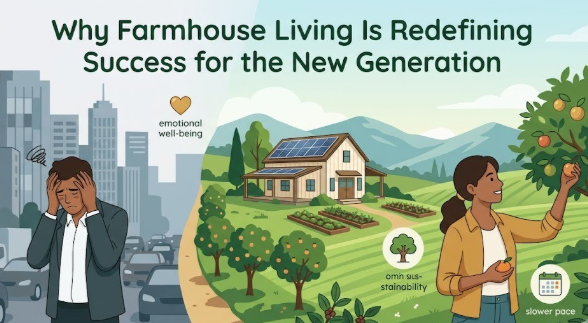
A farmhouse in Coorg occupies an unusual space: it’s not purely a holiday home, and it’s not purely an investment property either. It’s genuinely both, and understanding how those two identities work together is key to appreciating what makes this kind of ownership different.
The Weekend Home Case
Coorg is roughly 5 to 6 hours from Bangalore by road, close enough for a long weekend trip without eating into an entire vacation. A 3BHK farmhouse villa gives you a private, comfortable space to retreat to, surrounded by greenery, coffee plantations, and a noticeably cooler climate than the city. For families, it becomes a recurring destination rather than a one-time visit, since there’s a genuine reason to keep coming back.
The Investment Case
At the same time, the land beneath and around your villa is actively managed farmland, generating tax-free agricultural income through crops like coffee, pepper, and cardamom. Land values in Coorg have also shown strong appreciation in recent years, meaning the asset builds value even in the years you don’t visit often.
Why the Combination Works Better Than Either Alone
A pure holiday home, such as an apartment in a hill station, typically generates no income and depreciates or stagnates depending on the local property market. Pure farmland, on the other hand, gives you income and appreciation but no personal-use value unless you’re comfortable simply owning land without a structure on it.
A managed farmhouse solves both problems. You get a place to actually use, and the land underneath it continues to work as an income-generating, appreciating asset whether you’re there or not.
Who This Works Best For
This model suits buyers who genuinely intend to visit a few times a year, value having a private space rather than staying in resorts or homestays, and also want their money to be doing something productive between visits. It’s less suited to buyers who have no interest in ever visiting Coorg, since in that case, plain managed farmland without the villa is a more cost-efficient choice.
Making the Most of Ownership
Many owners find that even infrequent use — three or four visits a year — is enough to justify the villa, simply because the alternative of booking accommodation repeatedly over the years would cost a similar amount without building any asset value. Combined with the underlying farmland’s returns, the farmhouse model turns what would otherwise be a pure expense into a dual-purpose asset.