
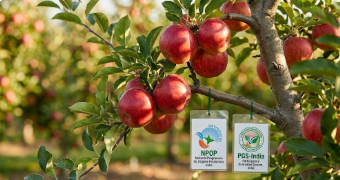
Every fruit orchard faces pest and disease pressure — this is an agricultural reality that no management system eliminates entirely. What distinguishes a well-managed fruit orchard from a poorly managed one is not the absence of pest pressure but the quality and timeliness of the response to it. Understanding the specific pests and diseases that affect the main fruit species on Karnataka managed farmland estates helps investors evaluate whether their management team is addressing these challenges appropriately.
Mango: The Fruit Fly Problem
The mango fruit fly (Bactrocera dorsalis and related species) is the most economically significant pest of commercial mango orchards globally. The female fruit fly lays eggs beneath the skin of developing mango fruit; the larvae hatch and feed on the flesh, causing internal rotting that makes the fruit unmarketable.
Fruit fly damage is not visible externally until the fruit is opened — making pre-harvest detection difficult and post-harvest losses potentially significant. In orchards without fruit fly management, infestation rates can reach thirty to sixty percent of the harvest in high-pressure years, directly reducing the commercial yield by that proportion.
Professional management of mango fruit fly uses an integrated approach: protein bait stations (food-based attractant mixed with a small quantity of approved pesticide in contained bait stations rather than spraying) that attract and kill female flies before they lay eggs; pheromone traps that monitor male fly population levels to guide timing of intervention; fruit bagging (covering individual fruit with paper or mesh bags before the susceptible stage) for the highest-value fruit destined for premium markets; and post-harvest hot water treatment or controlled atmosphere storage to kill any larvae present in harvested fruit.
Mango: Powdery Mildew and Anthracnose
Mango powdery mildew (Oidium mangiferae) and anthracnose (Colletotrichum gloeosporioides) are fungal diseases that affect the flowering and fruit development stages. Powdery mildew attacks the flowers and young fruit set, producing a white powdery coating that causes flower drop and reduces cherry set. Anthracnose causes black spots on developing and ripening fruit that reduce marketability.
Both diseases are managed with fungicide applications timed to the flowering and early fruit development period — sulphur-based fungicides for powdery mildew (permitted under organic protocols) and copper-based fungicides for anthracnose. Timing precision is essential: applications must occur before infection establishes, not after symptoms are visible.
Guava: Wilt Disease
Guava wilt (caused primarily by Fusarium oxysporum f. sp. psidii and Phytophthora cinnamomi) is the most serious disease threat to guava cultivation in India. Affected plants show progressive wilting and dieback — starting with yellowing of leaves on one or several branches and progressing to complete plant death in severe cases. Guava wilt has no effective cure once established — the infected plant must be removed and the soil treated before replanting.
Prevention is the only effective strategy: selecting wilt-resistant varieties (Taiwan Pink and VNR Bihi have better wilt tolerance than some traditional varieties), maintaining excellent drainage in the guava planting zone (waterlogged soil dramatically increases wilt risk), and soil treatment before planting to reduce soil-borne pathogen populations.
Sapota: Leaf Webber and Bud Borer
Sapota (chikoo) is relatively hardy compared to mango and guava, but faces specific pest pressure from the leaf webber (Nephopteryx eugraphella) — a moth whose larvae web together young leaves and feed inside the webbing — and the shoot borer (Liopasia speciosana), which bores into young shoots and causes shoot dieback.
Both are managed with targeted insecticide application during the active pest stage, timed by monitoring of adult moth activity with pheromone traps. The enclosed nature of the webber’s feeding (inside the webbing) and the borer’s feeding (inside the shoot) makes contact insecticides less effective than systemic options applied at the early infestation stage.
What Investors Should Ask About Pest Management
The specific question to ask a managed farmland operator about fruit orchard pest management is: “How do you monitor for fruit fly and other pests, and what is your response protocol when monitoring indicates a threshold has been reached?” A management team that answers with specific monitoring methods (pheromone traps, visual inspection frequencies, bait station placement records) and specific threshold-triggered response protocols is operating professionally. A team that provides vague assurances about “regular spraying” is not.
Disclaimer: The information provided in this article is for general informational and educational purposes only and does not constitute financial, legal, tax, or investment advice. While fruit tree cultivation and agroforestry systems can offer long-term agricultural returns, actual crop yields, income timelines, and market prices may vary based on weather conditions, seasonal fluctuations, soil quality, and local market demand. Potential investors should conduct their own due diligence and consult with qualified agricultural and financial advisors before making investment decisions. Nature N Me does not guarantee specific yields, harvest timelines, or financial returns.