The ecological richness of a well-managed Coorg coffee estate is not simply pleasant background — it is a functional component of the agricultural system that directly affects crop income, and it is an increasingly valued dimension of estate ownership in its own right. Understanding what lives on your estate, why it is there, and what it contributes to the agricultural system’s productivity provides a dimension of Coorg farmland ownership that purely financial analysis never captures.
The Pollination Economy on a Coorg Coffee Estate
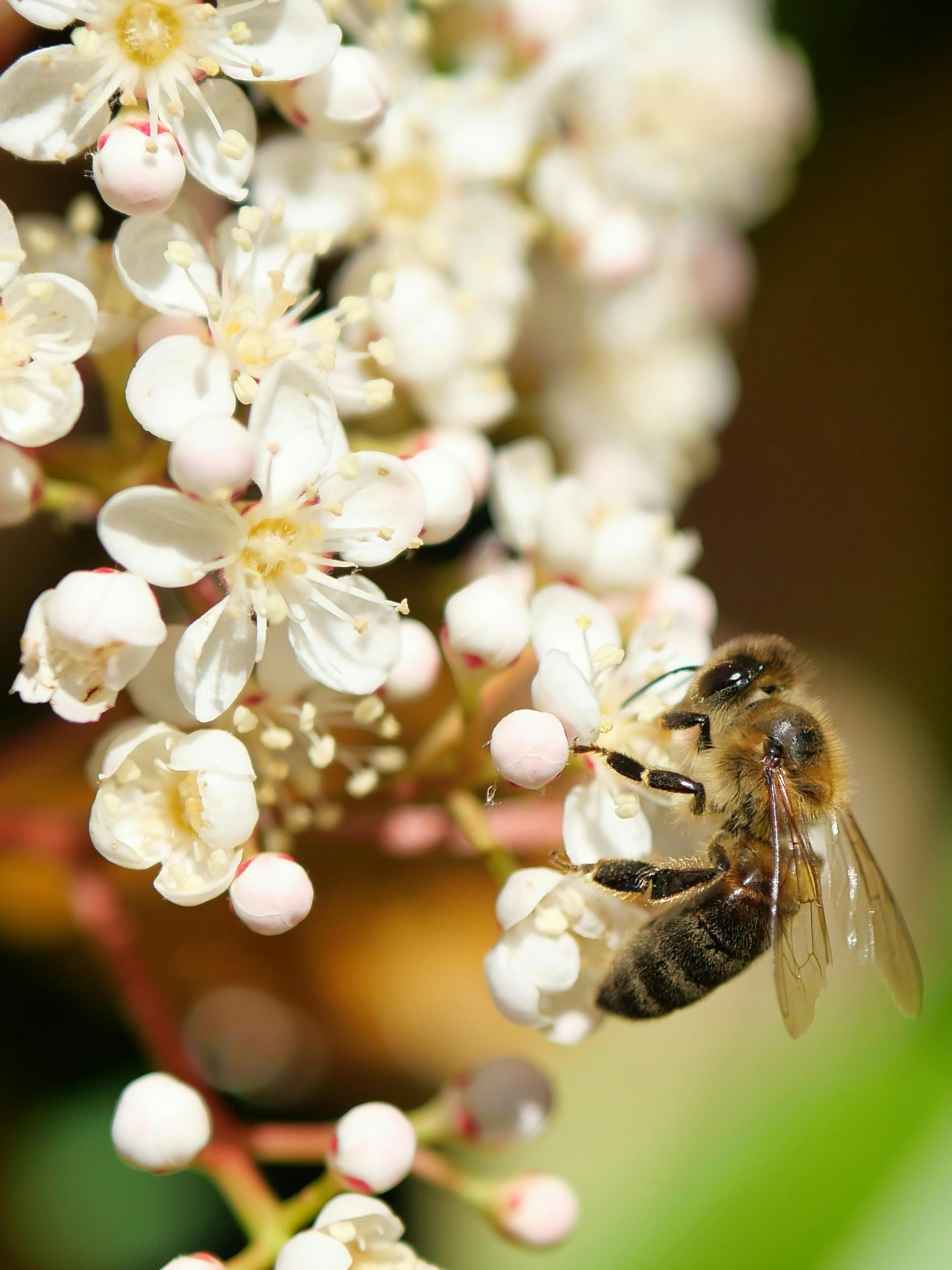
Coffee pollination is a subject of significant agricultural science interest globally — and for good reason. While Arabica coffee is self-fertile (capable of fertilising its own flowers without cross-pollination), studies across coffee-growing regions consistently show that pollination by bees and other insects significantly improves both the quantity and quality of cherry set compared to self-pollinated flowers alone.
Cross-pollination by insects produces heavier cherries with higher bean density, more uniform development, and better cup quality characteristics. In managed studies on Arabica plantations, insect pollination has been associated with yield improvements of fifteen to thirty percent compared to caged, insect-excluded controls. The pollinators on your estate are not incidental visitors — they are active contributors to the income your estate generates.
Coorg’s Native Bee Diversity
Coorg’s Western Ghats location places it within one of the world’s biodiversity hotspots, and this biodiversity extends to bee species diversity. The region hosts an extraordinary range of native bee species — from the familiar Indian rock bee (Apis dorsata) and Indian honey bee (Apis cerana indica) to dozens of smaller native solitary and semi-social bee species in the families Halictidae, Megachilidae, and Apidae.
These native bees are adapted to the specific flowering patterns, flower structures, and seasonal timing of the Western Ghats’ plants — including coffee. Unlike European honeybees (Apis mellifera), which have been widely introduced globally but can struggle in the specific conditions of shade-grown Arabica plantations, native Western Ghats bee species have evolved alongside the flowering patterns of this ecosystem and are the most effective pollinators of the specific crops grown on Coorg’s estates.
An organically managed Coorg coffee estate — where insecticide use is minimal and the diverse understorey and canopy structure provides nesting habitat and pollen diversity — supports native bee populations that are measurably more diverse and more abundant than conventionally managed estates with higher insecticide use. This is one of the agricultural productivity arguments for organic management: the native pollinator community it preserves is doing real agricultural work with real income consequences.
Beyond Bees: The Complete Wildlife Community
The biodiversity of a well-managed Coorg estate extends far beyond pollinators. The multi-layered structure — ground cover, cardamom understorey, coffee shrubs, shade tree canopy, emergent timber trees — provides habitat across the full vertical range that a diverse wildlife community requires.
Birds provide pest control services. Insectivorous birds — warblers, flycatchers, drongos, sunbirds — consume enormous quantities of insect pests daily, providing a biological pest control service that no purchased pesticide replicates. A Coorg estate with abundant bird diversity has lower pest pressure than equivalent habitat with degraded bird populations, translating into lower pest management costs and better crop health.
Predatory insects — parasitic wasps, ground beetles, spiders — similarly provide biological control of pest species including coffee berry borer. These predators are present in abundance on organically managed estates with diverse habitat structure; they are depleted by broad-spectrum insecticide use.
The Honey Income Opportunity
Native stingless bees (Tetragonula species) that are native to the Western Ghats produce a distinctive, highly valued honey — darker and more complex in flavour than conventional honeybee honey, with higher antioxidant content and specific probiotic properties recognised in Ayurvedic medicine. This native stingless bee honey commands five hundred to two thousand rupees per kilogram in health food and specialty markets — a premium product from an insect that is already present on a well-managed Coorg estate and can be managed for honey production with minimal additional investment in log hives.
Several Nature N Me investors have developed small-scale stingless bee honey production on their estates — a supplementary income stream that captures value from the estate’s existing biodiversity without any cost to the core agricultural program.
Disclaimer: The information provided in this article is for general educational, technical, and informational purposes only regarding coffee cultivation, elevation metrics, and agricultural income. Actual coffee yields, cupping scores, bean quality, and auction prices depend on variable factors including climate conditions, estate management, pest control, and global market fluctuations. Projected income ranges and financial metrics do not constitute financial, investment, or legal advice. Readers and prospective investors should perform independent due diligence and consult agricultural specialists and certified financial advisors before making any estate investment decisions.