
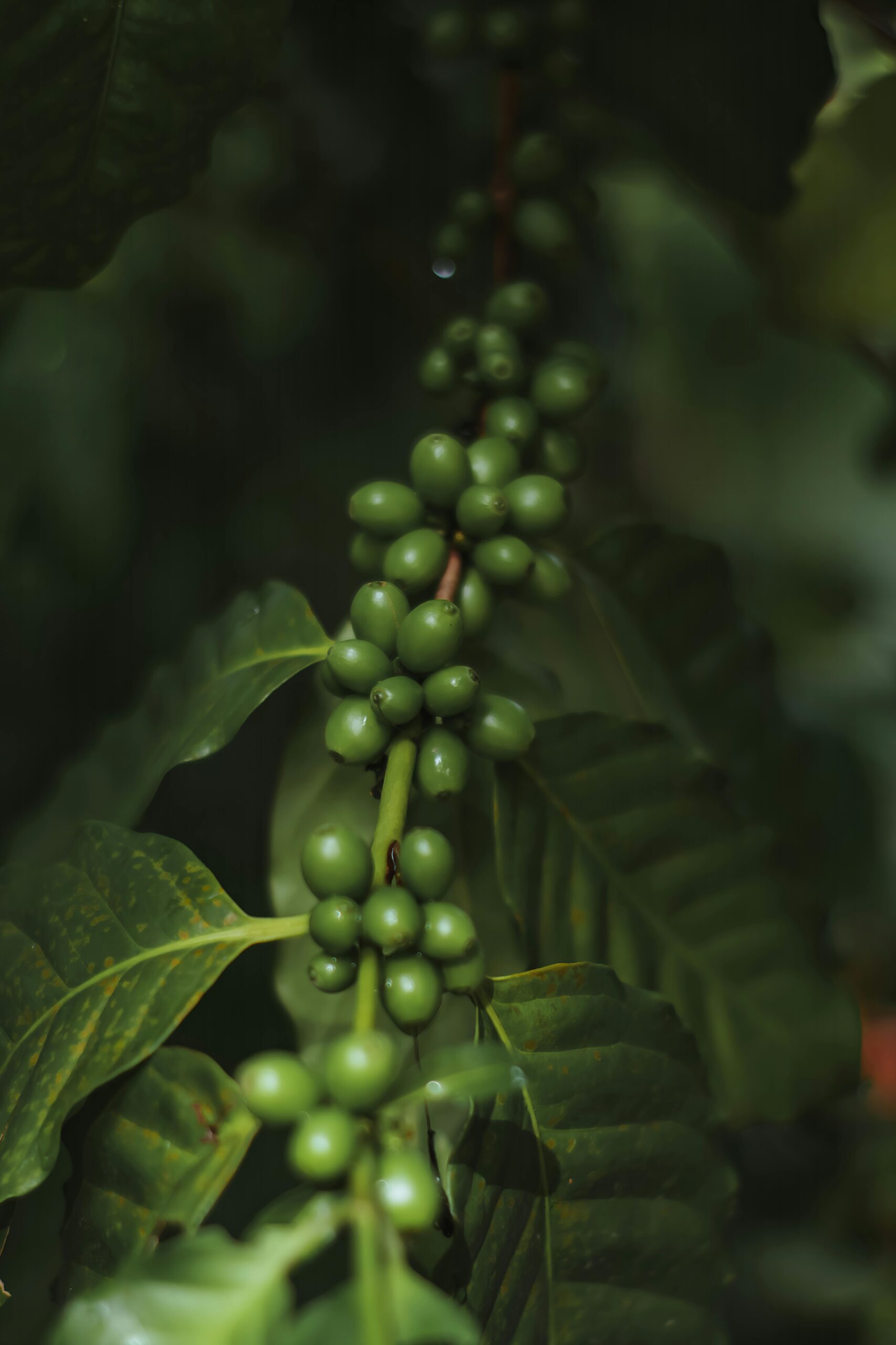
Black pepper — historically called “black gold” for the wealth it generated in India’s medieval spice trade — is growing on your Coorg coffee estate right now, quietly climbing the silver oak and teak shade trees that provide the coffee canopy below. The pepper vines, trained up the host trees in a symbiotic relationship that uses the estate’s vertical space without occupying any additional ground area, generate meaningful spice income that adds to the estate’s diversified crop income mix with minimal management overhead.
How Pepper Grows on a Coorg Estate
Piper nigrum (black pepper) is a perennial climbing vine native to South India. In the natural forest of the Western Ghats, it climbs tall trees using aerial roots for attachment. On a Coorg coffee estate, it is cultivated in exactly this natural way — cuttings planted at the base of silver oak, teak, or other established shade trees, where they climb using the tree trunk for support, reaching productive heights of five to ten metres over several years of growth.
This climbing habit is what makes pepper so well-suited to the Coorg agroforestry system. The pepper vine uses the vertical dimension of the estate’s established tree infrastructure without requiring any additional land area or competing with coffee, cardamom, or any other crop for ground space. The host tree — which is already present as the shade management infrastructure for the coffee below — serves double duty as the pepper trellis.
One silver oak tree can support one to two pepper vines simultaneously without affecting the tree’s shade management function or the vine’s productivity. On a five-acre estate with one hundred and fifty silver oak trees, this potentially supports one hundred and fifty to three hundred productive pepper vines — a commercial pepper planting achieved from infrastructure that is already in place for other agricultural purposes.
The Income Timeline: Third Year Onwards
Pepper vine cuttings planted at the base of established shade trees begin producing in year two to three with small but commercially viable yields, reaching full productive maturity in year four to five. At full production, a mature pepper vine on a well-managed Coorg estate produces one to three kilograms of dried black pepper per year depending on vine age, host tree height, and management inputs.
At two hundred productive vines per five-acre estate and an average of one and a half kilograms per vine, annual pepper production from the estate is approximately three hundred kilograms of dried black pepper. At current Karnataka farm-gate prices of three hundred to five hundred rupees per kilogram for good-quality Malabar pepper, this represents ninety thousand to one lakh fifty thousand rupees in annual pepper income — entirely additional to the coffee and cardamom income from the same estate.
The Quality Premium for Coorg Pepper
As discussed in our earlier post on pepper price cycles, Malabar-type pepper from Karnataka’s Western Ghats commands quality premiums over Vietnamese commodity pepper in specific market segments — specialty culinary buyers, premium spice retailers, and organic market channels that specifically seek Western Ghats provenance.
Coorg pepper grown on managed farmland with organic-aligned practices — without chemical inputs, on estates with documented management practices — is positioned for this quality premium channel. The per-kilogram price differential between commodity pepper and premium Malabar provenance pepper in quality-conscious market segments can be significant — four hundred to six hundred rupees premium per kilogram in established direct-buyer relationships.
The Management Reality: Relatively Low-Intensity
Pepper on a Coorg estate requires management — principally annual training of the vine to maintain its growth along the host tree, monitoring for Phytophthora root rot (the primary disease threat to pepper), and timely harvest of the berry spikes before they over-ripen and drop. But the management intensity is lower per rupee of income generated than either coffee or cardamom, because the vine’s infrastructure (the host tree) requires no investment and the crop itself requires less intensive care than the coffee plants below.
This makes pepper one of the most income-efficient components of the Coorg agroforestry system — high income per unit of management effort invested, using infrastructure already in place for other agricultural purposes.
Frequently Asked Questions
Q: How does black pepper grow alongside coffee on a Coorg estate?
A: Pepper vines are trained to climb the existing silver oak and teak shade trees using aerial roots, utilizing vertical space without taking up extra ground area.
Q: How long does it take for pepper vines to generate commercial returns?
A: Vines begin bearing small commercial yields in years 2 to 3 and reach full productive maturity between years 4 and 5.
Q: How much yield can a mature pepper vine produce per year?
A: A mature vine on a well-managed estate typically produces between 1 and 3 kilograms of dried black pepper annually.
Q: Why does Coorg pepper command a price premium in the market?
A: Western Ghats Malabar-type pepper is highly prized by specialty culinary buyers and premium organic retailers for its distinct provenance and superior quality.
Q: Is pepper farming high-maintenance compared to coffee?
A: No, pepper requires relatively low management intensity per rupee earned, as it utilizes pre-existing tree infrastructure and requires less daily care than coffee plants.