
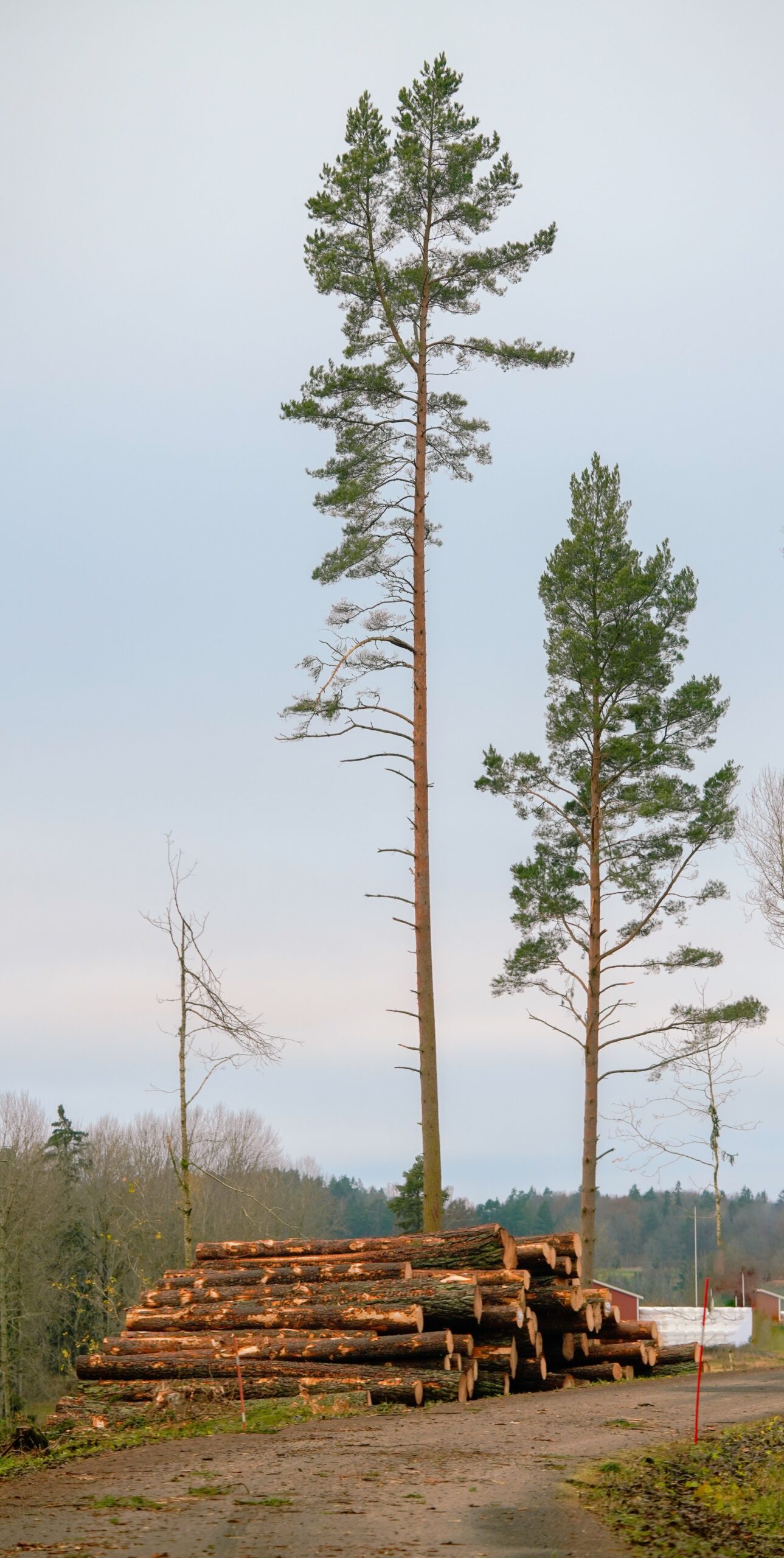
Every discussion of Coorg farmland investment focuses on the annual crop income — what coffee earns per kilogram, what cardamom fetches at auction, what pepper adds to the estate income mix. This annual income focus is understandable and financially important. But it consistently undervalues the silent, patient wealth accumulation happening in the teak trees that are growing on the same estate, requiring zero management attention, generating zero annual cost, and building in commercial value every single year.
The Mathematics of Teak Wealth Accumulation
A teak tree (Tectona grandis) planted as a sapling on a Coorg coffee estate today has zero commercial value — it is a small plant in the ground, worth perhaps fifty to one hundred rupees at nursery price. By year five, it has established as a young tree with a trunk of six to eight centimetres diameter — beginning to be visible as a future timber asset but not yet commercially harvestable. By year ten, the trunk reaches fifteen to twenty-five centimetres diameter with a clear bole of four to six metres — approaching the size range where selective harvest becomes commercially viable for some applications.
By year fifteen, a well-grown Coorg teak reaches thirty to forty-five centimetres diameter at breast height with a clear bole of five to eight metres. At this point, the tree has accumulated heartwood — the dense, oil-rich core that is the commercially prized portion of teak timber. A fifteen-year Karnataka teak tree of this specification is worth fifty thousand to one lakh rupees at current Karnataka timber market prices depending on specific dimensions and heartwood proportion.
What This Means at Estate Scale
A five-acre Coorg managed farmland estate with forty-five to sixty teak trees planted at establishment — at typical agroforestry teak spacing of fifteen to twenty metres between individuals — has forty-five to sixty trees accumulating toward the fifteen-year wealth event simultaneously.
At fifty thousand to one lakh rupees per tree at year fifteen, the estate’s teak stand represents twenty-two and a half lakhs to sixty lakhs of standing timber value — waiting to be selectively harvested and reinvested, entirely additional to the cumulative crop income received across the same fifteen years.
This teak timber wealth does not appear in the annual income statement. It is not reflected in monthly farm updates. It accumulates invisibly — adding to the estate’s total asset value year by year without generating any management cost or investor attention requirement. It is the purest form of passive wealth building available in any agricultural investment.
The Karnataka Teak Market: Why Prices Are Likely Higher at Harvest
As discussed in our earlier blog on Karnataka’s timber demand, the domestic teak supply deficit is structural and deepening. India consumes significantly more teak than it produces domestically — the gap is filled by imports that face increasing international restrictions as major teak-exporting countries tighten export regulations. Karnataka teak from private legal plantations, supplied with documentation of origin and legal harvest certification, commands premium prices in the domestic market precisely because legally documented Karnataka plantation teak is scarcer than the demand for it.
By 2040 — when the teak planted on a Coorg estate in 2025 reaches fifteen-year maturity — the domestic supply deficit will almost certainly be larger than it is today. This is not speculation: the structural timber demand from India’s construction and furniture sectors grows with GDP and urbanisation, while domestic plantation supply has not expanded proportionally. The teak planted today enters a market that will be more supply-constrained than the market of today — and therefore at higher per-tree prices than current market evidence suggests.
The Reinvestment Option
Teak harvest is not all-or-nothing. The agroforestry model allows selective harvest — removing the most mature trees whose commercial value has maximised while retaining younger trees to continue developing. The proceeds from selective year-fifteen harvest can be reinvested in new teak saplings, restoring the timber cycle for the following generation of trees. This rolling harvest-and-replant cycle creates a continuous timber income stream across decades rather than a single lump-sum event.
Contact Nature N Me at naturenme.in or WhatsApp +91 98805 21637 for the teak planting age and density on available Madikeri plots.
Disclaimer: The calculations and financial estimates provided in this article are based on current timber market trends, average growth rates, and standard agroforestry practices in Karnataka. Actual tree growth, timber quality, and future market prices may vary based on soil conditions, weather patterns, maintenance, and local regulations. This content is for informational and educational purposes only and should not be construed as guaranteed financial returns or investment advice.