
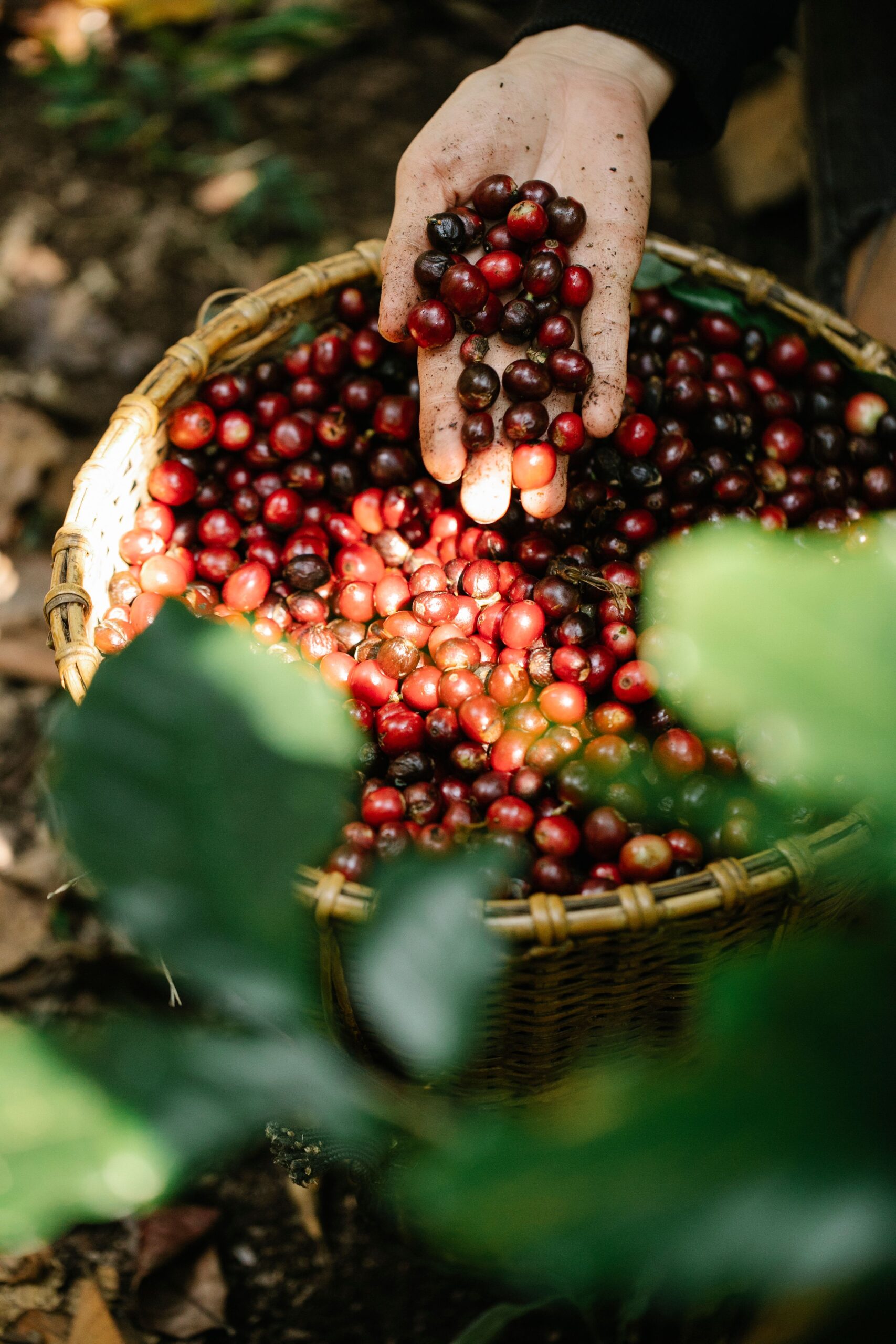
Most discussions of Coorg coffee focus on the growing — the altitude, the variety, the cultivation practices. The processing stage — what happens in the twenty-one days between harvesting a ripe cherry and producing a commercially sold green bean — receives far less attention despite being equally important in determining the coffee’s final quality and market value.
For managed farmland investors whose crop income depends on the quality and price of the coffee produced from their estate, understanding the processing journey provides the agricultural literacy needed to evaluate whether their management team is executing it correctly.
Day 0: Harvest and Transport
The clock starts the moment a cherry is picked from the tree. Coffee cherries begin natural fermentation within hours of harvest — a process that, if uncontrolled, produces undesirable flavours in the final cup. Quality-focused estates transport harvested cherry to the wet mill within two to four hours of picking, and begin processing the same day. Estates that store cherry overnight before processing are already compromising quality.
Nature N Me’s harvest protocols specify same-day processing for all cherry — a practice that is operationally demanding during peak harvest but essential for the quality that specialty buyers require.
Days 0 to 1: Pulping and Initial Separation
At the wet mill, cherry is first floated in water. Unripe or defective cherries (which float due to lower density) are separated from ripe cherry (which sinks) before pulping. This flotation step removes defects before they enter the processing stream.
The remaining ripe cherry enters the pulping machine — a rotating drum with a mesh that mechanically removes the outer skin and fruit pulp, leaving the coffee bean still enclosed in its parchment layer and covered with a sticky mucilage. The separation of pulp from bean must be done at the right pressure and speed — too aggressive and the parchment is damaged; too gentle and skin fragments remain.
Days 1 to 2: Fermentation
The pulped, mucilage-covered beans enter fermentation tanks — typically concrete or tiled tanks filled with clean water. In the water, the mucilage layer breaks down through natural enzymatic and microbial fermentation over twelve to thirty-six hours depending on temperature and the desired flavour outcome.
Fermentation timing is the most flavour-critical decision in the entire processing sequence. Under-fermentation leaves mucilage residue that produces a specific off-flavour in the cup. Over-fermentation produces vinegar-like and unpleasant ferment flavours. The farm manager or wet mill operator makes tactile and olfactory assessments throughout the fermentation period — testing the beans by feel (properly fermented beans feel clean and slightly rough rather than slippery) and by smell.
Days 2 to 3: Washing
After optimal fermentation, the beans are drained from the fermentation tank and washed in flowing water channels — typically long concrete channels with a slight slope, through which water flows continuously to carry away the dissolved mucilage and any remaining fermentation byproducts. Multiple washing passes ensure thoroughly clean parchment beans.
The washing quality directly affects the cup’s cleanliness — properly washed parchment coffee produces a clean, bright cup; inadequately washed coffee retains residual fermentation flavours that reduce quality and cupping scores.
Days 3 to 21: Drying
Washed parchment coffee is spread on raised drying beds — typically one layer deep — where it is dried by sun and airflow over twelve to eighteen days, depending on weather conditions. Daily turning of the drying coffee ensures even moisture loss and prevents localised mould development.
The target moisture content for dried parchment coffee is ten to eleven percent — the level at which the coffee is stable for storage without risk of mould while retaining the moisture needed for the subsequent milling step.
Improper drying — whether too fast in direct harsh sunlight without turning, or too slow in humid conditions — produces quality defects that reduce cupping scores and market price. The drying stage is the most time-consuming and weather-dependent phase, requiring daily management attention across the entire three-week period.
Day 21: Milling and Grading
Dried parchment coffee is transported to the dry mill — typically a centralised commercial facility — where the parchment layer is mechanically removed to reveal the green bean, which is then cleaned, sorted by density and size, and graded according to the Coffee Board’s classification system before being sold or exported.
Contact Nature N Me at naturenme.in or WhatsApp +91 98805 21637 to understand the specific processing protocols for your estate’s coffee.