
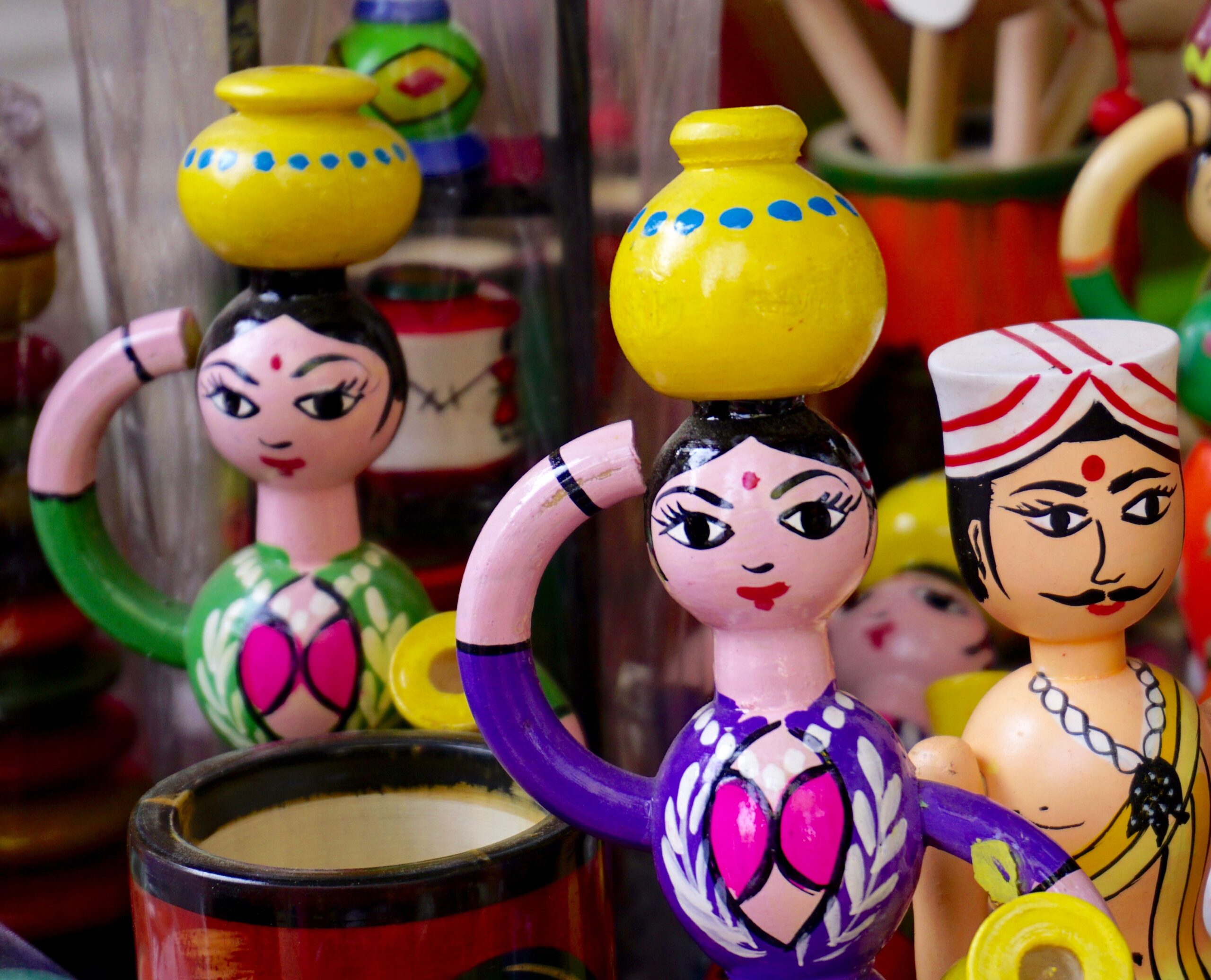
Nestled along the highway connecting Bengaluru and Mysuru lies Channapatna, a vibrant town globally celebrated as Karnataka’s “Gombegala Ooru” (Town of Toys). Famous for its glossy, brightly colored wooden dolls and traditional toys, Channapatna holds a centuries-old craft legacy that blends art, eco-friendly design, and Indian folklore.
Whether you are seeking handmade home decor, sustainable toys for children, or unique cultural souvenirs, Channapatna dolls are a masterpiece of Indian heritage craftsmanship.
1. Royal Origins & Deep Historical Roots
The story of Channapatna toys dates back to the 18th century under the reign of Tipu Sultan, the ruler of the Kingdom of Mysore.
A passionate patron of arts and craftsmanship, Tipu Sultan invited Persian artisans to train local woodcrafters in lacquerware techniques. Over the generations, local artisans refined these skills, creating a distinct style of smooth, rounded wooden dolls that became deeply intertwined with South Indian heritage and royal culture.
2. What Makes Channapatna Dolls Unique?
Channapatna dolls stand out in the world of handicrafts due to their eco-friendly materials and traditional creation techniques:
- 100% Eco-Friendly & Non-Toxic: Unlike modern plastic toys, Channapatna dolls are crafted using Ivory Wood (Aale Mara / Wrightia tinctoria). The wood is soft, light, and easy to carve.
- Natural Vegetable Dyes: The brilliant reds, yellows, greens, and blues are made entirely from natural materials such as turmeric, indigo, kumkum, and acacia tree resins. This makes them completely safe for young children.
- Characteristic High-Gloss Finish: Artisans apply liquid lac (shellac) on a high-speed lathe machine and buff the doll using dried screw pine leaves to achieve a smooth, mirror-like shine without synthetic varnishes.
3. Popular Types of Channapatna Dolls
- The Dancing Doll (Gombeyala): The most iconic creation—a rounded, weighted doll that sways dynamically on a curved base without tipping over.
- Royal Pairs (Raja-Rani): Figurines representing the King and Queen of Mysore, widely used during the annual Dasara Gombe Habba (festival doll displays).
- Folk & Rural Life Figures: Handcrafted miniatures of musicians, villagers, farmers, and animals depicting everyday Indian life.
- Educational & Play Toys: Stacking rings, pull-along animals, counting frames, and baby rattles designed to be safe, durable, and sensory-friendly.
4. Cultural Significance: Mysuru Dasara & Gombe Habba
During the festival of Dasara in Karnataka, households celebrate Gombe Habba (the Festival of Dolls). Families arrange elaborate multi-tiered displays (Padi) featuring gods, goddesses, royal processions, and village scenes. Channapatna dolls serve as the central centerpiece for these displays, passed down through generations as cherished family heirlooms.
Frequently Asked Questions
Q1: What are Channapatna toys?
A: Traditional handcrafted wooden toys and dolls made in Channapatna (known as the “Toy Town” of Karnataka, India), famous for their smooth finish and vibrant colors.
Q2: Who introduced the craft of Channapatna toy making?
A: The origin traces back to Tipu Sultan in the late 18th century, who invited Persian artisans to train local craftspeople in lacquer-turning techniques.
Q3: What type of wood is primarily used to make these toys?
A: They are primarily crafted from Aale Mara (Ivory Wood / Wrightia tinctoria), a lightweight, soft wood that is sustainable and child-safe.
Q4: How are Channapatna toys colored and finished?
A: Artisans use non-toxic, vegetable-based dyes mixed with natural lacquer, which is applied on a rotating lathe using friction heat, then polished with screw pine (Pandanus) leaves.
Q5: Are Channapatna toys safe for children?
A: Yes, they are 100% eco-friendly, non-toxic, lead-free, and designed with smooth, rounded edges, making them safe for kids and popular in Montessori settings.
Q6: What official protection do Channapatna toys have?
A: They were granted a Geographical Indication (GI) tag in 2005–06, certifying their authenticity and legal origin in Channapatna, Karnataka.