
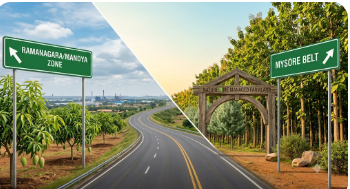
Not everyone has two hours to read a comprehensive guide. For investors who want to understand managed farmland near Coorg and Mysore quickly and decide whether it is worth deeper investigation — here are ten simple facts, no jargon, no caveats buried in footnotes. Just the essential picture.
Fact 1: You Actually Own the Land
This is not a fund, a unit scheme, or a participation certificate. You receive a registered sale deed in your individual name for a specific piece of Karnataka agricultural land. Your name is in the government’s land records. It is yours in the same way your apartment is yours — except it is agricultural land, which brings its own specific benefits.
Fact 2: You Do Not Need to Know Anything About Farming
Nature N Me’s agricultural management team handles everything — planting, watering, pest control, harvesting, selling the produce. You own the land. They farm it. You receive the income. Zero agricultural knowledge required from your side.
Fact 3: The Income Is Tax-Free
Agricultural income from agricultural land in India is exempt from income tax under Section 10(1) of the Income Tax Act. This has been the law since 1961. Your crop income from the farmland — coffee in Coorg, mangoes and teak near Mysore — is completely exempt from income tax regardless of your other income level.
Fact 4: The Minimum Investment Is Around ₹10–12 Lakhs
You can get started with approximately ten to twelve lakhs covering a one-acre plot plus stamp duty and registration. This is a meaningful investment — not pocket change — but it is accessible to professionals who have been saving seriously for two to four years.
Fact 5: Land Near Coorg Has Appreciated 12–15% Annually
Over the past five years, documented transaction prices for quality agricultural land in Madikeri zone have been rising at twelve to fifteen percent annually. This is not a projection — it is a retrospective calculation from actual registered sale prices.
Fact 6: Coorg Is Five to Six Hours Away; Mysore Is Ninety Minutes
Coorg (Madikeri) is five to six hours from Bangalore by road. Mysore is ninety minutes on the expressway from South Bangalore. Both offer managed farmland through Nature N Me with different crop mixes and different lifestyle contexts. Your visit frequency preference is the most practical guide to which suits you better.
Fact 7: Your First Meaningful Crop Income Arrives Around Year Three to Five
The first year or two generate modest agricultural income as crops establish. From year three to five, income builds to commercially meaningful levels. By year six to eight, a well-managed estate is at full productive income. This is a patient investment — not immediate income.
Fact 8: You Can Sell the Land Whenever You Choose
There is no lock-in. You own freehold land that you can sell to any eligible buyer at any time. The practical reality is that agricultural land takes three to six months to sell — it is illiquid compared to financial instruments. Plan accordingly with your holding period.
Fact 9: The Farm Is Managed Whether You Visit or Not
Monthly updates with photographs are sent to every investor. The estate is managed daily regardless of whether you visit. Most investors choose to visit two to four times per year — it is a lifestyle asset, not an obligation.
Fact 10: The Next Step Is One Conversation
Call or WhatsApp Nature N Me at +91 98805 21637. Tell them your budget and your preference (Coorg, Mysore, or open). They will share available plot details within twenty-four hours. You review, you ask questions, you visit if you want to, and you decide when you are ready. There is no pressure and no commitment until you choose to proceed.
That is the complete beginner’s picture. If any of these ten facts surprised you or made you curious for more — that curiosity is worth following.
Contact Nature N Me at naturenme.in or WhatsApp +91 98805 21637.
Disclaimer: The information provided in this article is for general informational and educational purposes only and does not constitute financial, legal, or investment advice. References to tax-free status under Section 10(1) of the Income Tax Act, past appreciation rates (12–15%), crop income timelines, and entry-level investment thresholds are based on current Indian tax laws and market conditions, which are subject to change. Real estate and agricultural operations carry inherent risks. Prospective buyers should conduct their own independent due diligence, verify government land records, and consult qualified legal and financial advisors before making any purchase decisions.
Frequently Asked Questions
Q: Do you get actual ownership of the managed farmland in Coorg or Mysore?
A: Yes, you receive a registered sale deed in your individual name with official entry in government land records for freehold agricultural land.
Q: Do you need agricultural experience to own managed farmland?
A: No, Nature N Me’s agricultural management team handles end-to-end estate operations, including planting, irrigation, pest control, harvesting, and crop sales.
Q: Is crop income from managed farmland taxable in India?
A: No, agricultural income from farmland in India is completely exempt from income tax under Section 10(1) of the Income Tax Act.
Q: What is the starting investment required for managed farmland near Coorg or Mysore?
A: The entry-level investment starts around ₹10–12 lakhs for a 1-acre plot, which includes stamp duty and registration costs.
Q: How do Coorg and Mysore farmland locations compare in travel time?
A: Mysore managed farmland is about a 90-minute drive from South Bangalore via the expressway, whereas Coorg (Madikeri) is a 5-to-6-hour drive.
Q: Can you sell your managed farmland plot whenever you choose?
A: Yes, there is no lock-in period and you can sell your freehold land to any eligible buyer at any time, though agricultural land typically takes 3 to 6 months to liquidate.