
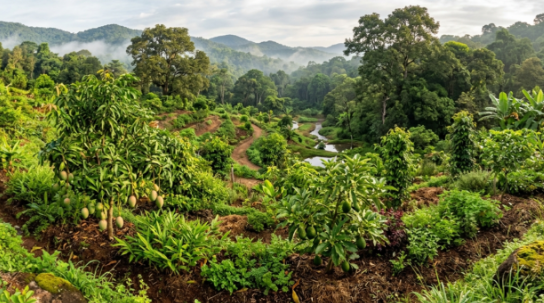
Something interesting is happening among Karnataka’s youngest working professionals — the twenty-five to thirty-two-year-old cohort who finished college between 2016 and 2022, entered the workforce, and are now beginning to accumulate meaningful savings for the first time. A segment of this cohort is making a different choice from the generation before them about where their first significant investment goes.
Their parents’ generation defaulted to the FD as the first savings instrument and the apartment as the first major investment. The previous generation’s Bangalore cohort moved to equity mutual funds and SIPs as the standard investment education spread through corporate finance culture. This newest cohort, shaped by different experiences and different information access, is looking at managed farmland near Mysore as a genuine contender for their first significant physical asset.
Why This Generation Thinks Differently About Assets
Several factors specific to this generation’s experience shape their investment thinking in ways that diverge from their predecessors.
They have watched Bangalore apartment prices move beyond reach at the pace their savings can accumulate — a starter flat in Whitefield that might have been attainable with three years of saving at their income level a decade ago now requires six to eight years of saving and a large home loan. This pricing out of the conventional first-asset has created openness to alternatives.
They have seen the performance of physical assets — their parents’ land, the appreciation of property in Karnataka’s growing markets — and understand intuitively that land holds value in ways that digital financial instruments do not provide the same psychological certainty about.
They are genuinely interested in the lifestyle dimension of farmland ownership in ways that older investors often treat as secondary. For a twenty-eight-year-old who genuinely values time in nature, connection to agricultural cycles, and the experience of owning something that grows and produces — managed farmland near Mysore is not just a financial investment but a lifestyle decision that expresses what they value.
Why Mysore Specifically Appeals to This Age Group
The expressway accessibility matters especially for younger investors who are time-constrained and who make more frequent, shorter visits rather than infrequent long trips. A ninety-minute Mysore drive on a Saturday morning that gets them back in Bangalore by Sunday evening fits into a busy young professional’s life in a way that a five-hour Coorg drive does not.
The entry price point of managed farmland near Mysore is more accessible to young professionals at the earlier stages of their savings accumulation. Mysore agricultural land at lower prices per acre than Coorg’s premium zones means that a twenty-eight-year-old with eight to twelve lakhs saved can make a genuine managed farmland investment rather than a very small position.
What They Are Specifically Looking For
Young professionals investing in Mysore managed farmland consistently describe similar motivations: something physical that I can visit and see growing, something that generates income without me doing anything, something that connects me to nature in a way that my life otherwise does not allow, and something that feels like a genuine long-term investment rather than a number on a screen.
These motivations are not new — they are the motivations of farmland investors across age groups. What is different is that this generation is acting on them at age twenty-eight rather than forty-five, and the compounding advantage of that earlier start is exactly the kind of patient wealth building that genuinely transforms financial trajectories over decades.