
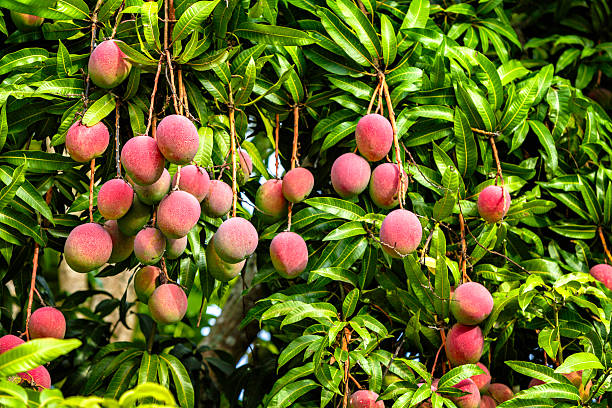
Among the fruit species that can be grown on managed farmland near Mysore, mango holds a special position — it is not an exotic new crop or an emerging market opportunity, but a deeply established, extensively studied, commercially mature agricultural investment with a well-understood income profile. This reliability is precisely what makes mango the backbone of the fruit orchard composition on managed farmland in the Mysore agricultural belt.
Why Karnataka Mango Has National Standing
Karnataka is India’s largest mango-producing state — ahead of Andhra Pradesh, Uttar Pradesh, and Maharashtra in total production. This is not an accident of geography but a reflection of the specific agricultural conditions across the state’s diverse agro-climatic zones, from coastal Dakshina Kannada to the interior plateau districts around Mysore.
The Mysore agricultural belt contributes to Karnataka’s mango production with varieties that have specific commercial strengths. Totapuri — a large, elongated variety with firm flesh ideal for pickle and juice processing — is extensively grown in the Mysore-Bangalore corridor and has a reliable industrial buyer market in Karnataka’s large food processing sector. Badami (Karnataka’s answer to Alphonso) and Raspuri produce premium fresh-market fruit valued by both local consumers and Bangalore’s urban fruit market.
The Mango Income Profile Over Time
A mango orchard on managed farmland near Mysore follows a clear, well-understood income progression. Grafted seedlings planted at year one begin flowering from year three to four and produce their first small commercial harvest at year four to five. Income grows steadily as trees mature — year six to seven sees meaningful commercial production, and from year eight to ten the orchard reaches its productive prime, yielding consistently for thirty to fifty years with good management.
This long productive life — thirty to fifty years from a single planting — is one of mango’s most important investment characteristics. Unlike annual crops that must be replanted and re-established each year, a mango orchard is a capital investment that compounds productivity across decades. The trees that you plant today will be producing commercial fruit for your children and potentially your grandchildren on the same roots.
Market Access From the Mysore Agricultural Belt
The Mysore agricultural belt has excellent market access for mango production. The Agricultural Produce Market Committees (APMCs) in Mysore, Mandya, and surrounding districts provide formal market channels with price discovery for bulk mango sales. Bangalore’s wholesale and retail fruit markets are ninety to one hundred and twenty minutes from the estate by road — close enough for direct supply relationships with Bangalore fruit wholesalers and premium retail channels.
For investors interested in the direct-to-consumer premium market — selling premium Alphonso or Raspuri mango directly to Bangalore households, offices, or specialty food buyers — the expressway connectivity makes farm-to-consumer supply practical in a way that longer-distance agricultural zones cannot match. Fresh mangoes from a Mysore estate can reach a Bangalore customer the same day they are picked.
What Nature N Me’s Management Provides for Mango Production
Managing a mango orchard requires specific seasonal expertise — the timing of flowering induction (through regulated irrigation stress), the management of mango fruit fly (one of the primary pest threats), harvest timing based on fruit maturity rather than calendar date, and post-harvest handling to maintain quality during the crucial hours between picking and market. Nature N Me’s agricultural team manages all of these activities as part of the estate management program on Mysore plots.