
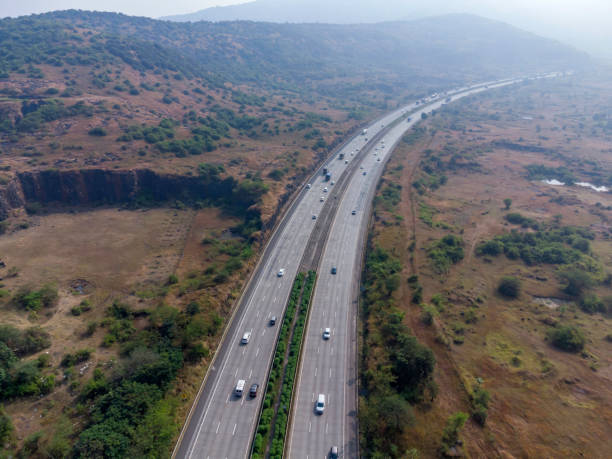
Infrastructure changes land values. This is one of the most consistent and well-documented relationships in real estate economics — when a road improves, the land it connects appreciates in proportion to the travel time it saves and the populations it links. The Bangalore-Mysore Expressway is one of the clearest examples of this principle currently operating in Karnataka’s property market.
What the Expressway Changed
Before the expressway’s improvement and widening, the Bangalore-Mysore journey on National Highway 275 was a slow, frustrating drive through a series of towns — Bidadi, Ramanagara, Channapatna, Mandya, Srirangapatna — each adding fifteen to twenty minutes of slow traffic to what should have been a pleasant two-hour journey. In practice, the trip regularly took three to four hours in peak conditions.
The expressway transformed this. With dedicated lanes, grade separators, and minimal intersections across its primary stretch, the Bangalore-Mysore journey now takes ninety minutes to two hours reliably — sometimes less from southern Bangalore starting points. The travel time is now predictable rather than variable, which matters as much as the average for investors planning regular visits.
What the Expressway Did to Land Values Along the Corridor
Land along the Bangalore-Mysore corridor has responded to the expressway improvement with measurable appreciation. Properties that were genuinely inconvenient to reach before — requiring three hours of frustrating driving for a Bangalore professional — are now accessible weekend destinations within the same category as many Coorg locations in terms of travel time.
Agricultural land in the corridor zones — particularly the districts between Ramanagara and Mysore that were previously too far for casual Bangalore consideration but too close to Mysore to benefit from Mysore’s own urban demand — has appreciated meaningfully as the buyer pool expanded to include Bangalore’s largest professional cohort.
This is the infrastructure appreciation effect discussed in the Coorg context applied to the Mysore corridor: travel time reduction expands the buyer universe, growing demand meets finite supply of quality agricultural land, and prices respond upward.
What Remains Ahead
The expressway improvement is already priced into corridor land values to some extent — the most obvious and immediate appreciation has occurred. What remains ahead is the secondary wave of appreciation as awareness continues to spread among Bangalore’s investor population, as Mysore’s own economic development continues under its smart city and industrial corridor programs, and as any further connectivity improvements — planned ring roads, potential metro extensions, improved rural connectivity — add additional accessibility layers.
Nature N Me’s Mysore project is positioned to capture both the residual expressway appreciation and the secondary waves driven by these additional factors.
The Comparison With Coorg
Coorg remains the premium agricultural investment destination in Karnataka for its specific Western Ghats character and specialty crop premium. But for investors for whom the five to six hour drive to Madikeri is genuinely limiting — families with young children, investors who want to visit monthly rather than quarterly, professionals with less flexible weekend time — the ninety-minute Mysore expressway journey changes the accessibility calculus fundamentally.
A farmland investment you can visit monthly is a more present, more real, more psychologically satisfying asset than one you visit twice a year. The expressway makes that monthly visit reality for the Mysore estate in a way that geography simply cannot offer for Coorg.