Investors increasingly ask about the environmental credentials of their investments — not just as a values question but as a long-term financial stability question. This FAQ addresses what agroforestry on your Coorg farmland actually does for the environment and why that matters for the investment.
How does agroforestry help the environment compared to conventional farming?
Conventional monoculture farming — single crops in bare soil rows with synthetic inputs — typically degrades soil over time, eliminates habitat for wild species, reduces water infiltration (leading to runoff and erosion), and requires increasing chemical inputs as biological soil health declines. The net environmental impact is extractive — the land gives more than it receives, and its ecological quality deteriorates.
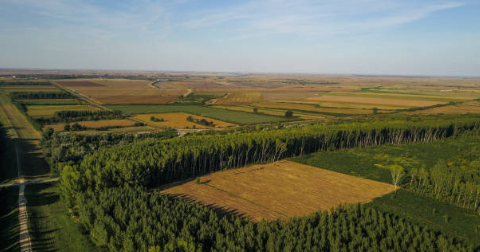
Agroforestry on a Coorg farmland plot works differently. The multi-species structure — trees, coffee, spice crops, and fruit all growing together — creates a complex habitat that supports a diversity of birds, insects, soil organisms, and small mammals. The permanent tree canopy prevents soil erosion by breaking rainfall impact and maintaining root structure through the year. The organic management approach builds soil health rather than depleting it. The result is an agricultural land use that produces commercial crops while simultaneously supporting ecological functions.
Does my Coorg farmland sequester carbon?
Yes — as discussed in our earlier carbon credits post, the trees and soil on an agroforestry estate sequester carbon dioxide from the atmosphere through photosynthesis and organic matter accumulation. The canopy trees (silver oak, teak, sandalwood), the coffee bushes, the fruit trees, and the healthy organic soil all store carbon in biomass and soil organic matter.
A well-managed one-acre agroforestry plot in Coorg may sequester two to five tonnes of carbon dioxide equivalent per year. Over ten years, a five-acre estate could accumulate one hundred to two hundred and fifty tonnes of sequestered carbon — a meaningful climate contribution that will become increasingly monetisable as India’s carbon market develops.
Does the environmental quality of my farmland affect its financial value?
Increasingly, yes. Several mechanisms connect ecological quality to financial value. Premium market access for organic and sustainably produced coffee and spices requires farm management practices that maintain ecological health — and these premiums translate directly into higher crop income. Farmstay guests who are drawn to Coorg for its natural environment pay premium prices for accommodation on estates that are genuinely ecologically rich rather than simplified monocultures. The forest-adjacent, high-biodiversity character of Coorg farmland is a key component of its lifestyle premium — what makes investors and buyers willing to pay more per acre than for equivalent agricultural land in ecologically degraded regions.
As environmental values increasingly influence consumer, investor, and buyer decisions in India, agricultural land that has been managed in ecologically sound ways will command growing premiums over land managed extractively.
Does this mean my farmland qualifies as “green” or ESG investment?
In informal terms, yes — an organic-aligned, agroforestry-based farmland investment in the Western Ghats biodiversity hotspot has strong environmental credentials by any reasonable assessment. Whether it formally qualifies under any specific ESG certification framework depends on which framework is applied and whether the specific practices on the estate have been assessed and certified.
Nature N Me’s approach to sustainable management is motivated by agricultural effectiveness and genuine values — not primarily by certification seeking. But the management practices we follow would qualify for consideration under multiple internationally recognised sustainable agriculture frameworks.